“Wait, are those flowers… edible?” a friend asked, eyeing the colorful spread I’d laid out on the rustic wooden board. Honestly, I had the same skeptical thought just a few weeks back. It all started when I was scrambling to pull together something last-minute for a casual spring get-together. I was staring at a jumble of veggies and cheeses in my fridge, feeling uninspired, when a tiny packet of edible flowers caught my eye at the farmer’s market. I figured, why not? The whole thing was a bit of an experiment, and I wasn’t sure if my guests would go for it—or if those delicate petals would just wilt into a sad mess.
But you know what? The result was stunning and surprisingly fresh. The flowers didn’t just add a pop of color; they gave the board an unexpected brightness and subtle flavor that turned even the usual suspects—like creamy goat cheese and crispy crackers—into something kind of magical. Since then, I’ve made this fresh spring garden charcuterie board a few times (okay, maybe more than a few), tweaking the combinations and swapping out flowers depending on what’s in season or on hand. It’s become my go-to for everything from quiet weekend afternoons to impromptu dinner parties.
The best part is how approachable it feels. I’m not a florist or a fancy caterer, just someone who loves fresh flavors and pretty presentations without fuss. This board has that perfect balance of rustic charm and delicate elegance, plus it invites a little playful curiosity—because who doesn’t want to nibble on pansies or nasturtiums? It’s a reminder that sometimes, the simplest ideas bring the biggest smiles around the table.
So if you’re wondering whether edible flowers can really work on a charcuterie board, I’m here to say yes—with a little care and a few tips, you can create a fresh spring garden charcuterie board that feels like a celebration of the season itself. It’s a quiet kind of joy that lingers long after the last bite.
Why You’ll Love This Recipe
This fresh spring garden charcuterie board with edible flowers isn’t just a feast for the eyes—it’s a tested winner that brings together ease, flavor, and a touch of whimsy. From my kitchen experiments and hosting trials, here’s why it stands apart:
- Quick & Easy: You can assemble this board in under 30 minutes, making it perfect for those spontaneous gatherings or when you want to impress without stress.
- Simple Ingredients: Most items are pantry staples or easy to find at your local market, with edible flowers adding that unexpected twist.
- Perfect for Spring Entertaining: Whether it’s a light brunch, a garden party, or a cozy evening with friends, this board fits the mood beautifully.
- Crowd-Pleaser: It’s got something for everyone—creamy cheeses, fresh veggies, crunchy nuts, sweet fruit, and yes, those edible flowers that spark conversation.
- Unbelievably Delicious: The layers of texture and the subtle floral notes make each bite a surprise, taking your classic charcuterie experience up a notch.
What makes this recipe different is the way it balances rustic, garden-fresh ingredients with thoughtful details—like choosing a mix of soft and hard cheeses, and pairing them with honeycomb or a drizzle of balsamic glaze. Plus, the edible flowers aren’t just decoration; they actually complement the flavors, lending a peppery or citrusy hint depending on what you pick. I’ve found that using fresh herbs alongside the flowers creates a truly fragrant board that invites you to slow down and savor.
This recipe isn’t just about food; it’s about creating moments that feel effortless yet special. It’s the kind of board that gets you closing your eyes after the first bite and thinking, “Yeah, this is spring on a plate.” And honestly, it’s a beautiful way to bring some garden magic indoors—even if your thumbs aren’t quite green.
What Ingredients You Will Need
This fresh spring garden charcuterie board relies on straightforward, wholesome ingredients that come together with a bit of flair. You’ll find that most of these items are pantry or market staples, with edible flowers adding that unique twist. Feel free to swap or adjust according to what’s fresh and available.
- Cheeses:
- Goat cheese, soft and tangy (I like Chevre brands for creamy texture)
- Aged cheddar, sliced or cubed (sharpness balances floral sweetness)
- Brie or Camembert, for a buttery, spreadable option
- Meats (optional):
- Prosciutto, thinly sliced
- Salami or soppressata, for a little spice
- Fresh Produce:
- Cucumber slices, crisp and refreshing
- Cherry tomatoes, halved for burst of sweetness
- Radishes, thinly sliced for a peppery crunch
- Fresh herbs like rosemary, thyme, or mint (adds fragrance and depth)
- Seasonal berries such as strawberries or blueberries (fresh and vibrant)
- Nuts & Extras:
- Marcona almonds or toasted walnuts (for crunch and nuttiness)
- Honeycomb or a small dish of honey (pairs beautifully with cheese)
- Olives, preferably a mix of green and black for variety
- Artisan crackers or sliced baguette, toasted lightly
- Edible Flowers:
- Pansies (mild, slightly sweet)
- Nasturtiums (a peppery note that livens up the board)
- Violas or calendula petals (for color and subtle citrus hints)
- Fresh lavender sprigs (optional, for aroma)
When selecting edible flowers, look for ones labeled specifically as “edible” from trusted sources—farmers markets or specialty stores are best. For the freshest flavor and safety, avoid flowers from florists or nurseries treated with pesticides. If you want a gluten-free option, swap the crackers for rice cakes or seed crackers. For a dairy-free take, try vegan cheeses made from cashews or almonds.
In spring, swapping in fresh strawberries or even thinly sliced green apples can brighten the overall flavor. I’ve also had great luck adding a balsamic glaze drizzle for that touch of tang that contrasts sweet honey and rich cheese.
Equipment Needed
- Large wooden or slate serving board (about 18×12 inches works well)
- Sharp knife for slicing cheeses, meats, and veggies
- Small bowls or ramekins for honey, olives, and nuts
- Tongue tongs or small forks to arrange delicate flowers and herbs
- Cheese spreader or butter knife
If you don’t have a fancy charcuterie board, no worries—a large cutting board or even a clean baking sheet lined with parchment paper can do the trick. I’ve also used a cast iron skillet (yes, really!) to good effect for a rustic vibe, similar to the one I love for my loaded apple pie skillet.
When working with edible flowers, handle them gently with tweezers or salad tongs to prevent bruising. Keeping the flowers chilled until just before serving helps maintain their freshness and vibrant colors.
Preparation Method
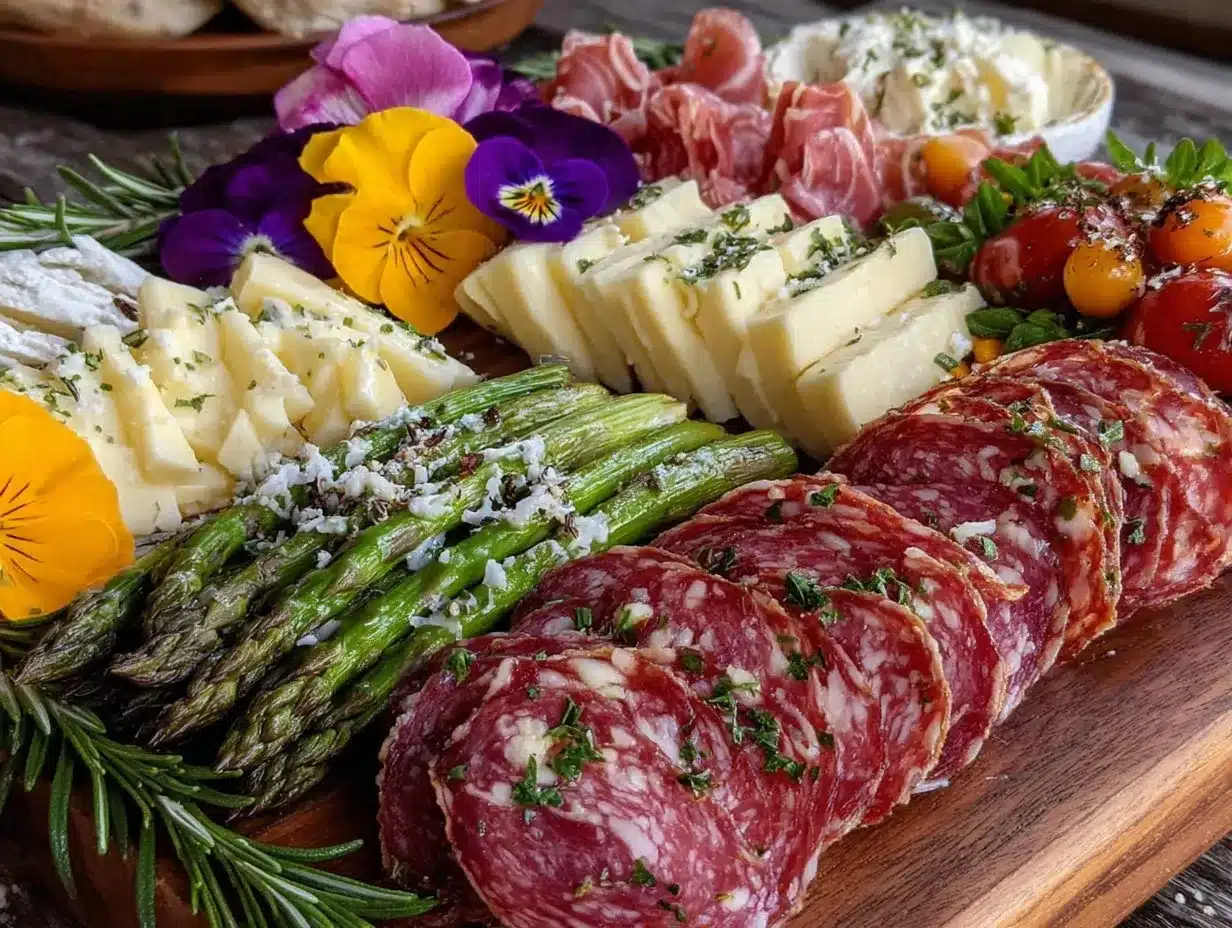
- Prepare the base: Start by laying out your large wooden board on a flat surface. This is your canvas, so think about balance and spacing as you go. (10 minutes)
- Slice cheeses: Cut the aged cheddar into small cubes or thin slices. Leave the goat cheese in a small ball or log shape for spreading, and slice the brie into wedges. Place cheeses evenly around the board, leaving room for other elements. (5-7 minutes)
- Arrange meats: Fold or roll thin slices of prosciutto and salami, placing them near cheeses for easy pairing. Don’t crowd—let them breathe. (5 minutes)
- Prep fresh produce: Thinly slice cucumbers, radishes, and cherry tomatoes. Rinse and pat dry berries and herbs. Group these vibrant colors in clusters to create visual interest. (10 minutes)
- Add nuts and extras: Place small bowls or piles of Marcona almonds, olives, and honeycomb strategically around the board. These give textural contrast and little flavor bursts. (3 minutes)
- Place edible flowers: Gently tuck pansies, nasturtiums, and viola petals into any gaps, layering them on top of cheese or alongside herbs. The key here is subtlety—too many flowers can overwhelm the palate. (5 minutes)
- Final touches: Drizzle a bit of honey or balsamic glaze over some cheeses if you like. Add a few fresh herb sprigs for aroma. Step back and adjust spacing or add a cracker cluster for balance. (5 minutes)
Pro tip: If your board looks a little empty at first, don’t panic—sometimes less is more. Let the colors and textures speak for themselves. Also, keep in mind that the flowers will wilt if left out too long, so assemble close to serving time whenever possible.
Cooking Tips & Techniques
Putting together a fresh spring garden charcuterie board is more about art than cooking, but a few techniques can really make it shine. From experience—both wins and mishaps—here’s what I’ve learned:
- Balance colors and textures: Pair soft cheeses with crunchy nuts and crisp veggies to keep every bite interesting. That way, the board doesn’t feel one-note or flat.
- Handle flowers gently: These beauties bruise easily, so use tongs or tweezers and avoid stacking them heavily. Chilling flowers before assembly helps them stay crisp longer.
- Don’t overcrowd: Give each ingredient space to shine. Overfilling the board can make it look messy and overwhelm the palate.
- Layer flavors: Drizzle honey or balsamic glaze strategically to complement cheeses without drowning the fresh notes. I once went heavy-handed with glaze—it was too sweet and masked the flowers’ subtlety.
- Multitask smartly: While slicing cheeses, prep veggies and herbs. This saves time and keeps your workflow smooth.
- Use room temperature cheese: Take cheeses out about 30 minutes before serving—cold cheese tastes dull and hard to cut.
One lesson from a previous party: don’t forget to label your flowers, especially if guests aren’t used to edible blooms. A little note or sign is a friendly touch and sparks fun conversation.
Variations & Adaptations
This fresh spring garden charcuterie board is flexible enough to suit different tastes and dietary needs. Here are some ways to mix it up:
- Vegetarian version: Skip the meats and add more roasted or grilled vegetables (think marinated artichokes, grilled asparagus). You can also pile on cheese varieties like smoked mozzarella or feta.
- Seasonal swaps: In summer, swap the edible flowers for fresh herbs like basil and mint, and add stone fruits like peaches or plums. For a fall feel, incorporate roasted nuts and figs instead of berries.
- Gluten-free option: Use seed crackers or rice cakes in place of baguette slices. Also, double-check that any processed meats or cheeses are gluten-free.
- Spicy twist: Add pickled jalapeños, spicy chorizo slices, or a smear of harissa hummus on the side for a kick. Edible flowers like nasturtiums pair nicely with a bit of heat.
I once tried a version with smoked salmon instead of cured meats, topped with a few dill sprigs and edible violet petals. It was a crowd favorite for a spring brunch, pairing perfectly with a light cucumber salad. Feel free to get creative—the board is your playground.
Serving & Storage Suggestions
This board is best enjoyed fresh and at room temperature so all the flavors and textures come through. Try not to assemble more than 30 minutes before serving—especially if you’re using delicate flowers.
For presentation, a rustic wood board or slate platter really brings out the colors of the flowers and produce. Pair the board with a crisp white wine or sparkling water infused with lemon and mint for a refreshing combo.
If you have leftovers (rare, but it happens!), cover the board tightly with plastic wrap and refrigerate. Most cheeses keep well for a day or two, but flowers will wilt quickly, so remove them before storing. Crackers and nuts are best kept separate to avoid sogginess.
When reheating cheese-based leftovers, avoid microwaving directly on the board. Instead, gently warm cheeses in a low oven or let them come to room temperature before serving again. Flavors tend to mellow and meld overnight, making the board taste different but still enjoyable.
Nutritional Information & Benefits
This fresh spring garden charcuterie board is a balanced mix of proteins, healthy fats, and fresh produce—making it both nourishing and satisfying. Here’s a rough estimate for a moderate serving:
| Component | Calories | Protein | Fat | Carbs |
|---|---|---|---|---|
| Cheeses (3 oz / 85 g total) | 300 | 18g | 24g | 2g |
| Meats (2 oz / 56 g) | 150 | 12g | 10g | 0g |
| Fresh produce & flowers | 50 | 2g | 0g | 12g |
| Crackers (1 oz / 28 g) | 120 | 2g | 4g | 18g |
The edible flowers add not only visual appeal but also small amounts of antioxidants and vitamins, especially when paired with fresh herbs and produce. This board fits well into low-carb or gluten-free diets when crackers are swapped accordingly. Be mindful of potential allergens like nuts, dairy, and cured meats when serving guests.
From a wellness perspective, the combination of fresh veggies, nuts, and quality cheese offers a satisfying yet balanced snack or light meal that can support energy without heaviness—perfect for springtime when you want to feel light and refreshed.
Conclusion
The fresh spring garden charcuterie board with edible flowers has become one of those recipes that just feels right when the seasons change—simple, pretty, and full of fresh flavor. It’s a dish that invites a little creativity and rewards you with a feast for both eyes and palate. Whether you’re hosting a casual afternoon with friends or just treating yourself to something special, this board has a way of making the moment feel a bit more celebratory and a lot more delicious.
Feel free to swap ingredients, try new edible flowers, or pair it with your favorite beverage to make it truly your own. I love how this recipe brings a little garden magic to the table without any fuss, and I hope you find the same quiet joy in it as I have.
If you try this recipe, I’d love to hear about your variations or any fun flower combos you’ve discovered. Sharing these little kitchen adventures is what keeps cooking exciting!
Frequently Asked Questions
What are the best edible flowers to use on a charcuterie board?
Pansies, nasturtiums, violas, and calendula petals are all great choices. They have mild flavors and vibrant colors that complement cheeses and fresh produce well.
Can I prepare the charcuterie board ahead of time?
You can prep most ingredients a few hours in advance, but it’s best to add edible flowers and assemble the board shortly before serving to keep everything fresh.
Are edible flowers safe to eat?
Yes, but only flowers labeled as edible and sourced from trusted vendors. Avoid any flowers treated with pesticides or from florists.
What can I substitute if I don’t have edible flowers?
Fresh herbs like mint, basil, or rosemary can add a lovely aroma and visual interest if flowers aren’t available.
How do I store leftover charcuterie board items?
Wrap cheeses tightly and store in the fridge. Keep crackers in an airtight container. Remove flowers before storing, as they wilt quickly.
For more inspiration on fresh, seasonal dishes, you might enjoy my fresh loaded strawberry poppyseed salad recipe or the fresh loaded creamy vegetarian pasta salad that highlight garden-fresh ingredients just like this board.
Pin This Recipe!
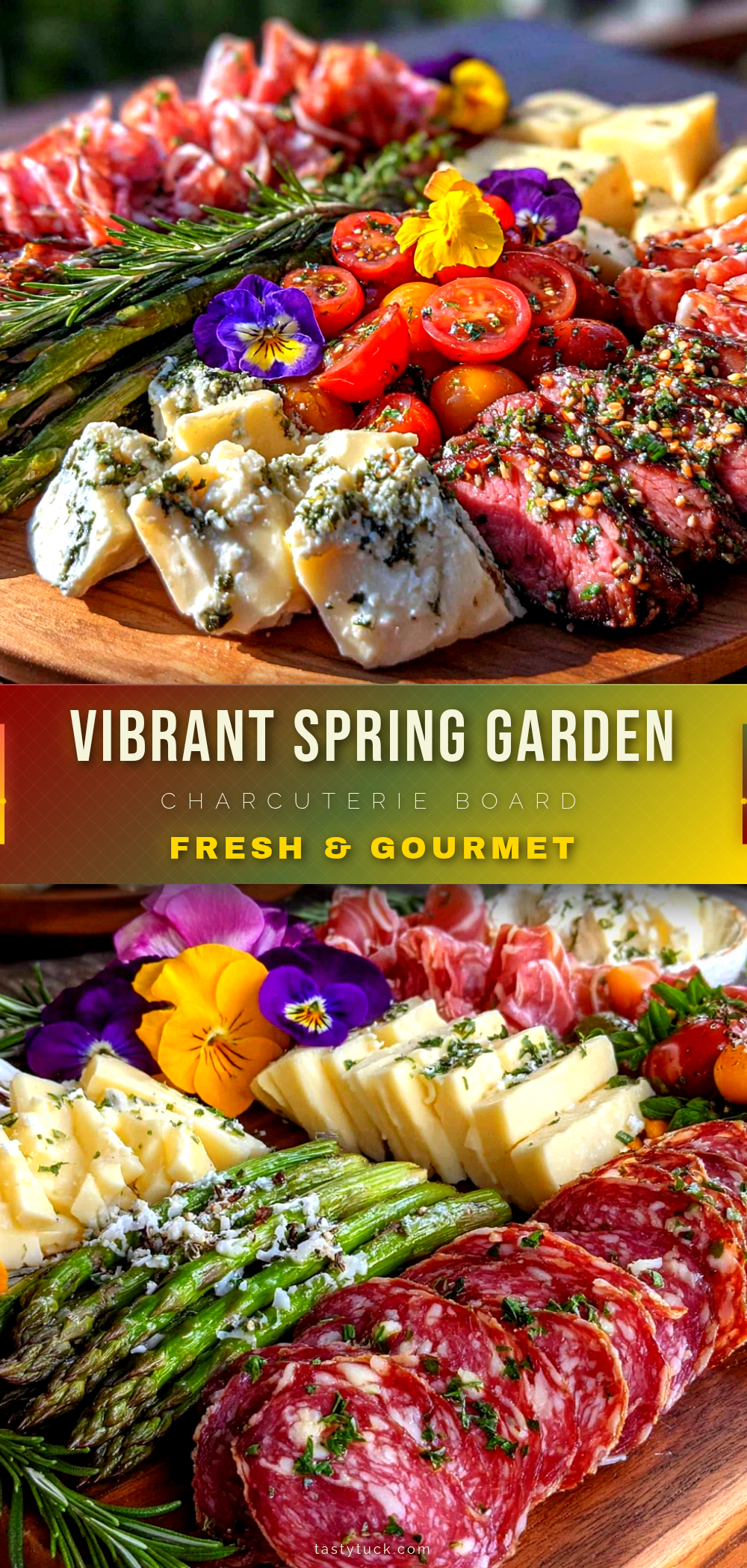
Fresh Spring Garden Charcuterie Board
A fresh and colorful charcuterie board featuring a mix of cheeses, meats, fresh produce, nuts, and edible flowers that add a subtle floral flavor and vibrant presentation. Perfect for spring entertaining and easy to assemble in under 30 minutes.
- Prep Time: 25 minutes
- Cook Time: 0 minutes
- Total Time: 25 minutes
- Yield: 4 servings
- Category: Appetizer
- Cuisine: American
Ingredients
- Goat cheese, soft and tangy (e.g., Chevre)
- Aged cheddar, sliced or cubed
- Brie or Camembert, wedges
- Prosciutto, thinly sliced (optional)
- Salami or soppressata (optional)
- Cucumber slices
- Cherry tomatoes, halved
- Radishes, thinly sliced
- Fresh herbs like rosemary, thyme, or mint
- Seasonal berries such as strawberries or blueberries
- Marcona almonds or toasted walnuts
- Honeycomb or a small dish of honey
- Olives, mix of green and black
- Artisan crackers or sliced baguette, toasted lightly
- Edible flowers: pansies, nasturtiums, violas or calendula petals, fresh lavender sprigs (optional)
Instructions
- Prepare the base by laying out a large wooden or slate serving board on a flat surface, considering balance and spacing. (10 minutes)
- Slice the aged cheddar into small cubes or thin slices. Leave goat cheese in a small ball or log shape for spreading. Slice brie into wedges. Place cheeses evenly around the board. (5-7 minutes)
- Fold or roll thin slices of prosciutto and salami, placing them near cheeses without crowding. (5 minutes)
- Thinly slice cucumbers, radishes, and cherry tomatoes. Rinse and pat dry berries and herbs. Group fresh produce and herbs in clusters for visual interest. (10 minutes)
- Place small bowls or piles of Marcona almonds, olives, and honeycomb strategically around the board for texture and flavor bursts. (3 minutes)
- Gently tuck edible flowers (pansies, nasturtiums, viola petals) into gaps, layering on top of cheese or alongside herbs, using subtlety to avoid overwhelming the palate. (5 minutes)
- Drizzle honey or balsamic glaze over some cheeses if desired. Add fresh herb sprigs for aroma. Adjust spacing and add cracker clusters for balance. (5 minutes)
Notes
Handle edible flowers gently with tongs or tweezers to avoid bruising. Keep flowers chilled until just before serving to maintain freshness and vibrant colors. Assemble the board close to serving time to prevent flowers from wilting. Use room temperature cheese for best flavor and ease of slicing. Label flowers for guests unfamiliar with edible blooms. For gluten-free, substitute crackers with rice cakes or seed crackers. For dairy-free, use vegan cheeses made from nuts.
Nutrition
- Serving Size: Moderate serving per
- Calories: 620
- Sugar: 10
- Sodium: 700
- Fat: 38
- Saturated Fat: 15
- Carbohydrates: 32
- Fiber: 3
- Protein: 34
Keywords: charcuterie board, edible flowers, spring recipe, easy entertaining, fresh produce, cheese board, appetizer, garden party