Introduction
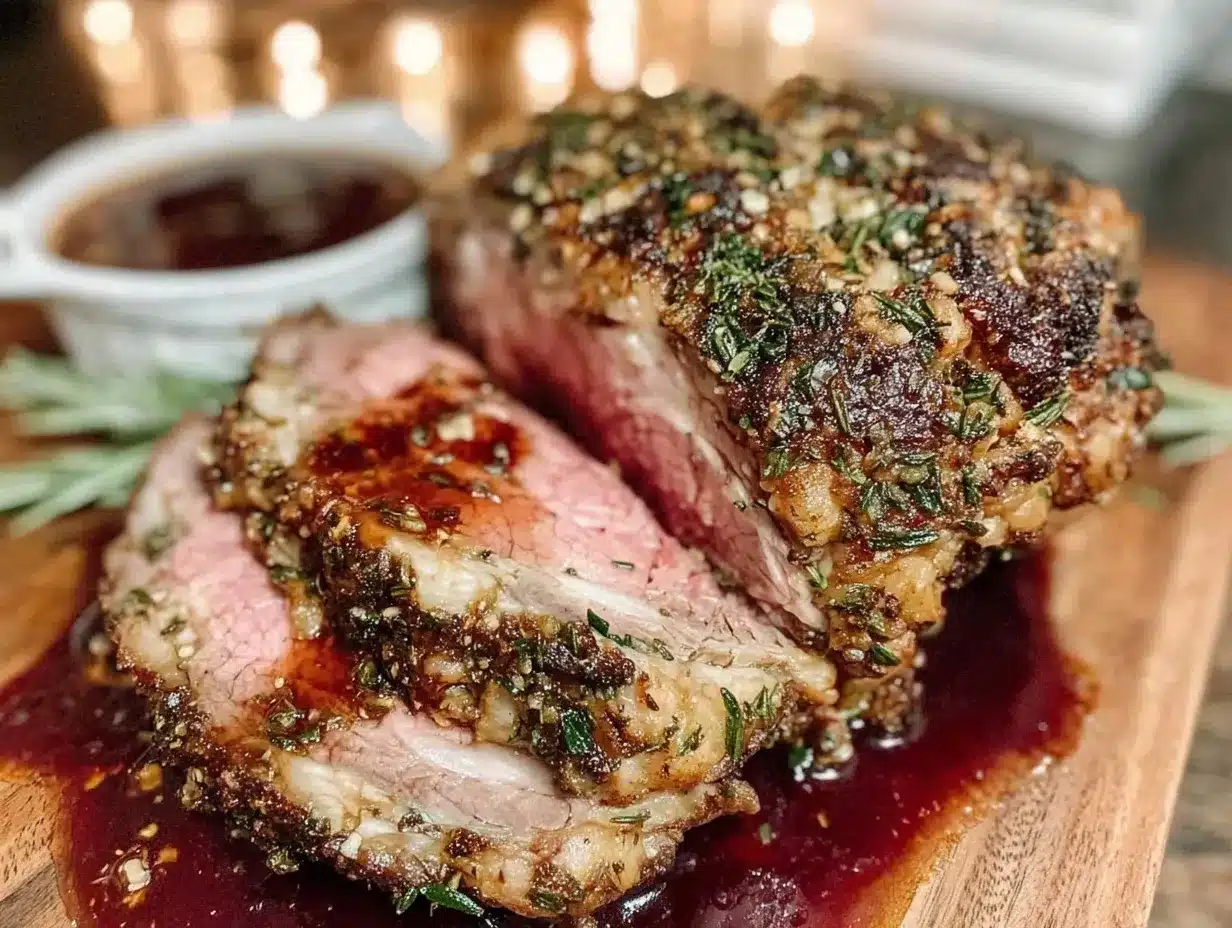
“You really think that’s going to work?” my brother asked, eyeing the oversized roast sitting on the counter. I was half-joking about tossing together a quick herb crust for our prime rib while juggling a chaotic kitchen. Honestly, it was one of those nights when the oven timer felt like a ticking clock on my patience, but the smell of garlic, rosemary, and thyme started to fill the air. The skepticism faded fast once that crust developed into a savory, golden armor and the red wine au jus simmered down to a rich, flavorful sauce. That first bite? Pure comfort wrapped in something unexpectedly fancy.
Cooking prime rib always felt intimidating to me — the timing, the seasoning, the resting. But this herb-crusted version became my go-to, especially when friends would drop by unannounced or when I wanted to impress without fussing endlessly. The red wine au jus? It’s like the quiet hero that pulls everything together, and trust me, it’s so easy to get right. This recipe stuck because it’s a blend of simple ingredients and a little patience, transforming a basic roast into something truly memorable. No pressure, no perfection needed — just good food with a cozy vibe.
It’s that kind of recipe where you can close your eyes after the first bite, savoring the juicy tenderness and the herbaceous crunch. If you’ve ever felt nervous about roasting a prime rib, this guide will walk you through every step, making the whole process feel natural — maybe even a little fun.
Why You’ll Love This Recipe
This perfect herb-crusted prime rib recipe was tested over multiple dinners where timing and flavor had to be spot on — and it passed every time. Between family gatherings and quiet dinners, this roast has become a trusted classic that’s both approachable and impressive.
- Quick & Easy: While prime rib might sound fancy, this recipe comes together in under 3 hours including roasting and resting — great for a special weekend meal without all the fuss.
- Simple Ingredients: You won’t need to hunt down any obscure spices. Just fresh herbs, garlic, salt, pepper, and a good cut of prime rib.
- Perfect for Holidays & Celebrations: Whether it’s Christmas dinner or a weekend feast, this roast fits right in as the centerpiece everyone talks about.
- Crowd-Pleaser: Kids and adults alike love the tender, juicy meat with the crispy herb crust — it’s a guaranteed winner.
- Unbelievably Delicious: The herb crust locks in moisture while adding a beautiful texture contrast, and the red wine au jus brings depth and richness that’s just irresistible.
What sets this recipe apart is the balance between straightforward preparation and deeply satisfying flavors. The herb crust isn’t just a sprinkle-on topping — it’s pressed into the meat, creating a savory shell that keeps every slice juicy. Plus, the red wine au jus is a simple reduction, no complicated steps, just pure flavor magic that complements the beef perfectly.
Honestly, this isn’t just another roast; it’s the kind of dish that feels like a quiet celebration on your plate. It’s perfect for those moments when you want something memorable but without the stress — a recipe that feels like a little secret worth sharing.
What Ingredients You Will Need
This recipe uses straightforward, whole ingredients to build layers of flavor naturally. Most of these are pantry staples or fresh herbs you can easily find or grow yourself. The herb crust and au jus come together without any complicated shortcuts, just fresh, quality components.
- Prime Rib Roast: About 4-5 pounds (1.8-2.3 kg), bone-in preferred for better flavor and juiciness. Look for USDA Choice or Prime grade if possible.
- Fresh Herbs: Rosemary (2 tablespoons, finely chopped), thyme (2 tablespoons, finely chopped), and parsley (1 tablespoon, chopped) — these fresh herbs give the crust its fragrant punch.
- Garlic: 4 cloves, minced — don’t skimp here; garlic is the backbone of the crust’s flavor.
- Olive Oil: 2 tablespoons — helps the herb mixture stick and crisp nicely.
- Salt and Pepper: Kosher salt (2 teaspoons) and freshly cracked black pepper (1 teaspoon) — the basics that bring out the beef’s natural flavor.
- Red Wine for Au Jus: 1 cup (240 ml) dry red wine like Cabernet Sauvignon or Merlot — adds acidity and depth.
- Beef Stock: 2 cups (480 ml), low sodium preferred — to build the au jus base.
- Butter: 2 tablespoons, unsalted — finishes the au jus with richness and shine.
- Shallots: 1 small, finely minced — adds subtle sweetness to the sauce.
- Flour: 1 teaspoon (optional) — for thickening au jus if you prefer a slightly richer sauce.
When selecting your prime rib, I recommend checking your local butcher for the freshest cut, or a trusted brand like Snake River Farms for a buttery texture. Fresh herbs make a big difference, so if you can, pick them up the day you cook. If fresh isn’t an option, dried herbs work but reduce quantity by half.
For a gluten-free option, skip the flour in the au jus and simply reduce the liquid longer for a naturally thicker sauce. Substitute beef stock with mushroom broth for a slightly different but equally rich flavor.
Equipment Needed
- Roasting Pan with Rack: Essential to allow air circulation around the prime rib for even cooking and to catch drippings for the au jus.
- Meat Thermometer: A reliable instant-read thermometer takes the guesswork out of cooking to your desired doneness.
- Small Saucepan: For preparing the red wine au jus.
- Mixing Bowl: To combine the herb crust ingredients.
- Sharp Knife: For carving the roast once rested.
- Optional: Kitchen Twine: If your roast isn’t tied, you can tie it yourself for even cooking.
For those without a roasting pan, a sturdy rimmed baking sheet with an oven-safe rack can work in a pinch. I’ve used a cast iron skillet for roasting smaller cuts — it holds heat well but be mindful of oven size and airflow.
Keeping your thermometer calibrated and clean makes a big difference in accuracy, and a good one is worth the investment if you roast meats often.
Preparation Method
- Bring the Prime Rib to Room Temperature: Remove the roast from the fridge about 1 hour before cooking. This helps it cook more evenly. Pat it dry with paper towels to ensure the herb crust sticks well.
- Make the Herb Crust: In a mixing bowl, combine 2 tablespoons olive oil, minced garlic, chopped rosemary, thyme, and parsley, kosher salt, and cracked black pepper. Stir until it forms a paste-like consistency.
- Apply the Herb Crust: Rub the herb mixture all over the prime rib, pressing gently so it adheres well. Don’t be shy with the herbs — this is where the flavor builds.
- Preheat Oven: Set your oven to 450°F (232°C). Place the prime rib on the roasting rack fat side up to allow the fat to baste the meat.
- Initial High-Heat Roast: Roast for 20 minutes at 450°F to develop a golden crust. This step is crucial for that perfect herb crust texture.
- Lower Oven Temperature: Reduce heat to 325°F (163°C) and continue roasting. Use a meat thermometer inserted into the thickest part (away from bone). For medium-rare, roast until internal temp reaches 130°F (54°C), about 1 to 1.5 hours depending on size.
- Rest the Meat: Remove roast and tent loosely with foil. Let it rest 20-30 minutes before carving — this allows juices to redistribute for juicy slices.
- Prepare the Red Wine Au Jus: While the roast rests, pour the drippings from the roasting pan into a saucepan. Add minced shallots and cook over medium heat until softened, about 3 minutes.
- Add Wine & Stock: Pour in 1 cup of red wine and 2 cups beef stock. Simmer gently, scraping bottom to loosen browned bits, until reduced by half and flavorful, about 10-15 minutes.
- Finish the Sauce: Whisk in 2 tablespoons unsalted butter off heat for shine and richness. If you prefer thicker au jus, whisk in 1 teaspoon flour before adding liquids and cook a minute longer.
- Carve and Serve: Slice the roast against the grain in ½-inch (1.3 cm) thick pieces. Serve hot with the red wine au jus on the side.
Pro tip: Don’t rush the resting phase — I’ve learned that waiting those extra minutes makes all the difference between a juicy roast and one that dries out quickly. Also, keep an eye on your thermometer; ovens vary, and it’s the best way to nail your preferred doneness every time.
Cooking Tips & Techniques
One of the trickiest parts of cooking prime rib is timing, but using a meat thermometer is a game-changer. I’ve had my share of “overdone” slices before I trusted the temp readings fully. Aim for about 5°F (3°C) below your target temperature when removing from the oven — carryover heat finishes the cooking.
Another thing — don’t skip the high-heat blast at the start. It’s what gives the herb crust that irresistible crunch and color. I once tried slow roasting from the start, and the crust was soggy and sad. Not worth it.
When making the au jus, patience is key. Letting it simmer slowly helps concentrate flavors without bitterness. Also, scraping the pan drippings really adds that deep, savory note. I’ve used a wooden spoon to loosen every bit.
Multitasking tip: While the roast cooks, prep your sides or desserts (maybe the easy one-bowl loaded strawberry cake mix recipe for a sweet finish) to keep everything flowing smoothly.
Lastly, carving technique matters. Slice against the grain for tender bites, and use a sharp knife to keep edges clean — presentation counts, even if it’s just for family.
Variations & Adaptations
This herb-crusted prime rib is versatile and adapts well to different preferences and dietary needs.
- Herb Variations: Swap rosemary and thyme with sage and oregano for a slightly different herbal profile. I tried this once during fall and loved the earthier flavor.
- Cooking Method: For a smoky twist, try finishing the roast on a grill after oven roasting for 5 minutes. It adds a subtle char that’s fantastic.
- Dietary Adjustments: For a low-sodium version, reduce added salt and use homemade or low-sodium stock for the au jus. Also, the au jus can be made with vegetable broth for a lighter sauce.
- Flavor Boosters: Add a teaspoon of Dijon mustard to the herb paste for a tangy kick that complements the beef nicely.
- Personal Favorite: I sometimes add a splash of balsamic vinegar to the au jus near the end for a hint of sweetness and acidity that cuts through the richness.
Serving & Storage Suggestions
Serve this prime rib hot, right after carving, to keep the herb crust crispy and the meat juicy. It pairs wonderfully with classic sides like roasted garlic mashed potatoes or green beans almondine.
If you’re planning a full meal, a fresh salad like the fresh loaded strawberry poppyseed salad offers a bright counterpoint to the rich beef.
Store leftovers wrapped tightly in foil or airtight containers in the refrigerator for up to 3 days. The flavors deepen over time, making cold slices great for sandwiches or reheated meals.
To reheat, gently warm slices in a covered skillet over low heat or in the oven at 250°F (120°C) wrapped in foil to preserve juiciness. Avoid microwave reheating as it tends to dry out the meat.
Nutritional Information & Benefits
A 3-ounce (85g) serving of prime rib provides about 250 calories, 20 grams of protein, and 18 grams of fat, depending on the cut and trimming. It’s a rich source of iron, zinc, and vitamin B12, all essential for energy and immune support.
The fresh herbs add antioxidants and subtle anti-inflammatory benefits. Using fresh garlic contributes to heart health, while the red wine au jus offers a touch of polyphenols from the wine.
For those watching carbs, this recipe is naturally low-carb and gluten-free if you skip the flour in the au jus. It fits well within many balanced diets when enjoyed in moderation.
Conclusion
This perfect herb-crusted prime rib with red wine au jus recipe is a wonderful way to bring a little specialness to your table without overcomplicating things. It’s approachable enough for cooks who aren’t always confident with big roasts but delivers that “wow” factor every time. I love how it invites you to slow down for a moment, enjoy the aromas, and appreciate a meal that feels both comforting and a bit fancy.
Feel free to play with the herbs or the au jus to make it your own — that’s part of the joy in cooking. And if you’re looking for a delicious dessert to round out the meal, the cozy cracker barrel loaded peach cobbler is a sweet finish that pairs beautifully.
Give this recipe a try and share your tweaks or stories — I always love hearing how this roast fits into your celebrations and dinners. Here’s to good food and even better company!
FAQs
- What is the best way to check if prime rib is cooked perfectly?
Use an instant-read meat thermometer. For medium-rare, aim for 130°F (54°C) before resting. - Can I make the herb crust ahead of time?
Yes! You can prepare the herb paste and refrigerate it for up to 24 hours before applying it to the roast. - What type of red wine works best for the au jus?
Dry wines like Cabernet Sauvignon or Merlot work great because they add richness without sweetness. - How do I store leftover prime rib?
Wrap tightly in foil or store in airtight containers in the fridge for up to 3 days. Reheat gently to retain moisture. - Can I use dried herbs instead of fresh?
You can, but use half the amount since dried herbs are more concentrated. Fresh herbs do provide a brighter flavor.
Pin This Recipe!
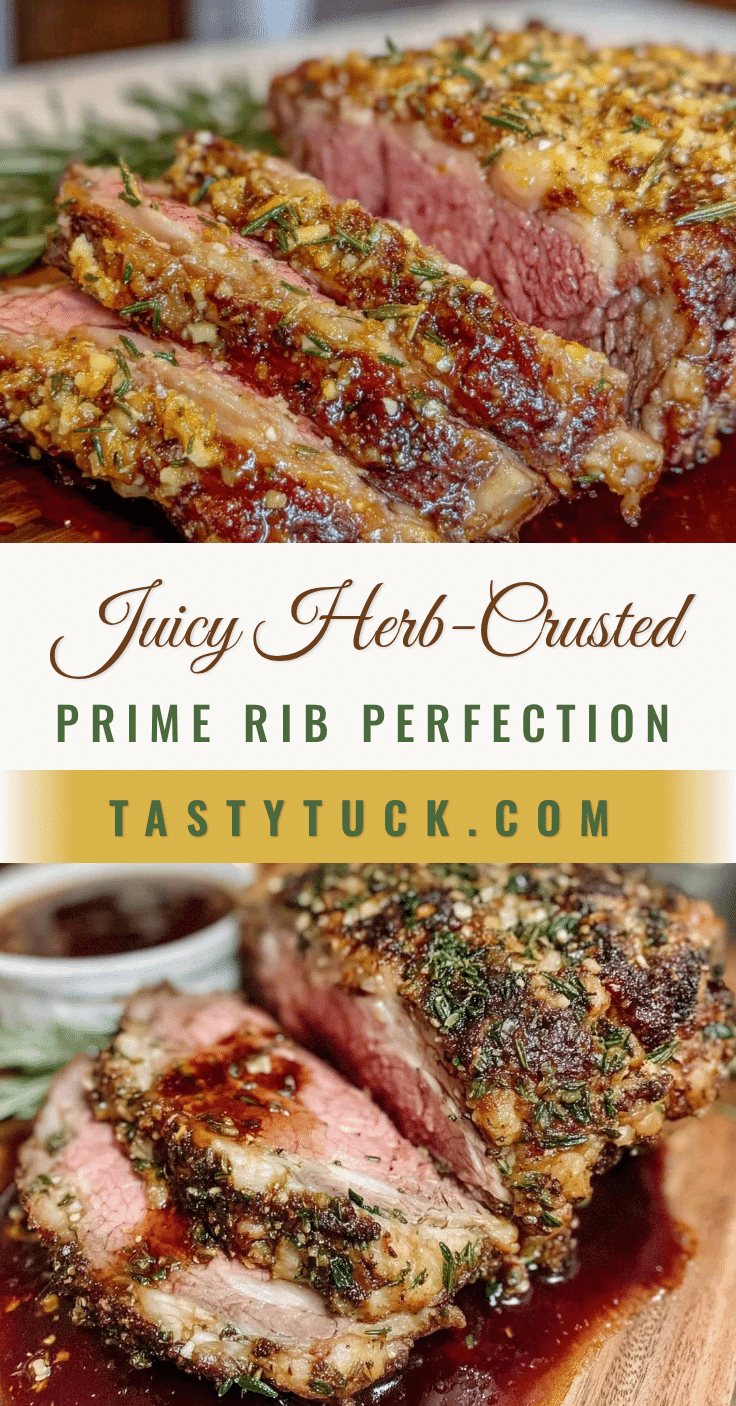
Perfect Herb-Crusted Prime Rib Recipe Easy Red Wine Au Jus Guide
A simple and approachable herb-crusted prime rib roast with a rich red wine au jus, perfect for holidays and special occasions. This recipe balances straightforward preparation with deeply satisfying flavors.
- Prep Time: 15 minutes
- Cook Time: 1 hour 50 minutes
- Total Time: 2 hours 5 minutes
- Yield: 8 servings 1x
- Category: Main Course
- Cuisine: American
Ingredients
- 4–5 pounds bone-in prime rib roast (USDA Choice or Prime grade preferred)
- 2 tablespoons fresh rosemary, finely chopped
- 2 tablespoons fresh thyme, finely chopped
- 1 tablespoon fresh parsley, chopped
- 4 cloves garlic, minced
- 2 tablespoons olive oil
- 2 teaspoons kosher salt
- 1 teaspoon freshly cracked black pepper
- 1 cup dry red wine (Cabernet Sauvignon or Merlot)
- 2 cups low sodium beef stock
- 2 tablespoons unsalted butter
- 1 small shallot, finely minced
- 1 teaspoon flour (optional, for thickening au jus)
Instructions
- Remove the prime rib from the fridge about 1 hour before cooking to bring it to room temperature. Pat dry with paper towels.
- In a mixing bowl, combine olive oil, minced garlic, chopped rosemary, thyme, parsley, kosher salt, and cracked black pepper to form a paste.
- Rub the herb mixture all over the prime rib, pressing gently to adhere well.
- Preheat oven to 450°F (232°C). Place the prime rib on a roasting rack fat side up.
- Roast at 450°F for 20 minutes to develop a golden crust.
- Reduce oven temperature to 325°F (163°C) and continue roasting until internal temperature reaches 130°F (54°C) for medium-rare, about 1 to 1.5 hours depending on size.
- Remove roast from oven and tent loosely with foil. Rest for 20-30 minutes to allow juices to redistribute.
- While resting, pour drippings from roasting pan into a saucepan. Add minced shallots and cook over medium heat until softened, about 3 minutes.
- Add red wine and beef stock to the saucepan. Simmer gently, scraping the bottom to loosen browned bits, until reduced by half, about 10-15 minutes.
- Off heat, whisk in unsalted butter for richness and shine. If thicker sauce is desired, whisk in flour before adding liquids and cook an additional minute.
- Carve the roast against the grain into ½-inch thick slices and serve hot with red wine au jus.
Notes
Do not skip the initial high-heat roast to develop a crispy herb crust. Resting the meat is crucial for juicy slices. Use a meat thermometer to ensure perfect doneness. For gluten-free, omit flour in au jus and reduce sauce longer. Leftovers keep well refrigerated for up to 3 days and reheat gently to preserve moisture.
Nutrition
- Serving Size: 3 ounces (85 grams)
- Calories: 250
- Fat: 18
- Protein: 20
Keywords: prime rib, herb crust, red wine au jus, roast beef, holiday roast, easy prime rib, beef roast, dinner recipe