Mrs. Gable watched me fumbling with a box of sad-looking apples at the farmers market, turning each one over like I was searching for a secret message. She didn’t say anything at first. Then she reached past me, picked up a misshapen Honeycrisp, and placed it in my basket with a firm nod. “These are the ones,” she said. “The ugly ones always have the most flavor.” I had no idea who she was, but she spoke with the kind of certainty that made you listen. We got to talking, and somewhere between her telling me about the apple orchard her grandfather planted in 1947 and me admitting I was hunting for the perfect fall baking recipe, she mentioned this cake. Not a recipe written down, mind you — just a description. “It smells like October in a pan,” she said. “You put cider in the batter and brown butter on top, and suddenly the whole house feels warmer.”
I went home that day with a bag of lumpy apples and the ghost of an idea. Honestly, it took me three tries to get this right. The first version was too dense, like a brick of apple-flavored sadness. The second was better but the glaze turned grainy — a rookie mistake with brown butter, let me tell you. But that third attempt? That was the one. The cake came out of the oven with a crackled golden top, and the smell — cinnamon, nutty butter, sweet apple cider — drifted through every room. My husband walked in the door and just stood there, inhaling. “What is that?” he asked. I didn’t even answer. I just handed him a fork.
Maybe you’ve been there — chasing a flavor memory that you can’t quite name but you know when you taste it. That’s what this cozy apple cider cake is for me. It’s not fancy or fussy. It’s the kind of cake you make on a Wednesday when the weather turns cold and you need something to look forward to. It’s for slow mornings with coffee, or late nights when the house is quiet and you want one more warm bite before bed. Mrs. Gable never gave me a written recipe, but honestly, I think she’d approve of this version. It keeps the soul of what she described — that October-in-a-pan feeling — and makes it something you can bake anytime you need a little warmth.
Why You’ll Love This Recipe
This isn’t just another apple cake. I’ve tested this recipe more times than I care to admit, and let me tell you — it earned its place in my permanent rotation. Here’s what makes it special:
- Incredibly Moist : The apple cider keeps every bite tender and soft, almost like a cross between cake and a really good coffee cake. No dry crumbs here.
- Simple Ingredients : You probably have most of this in your pantry right now. No special flours, no obscure extracts — just real, honest baking staples.
- Perfect for Cozy Evenings : This cake was made for cold weather, rainy afternoons, or any day that calls for a warm drink and something sweet on the side.
- Brown Butter Magic : The glaze is where the real personality lives. Brown butter adds this nutty, almost caramel-like depth that plain butter just can’t touch.
- Crowd-Pleaser : I’ve brought this to potlucks, family dinners, and casual get-togethers. It disappears every single time. Kids love it, adults sneak seconds.
- No Mixer Required : You can make the batter with a whisk and a bowl. Less cleanup, more cake.
What really sets this apart from other apple cakes is the way the cider reduces and concentrates in the oven. It’s not just a flavor drizzle — it’s baked right into the crumb. The brown butter glaze on top adds that salty-sweet finish that makes you close your eyes after the first bite. I mean it. This is comfort food at its finest — simple, soul-soothing, and exactly what you need when the world feels a little heavy.
What Ingredients You Will Need
This recipe uses straightforward ingredients, but each one plays a specific role in building flavor and texture. Let me walk you through what you’ll need and why it matters.
For the Cake
- 2 cups all-purpose flour (spooned and leveled — don’t scoop straight from the bag or you’ll pack it too tight)
- 1 teaspoon baking powder (make sure it’s fresh; expired baking powder won’t give you that nice rise)
- 1/2 teaspoon baking soda
- 1/2 teaspoon salt (I use fine sea salt; it dissolves more evenly)
- 1 1/2 teaspoons ground cinnamon (this is the backbone of the warm spice flavor)
- 1/2 teaspoon ground nutmeg (freshly grated if you have it — the difference is real)
- 1/4 teaspoon ground cloves (just a pinch; cloves are strong and can overpower quickly)
- 1/2 cup unsalted butter, softened to room temperature (I prefer Kerrygold for its rich flavor, but any good unsalted butter works)
- 3/4 cup granulated sugar
- 1/2 cup packed light brown sugar (this adds moisture and a hint of molasses warmth)
- 2 large eggs, room temperature (cold eggs can seize the batter; let them sit out for 30 minutes)
- 1 teaspoon vanilla extract (pure vanilla, not imitation, if you can swing it)
- 1 cup apple cider (unfiltered is best — it has more apple flavor and a gorgeous amber color)
For the Brown Butter Glaze
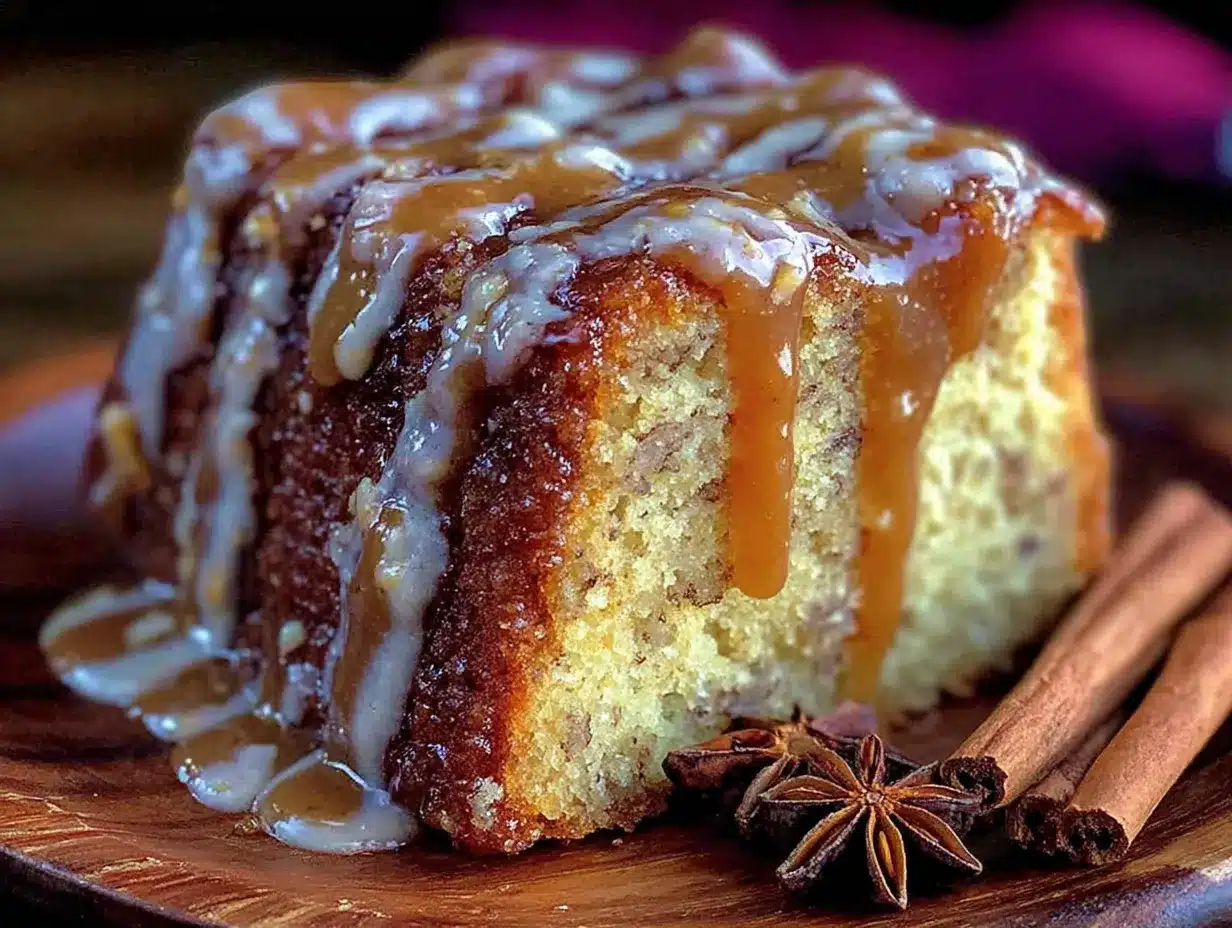
- 1/4 cup unsalted butter (you’ll brown this, so keep an eye on it — it goes from golden to burnt fast)
- 1 1/2 cups powdered sugar, sifted (sifting prevents lumps; trust me on this one)
- 2 to 3 tablespoons apple cider (or milk if you want a milder flavor)
- 1/2 teaspoon vanilla extract
- Pinch of salt (this balances the sweetness and makes the brown butter pop)
Ingredient Tips
For the best results, use fresh apple cider — not apple juice. Cider has more body and a tangier, more complex flavor that stands up to baking. If you can find it at a local orchard or farmers market, even better. I’ve tried this with store-bought cider and it works fine, but the unfiltered kind gives you a richer result.
The butter for the glaze needs to be browned, not just melted. This step takes about 5 minutes and transforms the flavor completely. You’ll see it go from yellow to golden to amber, with little brown specks forming at the bottom. That’s the milk solids toasting — and that’s where the magic lives.
Equipment Needed
- 9-inch round cake pan (or an 8-inch square pan works too; just adjust baking time by a few minutes)
- Parchment paper (for lining the pan — makes removal so much easier)
- Mixing bowls (one large, one medium)
- Whisk (for dry ingredients and batter)
- Rubber spatula (for folding and scraping every last bit of batter)
- Small saucepan (for browning the butter)
- Cooling rack (essential for even cooling; a wire rack lets air circulate underneath)
- Measuring cups and spoons
If you don’t have a 9-inch round pan, you can use a 9-inch springform pan — just make sure the seal is tight so batter doesn’t leak. I’ve also made this in a loaf pan, and it works beautifully; just bake it for about 55 to 60 minutes instead. A kitchen scale is nice to have for accuracy, but measuring cups work just fine.
Preparation Method
- Preheat and Prep : Preheat your oven to 350°F (175°C). Grease your 9-inch round cake pan with butter or non-stick spray, then line the bottom with a circle of parchment paper. This extra step guarantees the cake releases cleanly. Trust me — I’ve had cakes stick and crumble, and it’s heartbreaking.
- Mix Dry Ingredients : In a medium bowl, whisk together the flour, baking powder, baking soda, salt, cinnamon, nutmeg, and cloves. Whisk for about 20 seconds to aerate everything and distribute the spices evenly. Set this aside.
- Cream Butter and Sugars : In a large bowl, beat the softened butter with the granulated sugar and brown sugar until light and fluffy — about 3 minutes with a hand mixer or vigorous whisking. You want it to look pale and airy. Scrape down the sides halfway through.
- Add Eggs and Vanilla : Add the eggs one at a time, beating well after each addition. Stir in the vanilla extract. The mixture might look slightly curdled at this point — that’s normal, especially if your eggs were a bit cold. Don’t panic.
- Alternate Dry Ingredients and Cider : Add the dry ingredients in three parts, alternating with the apple cider. Start with a third of the flour mixture, mix until just combined, then add half the cider. Repeat with another third of flour, the remaining cider, and finish with the last third of flour. Mix until just combined — overmixing will make the cake tough. A few streaks of flour are okay; they’ll disappear as you fold.
- Pour and Smooth : Pour the batter into the prepared pan and spread it evenly with a spatula. Give the pan a gentle tap on the counter to release any air bubbles. The batter will be thick and slightly sticky — that’s exactly right.
- Bake : Bake for 35 to 40 minutes, or until a toothpick inserted into the center comes out clean or with a few moist crumbs. The top should be golden brown and spring back when lightly touched. Start checking at 32 minutes if your oven runs hot.
- Cool in Pan : Let the cake cool in the pan on a wire rack for 15 minutes. Then run a knife around the edge, invert onto the rack, and remove the parchment paper. Let it cool completely — about 1 hour — before glazing. If you glaze while the cake is warm, the glaze will soak in and disappear. Sometimes that’s nice, but for this recipe, you want that glossy top layer.
- Make the Brown Butter Glaze : While the cake cools, make the glaze. In a small saucepan, melt the butter over medium heat. Swirl the pan occasionally. The butter will foam, then turn golden, then develop brown specks at the bottom. This takes about 4 to 5 minutes. The moment it smells nutty and looks amber, remove it from the heat. Pour it into a heatproof bowl to stop the cooking — don’t leave it in the hot pan or it’ll burn.
- Finish the Glaze : Let the brown butter cool for 2 minutes. Then whisk in the sifted powdered sugar, 2 tablespoons of apple cider, vanilla extract, and a pinch of salt. Whisk until smooth. If the glaze is too thick, add the remaining tablespoon of cider. If it’s too thin, add a little more powdered sugar. You want it thick enough to drizzle but thin enough to spread — like lava.
- Glaze the Cake : Pour the glaze over the completely cooled cake. Use a spatula to spread it to the edges, letting some drip down the sides. Let the glaze set for at least 15 minutes before slicing. The waiting is the hardest part, I know.
Cooking Tips & Techniques
Let me save you from the mistakes I made along the way. First, don’t skip browning the butter for the glaze. I tried making this with melted butter once, thinking it would save time. It was fine — but fine isn’t what we’re after. Brown butter adds a toasty, nutty depth that makes this cake feel special. Watch it closely, though. It goes from perfect to burnt in about 30 seconds. Swirl the pan constantly and trust your nose. When it smells like toasted hazelnuts, you’re there.
Room temperature ingredients matter more than you think. Cold eggs can make the batter seize up, and cold butter won’t cream properly. I know it’s tempting to rush, but let your eggs and butter sit out for 30 minutes. If you forget, you can place the eggs in a bowl of warm water for 5 minutes. The butter? You can microwave it in 5-second bursts, but be careful — you want it soft, not melted.
Use fresh spices. Cinnamon that’s been sitting in your cabinet for two years won’t give you the same warmth. I learned this the hard way when I made a batch that tasted flat and dusty. Spices lose potency over time. If your cinnamon doesn’t smell like much, it won’t taste like much either. Replace them every 6 months for best results.
Don’t overmix the batter. I know I said this already, but it bears repeating. Overmixing develops gluten, which makes the cake tough and dense. Mix until the flour just disappears. A few lumps are fine — they’ll bake out. I’ve ruined a batch by being too aggressive with the whisk, and the result was a cake that could have doubled as a doorstop.
Let the cake cool completely. I know you want to eat it right away. I get it. But if you pour the glaze over a warm cake, it will melt into a puddle and you’ll lose that beautiful glossy top. Patience pays off here. Set a timer if you have to. Walk away. The cake will still be there when you get back.
Variations & Adaptations
One of the things I love about this recipe is how flexible it is. Here are some ways to make it your own:
Gluten-Free Version : Substitute the all-purpose flour with a 1:1 gluten-free baking flour blend. I’ve used Bob’s Red Mill with good results. Add 1/4 teaspoon of xanthan gum if your blend doesn’t already include it. The texture will be slightly more tender, but the flavor holds up beautifully.
Dairy-Free Option : Use vegan butter or coconut oil in place of the butter in both the cake and the glaze. For the glaze, you can brown vegan butter — it works, though it won’t get quite as nutty. Use a dairy-free milk like oat or almond instead of cider in the glaze if needed.
Apple Cider Reduction : For an even more intense apple flavor, simmer 1 cup of apple cider on the stove until it reduces to about 1/4 cup. Let it cool and add it to the batter along with the regular cider. It concentrates the apple flavor like crazy. I tried this on a whim one rainy Sunday and it was incredible.
Add Fresh Apples : Fold in 1 cup of finely diced apple (peeled) into the batter before baking. Honeycrisp or Granny Smith work well. The little chunks of apple add texture and little bursts of moisture. Just make sure the pieces are small — about 1/4 inch — so they don’t sink to the bottom.
Spice It Up : Add 1/2 teaspoon of cardamom or ginger along with the other spices. Cardamom gives it a slightly floral, almost chai-like warmth. Ginger adds a gentle zing. I’ve done both and they’re lovely in their own ways.
Maple Glaze Variation : Replace the apple cider in the glaze with 2 tablespoons of pure maple syrup and 1 tablespoon of milk. The maple pairs beautifully with the apple cider in the cake. It’s a little less tangy and a little more sweet — perfect if you’re serving it for brunch.
Serving & Storage Suggestions
This cake is best served at room temperature or slightly warm. If you want that just-baked feeling, pop individual slices in the microwave for 10 seconds. The glaze softens and the cake becomes almost pudding-like. It’s dangerous, honestly.
For serving, I love a simple dusting of powdered sugar and a few fresh apple slices on the side. A dollop of lightly sweetened whipped cream or a scoop of vanilla ice cream takes it over the top. If you’re feeling fancy, drizzle a little caramel sauce over the plate before setting the slice down. It’s not necessary, but it sure is pretty.
This cake pairs beautifully with hot coffee, chai tea, or a glass of cold milk. For a grown-up treat, serve it with a splash of bourbon or apple brandy on the side. The warmth of the alcohol complements the brown butter and spices perfectly.
Storage : Store the cake in an airtight container at room temperature for up to 3 days. The glaze will stay glossy and the cake will remain moist. If your kitchen is warm, you can refrigerate it, but let it come to room temperature before serving — cold cake loses some of its appeal.
Freezing : This cake freezes beautifully. Wrap the unglazed cake tightly in plastic wrap, then in foil, and freeze for up to 3 months. When you’re ready to serve, thaw it overnight in the refrigerator, bring it to room temperature, then make the glaze fresh. I’ve done this for holiday prep and it’s a lifesaver. The glaze doesn’t freeze well, so always add it after thawing.
Flavor Development : Honestly, this cake tastes even better the next day. The spices meld together and the apple cider flavor deepens overnight. If you can resist eating it all on day one, you’re in for a treat on day two. I’ve been known to hide a slice just so I can have it with my morning coffee.
Nutritional Information & Benefits
Here’s an approximate nutritional breakdown per slice (based on 10 servings):
- Calories : 340
- Fat : 14g
- Carbohydrates : 52g
- Protein : 4g
- Fiber : 1g
- Sugar : 36g
While this is definitely a treat, it does have some redeeming qualities. Apple cider contains antioxidants called polyphenols, which can help reduce inflammation. Cinnamon is known for its blood sugar-regulating properties, and nutmeg has compounds that may support digestion. Of course, the brown butter and sugar balance things out — this isn’t health food, and it doesn’t pretend to be.
If you’re looking to lighten it up, you can reduce the sugar to 1 cup total (using all brown sugar) and swap half the butter for unsweetened applesauce. The texture will be a little denser, but the flavor will still shine. I’ve made a lighter version for a friend who was watching her sugar intake, and she asked for the recipe — so it’s definitely worth trying.
Dietary Considerations : This recipe contains gluten, dairy, and eggs. For a gluten-free version, see the variations section above. For a dairy-free version, use vegan butter and a non-dairy milk in the glaze. I haven’t tested an egg-free version, but a flax egg (1 tablespoon ground flaxseed mixed with 3 tablespoons water) might work in a pinch.
Conclusion
This cozy apple cider cake with brown butter glaze is the kind of recipe that becomes a tradition. It’s not complicated or pretentious — it’s just really, really good. The kind of cake you make when you want the house to smell amazing, when you need something to bring to a friend’s house, or when you just want to sit down with a warm slice and a cup of coffee and breathe for a minute.
I hope you give it a try. And I hope you make it your own — add a little extra cinnamon, throw in some fresh apples, or double the glaze (I won’t judge). Mrs. Gable’s words stuck with me all these years: the ugly apples have the most flavor. This cake is proof that simple, humble ingredients can make something truly beautiful.
If you make this recipe, I’d love to hear about it. Leave a comment below and let me know how it turned out — did you make any changes? Did it become a favorite in your house? Share a photo if you’re feeling proud. And if you’re looking for more cozy fall recipes, check out my cozy apple cider cake or browse our collection of fall desserts for more warm, spiced treats.
Happy baking, friends. Stay warm.
Frequently Asked Questions
Can I use apple juice instead of apple cider?
You can, but the flavor will be less robust. Apple juice is thinner and sweeter, while cider has more body and a tangy complexity. If you only have juice, reduce it by simmering for 10 minutes to concentrate the flavor before using.
Why did my brown butter glaze turn out grainy?
This usually happens if the brown butter is too hot when you add the powdered sugar, or if the sugar isn’t sifted. Let the brown butter cool for 2 to 3 minutes before whisking in the sugar, and always sift the powdered sugar to remove lumps.
Can I make this cake ahead of time?
Absolutely. Bake the cake a day ahead, cool it completely, and store it wrapped tightly at room temperature. Make the glaze fresh the day you plan to serve it. The cake actually tastes better on day two as the flavors meld.
How do I know when the brown butter is done?
Watch for three signs: the butter will foam, then turn golden, then develop brown specks at the bottom. It should smell nutty and toasty — like toasted hazelnuts. Remove it from the heat immediately once you see the brown specks and smell that nutty aroma. It takes about 4 to 5 minutes on medium heat.
Can I double this recipe for a larger crowd?
Yes. Double all ingredients and bake in a 9×13 inch pan. The baking time will increase to about 45 to 50 minutes. Check for doneness with a toothpick. You may need to make 1.5 times the glaze recipe to cover the larger surface area.
Pin This Recipe!
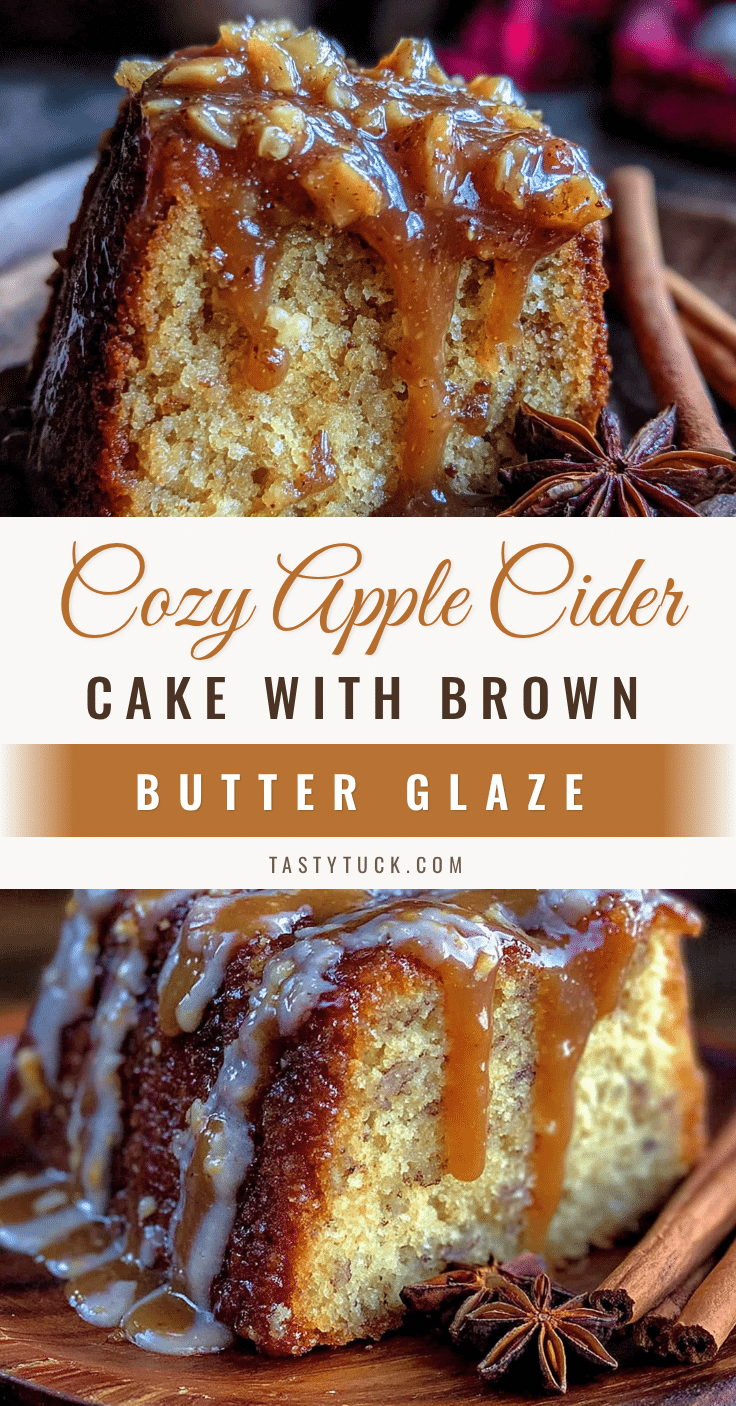
Cozy Apple Cider Cake with Easy Brown Butter Glaze
This incredibly moist apple cider cake is infused with warm spices and topped with a nutty brown butter glaze. It’s the perfect cozy dessert for fall, made with simple ingredients and no mixer required.
- Prep Time: 20 minutes
- Cook Time: 35 minutes
- Total Time: 1 hour 55 minutes (includes cooling)
- Yield: 10 servings 1x
- Category: Dessert
- Cuisine: American
Ingredients
- 2 cups all-purpose flour (spooned and leveled)
- 1 teaspoon baking powder
- 1/2 teaspoon baking soda
- 1/2 teaspoon fine sea salt
- 1 1/2 teaspoons ground cinnamon
- 1/2 teaspoon ground nutmeg (freshly grated if possible)
- 1/4 teaspoon ground cloves
- 1/2 cup unsalted butter, softened to room temperature
- 3/4 cup granulated sugar
- 1/2 cup packed light brown sugar
- 2 large eggs, room temperature
- 1 teaspoon pure vanilla extract
- 1 cup apple cider (unfiltered preferred)
- 1/4 cup unsalted butter (for glaze)
- 1 1/2 cups powdered sugar, sifted (for glaze)
- 2 to 3 tablespoons apple cider (for glaze, or milk for milder flavor)
- 1/2 teaspoon vanilla extract (for glaze)
- Pinch of salt (for glaze)
Instructions
- Preheat oven to 350°F (175°C). Grease a 9-inch round cake pan and line the bottom with parchment paper.
- In a medium bowl, whisk together flour, baking powder, baking soda, salt, cinnamon, nutmeg, and cloves for about 20 seconds. Set aside.
- In a large bowl, beat softened butter, granulated sugar, and brown sugar until light and fluffy, about 3 minutes. Scrape down sides.
- Add eggs one at a time, beating well after each. Stir in vanilla extract.
- Add dry ingredients in three parts, alternating with apple cider: start with 1/3 flour mixture, mix until just combined, then add half the cider. Repeat with another 1/3 flour, remaining cider, and finish with last 1/3 flour. Mix until just combined; do not overmix.
- Pour batter into prepared pan and spread evenly. Tap pan gently on counter to release air bubbles.
- Bake for 35 to 40 minutes, until a toothpick inserted in center comes out clean or with a few moist crumbs. Cool in pan on wire rack for 15 minutes, then invert onto rack, remove parchment, and cool completely (about 1 hour).
- For glaze: In a small saucepan, melt 1/4 cup butter over medium heat. Swirl pan occasionally until butter foams, turns golden, then develops brown specks and smells nutty (about 4-5 minutes). Remove from heat immediately and pour into a heatproof bowl.
- Let brown butter cool for 2 minutes. Whisk in sifted powdered sugar, 2 tablespoons apple cider, vanilla extract, and pinch of salt until smooth. Add remaining tablespoon of cider if too thick.
- Pour glaze over completely cooled cake, spreading to edges and letting some drip down sides. Let set for at least 15 minutes before slicing.
Notes
Use fresh apple cider (not apple juice) for best flavor. Brown butter for glaze carefully—it burns quickly. Let cake cool completely before glazing to maintain glossy top. Cake tastes even better the next day. For gluten-free, use 1:1 gluten-free flour blend with xanthan gum. For dairy-free, use vegan butter and non-dairy milk.
Nutrition
- Serving Size: 1 slice
- Calories: 340
- Sugar: 36
- Sodium: 220
- Fat: 14
- Saturated Fat: 8
- Carbohydrates: 52
- Fiber: 1
- Protein: 4
Keywords: apple cider cake, brown butter glaze, fall dessert, apple cake, cozy cake, easy cake recipe