I ruined three batches of sourdough before I figured out this cranberry orange loaf wasn’t going to work like my regular recipe. The first one came out dense as a brick—my husband tried to cut it and the knife got stuck halfway through. The second one looked beautiful on the outside but the inside was gummy and underbaked. The third one? I forgot the orange zest entirely and ended up with a bland loaf that tasted like nothing special.
Here’s the thing about baking with fruit in sourdough: the moisture content throws everything off. Cranberries release liquid as they bake, and oranges bring their own acidity that messes with fermentation timing. I had to learn the hard way that you can’t just toss fruit into your standard sourdough recipe and hope for the best. You have to adjust hydration, fermentation time, and even how you handle the fruit itself.
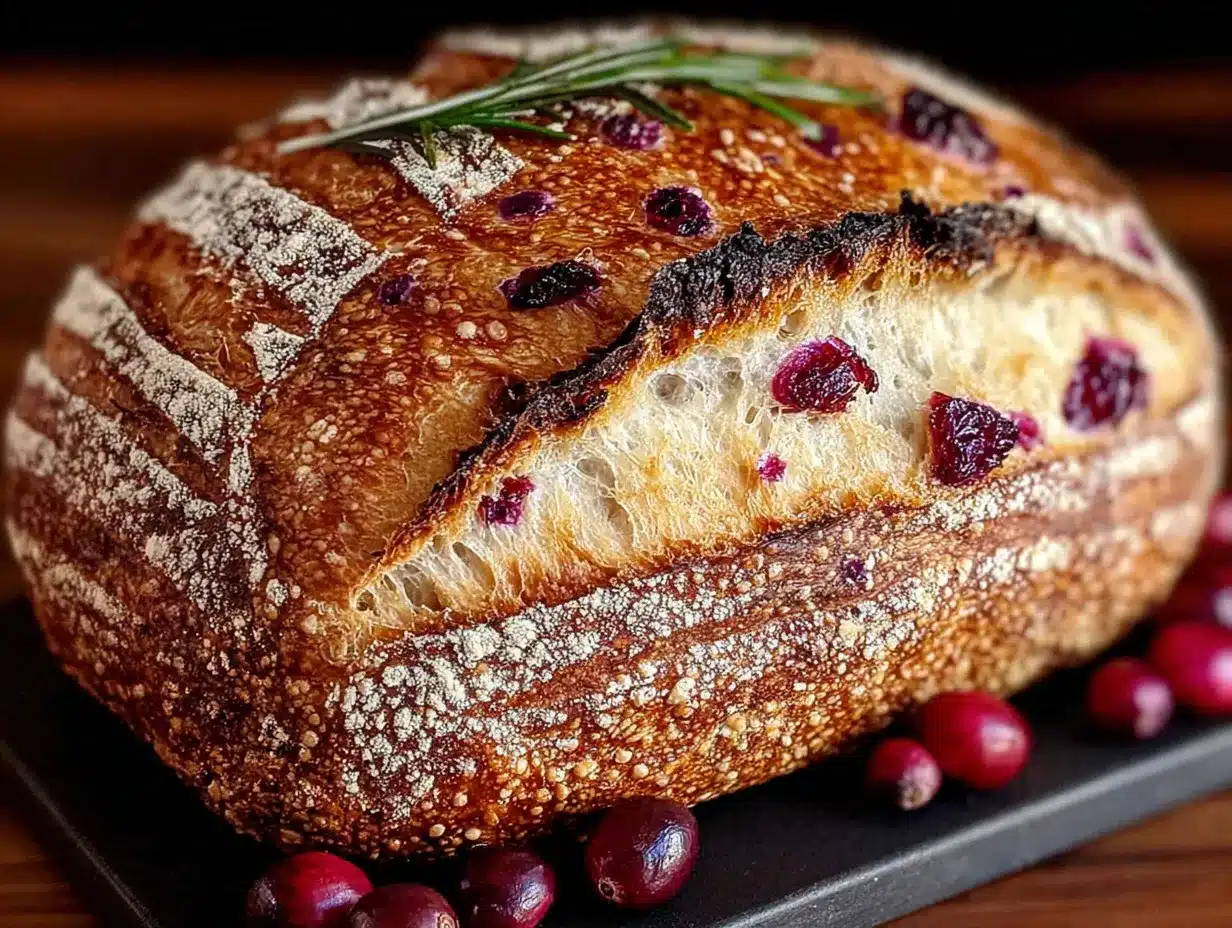
This cranberry orange sourdough loaf is the result of those failures—and honestly, I’m grateful for every single one of them. Because now I’ve got a recipe that works every time. The crumb is open and airy, the cranberries stay plump instead of turning to mush, and that orange flavor hits you in the best way. It’s the kind of bread you slice while it’s still warm and eat half the loaf before dinner even starts.
Why You’ll Love This Recipe
This isn’t just another flavored sourdough recipe. I’ve tested this thing six different ways to get the texture right, and here’s what makes it stand out:
- Perfectly Balanced Flavor : The tartness of fresh cranberries cuts through the tangy sourdough base, while orange zest adds brightness without being overpowering. It’s not sweet like a dessert bread—it’s more like breakfast toast that happens to be gorgeous.
- Reliable Results Every Time : I’ve accounted for the moisture issue by reducing the water content and adding the cranberries at a specific point in the process. No more gummy centers or soggy loaves.
- Holiday-Worthy Without the Stress : This bread looks impressive with those ruby-red cranberries scattered throughout the golden crumb, but it uses basic sourdough techniques you probably already know.
- Freezes Like a Dream : I always bake two loaves and tuck one in the freezer for when company shows up unexpected.
- Family-Approved : My kids fight over the end pieces. The end pieces! That’s how you know a bread recipe is good.
I’ve been baking sourdough for about eight years now, and this cranberry orange version is the one I come back to every fall. It’s become my signature loaf for Thanksgiving brunch and Christmas morning, and people actually ask me to bring it places. That’s the kind of recipe you want in your back pocket.
What Ingredients You Will Need
This recipe keeps things simple with ingredients you can find at any grocery store. The magic happens in how they work together, not in fancy additions.
For the Dough
- Active sourdough starter , 100g (fed 4-6 hours prior, bubbly and doubled in size)
- Bread flour , 500g (King Arthur is my go-to for consistent protein content)
- Water , 300g at room temperature (I use filtered water—chlorine can mess with fermentation)
- Fine sea salt , 10g
- Fresh cranberries , 150g (frozen works too, just don’t thaw them first)
- Orange zest , from 2 medium oranges (use a microplane for best texture)
- Granulated sugar , 25g (optional—helps balance tartness if your cranberries are particularly sour)
For the Folding and Shaping
- Rice flour , for dusting bannetons (prevents sticking better than all-purpose)
- Semolina or cornmeal , for dusting the baking surface
I want to talk about the cranberries for a second because they’re the star here. Fresh cranberries hold their shape better than frozen ones, but I’ve used both with success. If you’re using frozen, don’t thaw them—add them straight to the dough while they’re still frozen. Thawed cranberries release too much liquid and make the dough sticky and hard to handle.
The orange zest is non-negotiable. I tried using orange extract once because I was out of fresh oranges, and the flavor was artificial and weird. Just buy the oranges. You’ll need the juice for something else anyway—maybe a creamy no-bake lemon eclair cake if you’re feeling inspired.
For the bread flour, stick with something that has at least 12% protein content. Lower protein flours won’t give you the structure needed to support all those cranberries without collapsing.
Equipment Needed
You don’t need a professional bakery setup for this recipe, but a few specific tools make the process smoother.
- Digital kitchen scale —baking by volume with sourdough is asking for trouble. I use my scale for everything now, even for water.
- Dutch oven (5.5 to 7 quart) —this creates the steam needed for that crackling crust. A Lodge combo cooker works perfectly and costs less than fancy enameled versions.
- Banneton basket or any bowl lined with a floured kitchen towel
- Bench scraper —helps with folding and shaping without tearing the dough
- Lame or sharp razor blade for scoring the loaf
- Plastic wrap or a large shower cap for covering during bulk fermentation
- Parchment paper —trust me, you don’t want sticky dough stuck to your Dutch oven
I started with a cheap cast iron Dutch oven from a discount store, and it worked fine for years. Don’t let fancy equipment stop you from trying this recipe. If you’ve got a heavy pot with a lid, you’re good to go.
Preparation Method
This recipe follows a standard sourdough timeline, but with a few adjustments for the fruit. Plan to start in the morning for baking the next day, or start in the evening for baking the following afternoon.
Step 1: Mix the Dough (9:00 AM)
In a large bowl, combine 300g water and 100g active starter. Stir until the starter dissolves into the water—it doesn’t need to be perfectly smooth, just mostly incorporated. Add 500g bread flour and mix with your hand or a dough whisk until no dry bits remain. This will look shaggy and rough. Cover the bowl with plastic wrap and let it rest for 30 minutes.
This rest period is called autolyse, and it’s not just fancy baker talk. It gives the flour time to absorb water and start developing gluten naturally. You’ll notice the dough feels smoother and more elastic after just 30 minutes.
Step 2: Add Salt and Sugar (9:30 AM)
Sprinkle 10g salt and 25g sugar (if using) over the dough. Wet your hands slightly and fold the dough over itself several times until the salt is incorporated. The dough will resist at first, then relax after a few folds. Cover and rest for 30 minutes.
Step 3: Incorporate the Fruit (10:00 AM)
This is where my early attempts went wrong. You can’t just dump cranberries and zest into the dough and expect them to distribute evenly. Instead, flatten the dough gently on your work surface (no flour needed, just wet your hands), scatter the orange zest and cranberries over the surface, then fold the dough over itself repeatedly until the fruit is roughly distributed. Let it rest 30 minutes.
Step 4: Series of Folds (10:30 AM to 1:00 PM)
Over the next 2.5 hours, perform four sets of stretch and folds at 30-minute intervals. To do this: wet your hand, reach under one side of the dough, stretch it up, and fold it over the top. Rotate the bowl a quarter turn and repeat. Do this four times total for each set. The dough will become noticeably stronger and smoother with each fold.
If the cranberries start popping out during folding, just poke them back in. It happens.
Step 5: Bulk Fermentation (1:00 PM to 5:00 PM)
Cover the bowl and let the dough ferment at room temperature (around 70-75°F) for 4-5 hours. The dough should increase in volume by about 50%, feel airy and bubbly, and jiggle slightly when you shake the bowl. Don’t go by time alone—look for the signs. My kitchen runs cold, so I often need closer to 6 hours.
Step 6: Shape and Cold Retard (5:00 PM)
Turn the dough out onto a lightly floured surface. Gently shape it into a round by folding the edges toward the center, then flipping it seam-side down and using your hands to create tension on the surface. Place it seam-side up in a floured banneton. Cover with plastic wrap and refrigerate overnight (12-16 hours).
This cold fermentation is where the magic happens. The flavor deepens, the dough firms up for easier scoring, and the cranberries get a chance to meld with the sourdough tang.
Step 7: Bake (Next Morning, 9:00 AM)
Place your Dutch oven in the oven and preheat to 500°F for at least 30 minutes. Remove the dough from the fridge, turn it out onto a piece of parchment paper, and score it with a lame or sharp knife. A simple cross or a single slash works beautifully.
Carefully transfer the dough (on the parchment) into the hot Dutch oven. Cover and bake at 500°F for 20 minutes. Reduce the temperature to 450°F, remove the lid, and bake for another 20-25 minutes until deep golden brown. The internal temperature should reach 205-210°F.
Cool on a wire rack for at least 2 hours before slicing. I know it’s hard to wait, but cutting into hot sourdough ruins the texture. Trust the process.
Cooking Tips & Techniques
I’ve made every mistake in the book with this recipe, so let me save you some trouble.
Don’t overhydrate the dough. Regular sourdough often uses 75-80% hydration, but this recipe uses about 60% because the cranberries release moisture as they bake. If you add too much water upfront, you’ll end up with a flat, sticky mess.
Cold dough is easier to score. That overnight rest in the fridge isn’t just for flavor—it firms up the dough so your scoring blade cuts cleanly instead of dragging. If your dough feels too soft after shaping, pop it in the freezer for 20 minutes before scoring.
Watch your oven temperature. Every oven runs differently. My first loaf with this recipe burned on the bottom because I didn’t realize my Dutch oven sits closer to the heating element. Now I place a baking sheet on the rack below to diffuse the heat.
Toast it the next day. Day-old sourdough makes the best toast—the crumb firms up and the flavors meld together. I actually prefer this bread on day two, sliced thick and slathered with butter.
One thing I learned the hard way: if your starter isn’t super active, this recipe will punish you. Make sure it’s doubling in 4-6 hours before you start. A sluggish starter leads to a dense loaf with cranberries sinking to the bottom.
Variations & Adaptations
This recipe is flexible enough to play with, and I’ve tried most of these variations myself.
Dried Cranberry Version
If fresh cranberries aren’t in season, use 120g dried cranberries instead. Rehydrate them in hot water for 10 minutes, drain well, and pat dry before adding. The flavor is sweeter and more concentrated, so you might want to skip the sugar.
Gluten-Free Adaptation
I won’t lie—this is tricky with gluten-free flour. Substitute a high-quality gluten-free bread flour blend and add 1 teaspoon xanthan gum if your blend doesn’t include it. Reduce water to 280g and expect a denser crumb. It’s still delicious, just different.
Herb and Citrus Twist
Add 1 tablespoon fresh rosemary or thyme along with the orange zest. The herbal notes play beautifully against the tart cranberries and tangy sourdough. I made this for Thanksgiving last year and it disappeared before the turkey came out of the oven.
Whole Wheat Option
Replace 200g of the bread flour with whole wheat flour. Increase water by 25g since whole wheat absorbs more liquid. The loaf will be denser and nuttier, which pairs wonderfully with the cranberries.
For a sweeter version that’s more like a strawberry cake mix recipe, increase sugar to 50g and add a simple orange glaze on top after baking. Just mix powdered sugar with fresh orange juice until it’s thick and drizzle over the cooled loaf.
Serving & Storage Suggestions
This bread shines in so many ways. Here’s how I serve it depending on the occasion.
For breakfast : Slice thick and toast until golden. Spread with salted butter and a drizzle of honey. The combination of tart cranberries, tangy bread, and sweet honey is absolute perfection.
For brunch : Serve alongside scrambled eggs and bacon. The bread soaks up runny egg yolks beautifully. I’ve also made French toast with day-old slices—custard-soaked and pan-fried until crispy—and it’s life-changing.
For cheese boards : This bread pairs wonderfully with sharp cheddar, brie, or goat cheese. The cranberries and orange zest cut through rich, creamy cheeses.
Storage : Keep the loaf wrapped in a clean kitchen towel at room temperature for up to 3 days. Don’t store it in plastic—the crust will turn soft and rubbery. For longer storage, slice the loaf, place parchment paper between slices, and freeze in a zip-top bag for up to 3 months.
Reheating : Pop frozen slices directly in the toaster. For a whole frozen loaf, thaw at room temperature, then reheat in a 350°F oven for 10 minutes to crisp the crust.
The flavor actually improves after day one. Something about the cranberries and orange settling into the sourdough base makes the second day even better than the first.
Nutritional Information & Benefits
This bread uses simple, whole ingredients with no preservatives or artificial additives. Here’s the approximate breakdown per slice (assuming 12 slices per loaf):
- Calories : 180
- Carbohydrates : 36g
- Protein : 6g
- Fat : 1g
- Fiber : 2g
- Sugar : 4g
Cranberries are packed with antioxidants and vitamin C, while the fermentation process in sourdough makes the nutrients in the flour more bioavailable. The long fermentation also breaks down gluten partially, which some people with mild sensitivities find easier to digest.
This recipe is naturally low in fat and contains no dairy or eggs. For a vegan option, just ensure your sugar is plant-based.
I’m not a nutritionist, but I do know that homemade bread with real ingredients beats anything from the store. When I eat this loaf, I feel good about what I’m putting in my body—and that matters.
Conclusion
This cranberry orange sourdough loaf has become my fall baking tradition for a reason. It’s forgiving enough for beginners (once you know the moisture trick) and impressive enough for experienced bakers who want something special. The combination of tart berries, bright citrus, and tangy sourdough creates something that feels both rustic and refined.
I love that this recipe works for so many occasions—quiet mornings with coffee, holiday gatherings with family, or just a Tuesday when you need bread that makes you feel accomplished. The smell of cranberries and orange filling your kitchen while the loaf bakes? That’s the kind of simple joy that makes home baking worth every minute of effort.
Try this recipe and make it your own. Add more zest, swap in dried cherries, or double the cranberries if you’re feeling bold. Bread is meant to be adapted. And when you make it, come back and let me know how it turned out. I love hearing about your baking wins—and your failures too, honestly. That’s how we all get better.
Happy baking, friends. Your kitchen is about to smell incredible.
Frequently Asked Questions
Can I use frozen cranberries instead of fresh?
Yes, absolutely. Add them straight from the freezer without thawing. Thawed cranberries release too much liquid and make the dough difficult to handle.
Why did my cranberries sink to the bottom of the loaf?
This usually happens when the dough is too slack or the cranberries are too wet. Make sure you’re using the correct hydration (300g water) and pat the cranberries dry with a paper towel before adding them. The folding technique also helps distribute them evenly.
Can I make this recipe without a Dutch oven?
You can. Place a baking sheet on the bottom rack of your oven and pour a cup of hot water into it when you add the bread to create steam. Bake the loaf on a preheated baking stone or inverted sheet pan. The crust won’t be quite as crackly, but it’ll still be delicious.
How do I know when my starter is active enough?
Your starter should double in volume within 4-6 hours of feeding. It should look bubbly, smell pleasantly sour (not like acetone or nail polish remover), and pass the float test—a small spoonful should float in water.
Can I add nuts to this recipe?
Definitely. Toasted pecans or walnuts work beautifully with the cranberry and orange flavors. Add 100g chopped nuts along with the cranberries during the fold stage. Toast them first for deeper flavor.
Pin This Recipe!
Perfect Cranberry Orange Sourdough Loaf Recipe

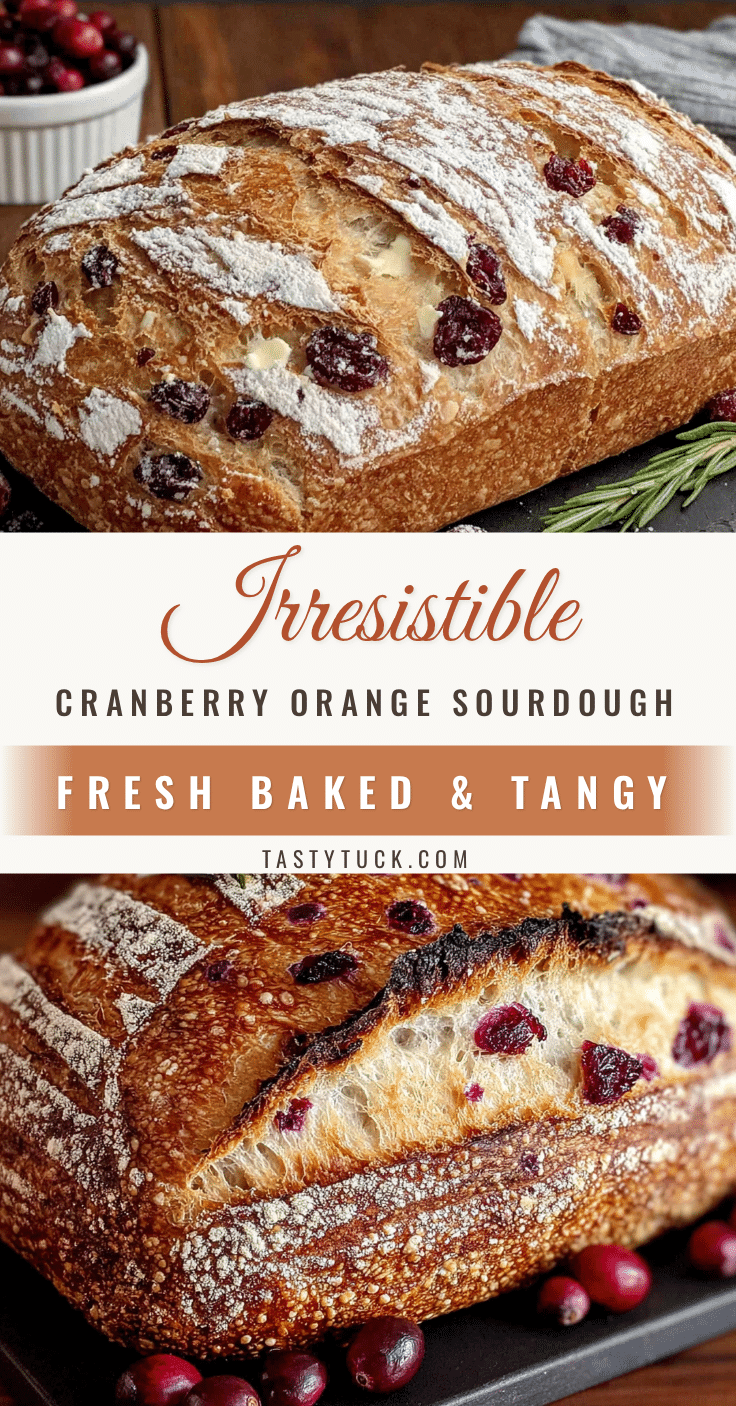
This cranberry orange sourdough loaf features an open, airy crumb with plump cranberries and bright orange zest. It’s the result of extensive testing to achieve reliable results every time, perfect for holiday brunch or a cozy morning toast.
- Prep Time: 30 minutes
- Cook Time: 45 minutes
- Total Time: 14 hours 15 minutes (includes overnight fermentation)
- Yield: 12 servings 1x
- Category: Bread
- Cuisine: American
Ingredients
- 100g active sourdough starter (fed 4–6 hours prior, bubbly and doubled in size)
- 500g bread flour (at least 12% protein content)
- 300g water, at room temperature (filtered recommended)
- 10g fine sea salt
- 150g fresh cranberries (frozen works, do not thaw)
- Zest of 2 medium oranges (use a microplane)
- 25g granulated sugar (optional, to balance tartness)
- Rice flour, for dusting bannetons
- Semolina or cornmeal, for dusting baking surface
Instructions
- Mix the Dough (9:00 AM): In a large bowl, combine 300g water and 100g active starter. Stir until the starter dissolves. Add 500g bread flour and mix with your hand or a dough whisk until no dry bits remain. Cover with plastic wrap and let rest for 30 minutes (autolyse).
- Add Salt and Sugar (9:30 AM): Sprinkle 10g salt and 25g sugar (if using) over the dough. Wet your hands slightly and fold the dough over itself several times until incorporated. Cover and rest for 30 minutes.
- Incorporate the Fruit (10:00 AM): Gently flatten the dough on your work surface (wet hands, no flour). Scatter orange zest and cranberries over the surface, then fold the dough over itself repeatedly until fruit is roughly distributed. Let rest 30 minutes.
- Series of Folds (10:30 AM to 1:00 PM): Perform four sets of stretch and folds at 30-minute intervals. For each set: wet your hand, reach under one side of the dough, stretch it up, and fold it over the top. Rotate the bowl a quarter turn and repeat four times total.
- Bulk Fermentation (1:00 PM to 5:00 PM): Cover the bowl and let the dough ferment at room temperature (70-75°F) for 4-5 hours, until increased by about 50%, feels airy and bubbly, and jiggles slightly when shaken.
- Shape and Cold Retard (5:00 PM): Turn dough onto a lightly floured surface. Gently shape into a round by folding edges toward center, then flip seam-side down and create surface tension. Place seam-side up in a floured banneton. Cover with plastic wrap and refrigerate overnight (12-16 hours).
- Bake (Next Morning, 9:00 AM): Place Dutch oven in oven and preheat to 500°F for at least 30 minutes. Remove dough from fridge, turn onto parchment paper, and score with a lame or sharp knife. Carefully transfer dough (on parchment) into hot Dutch oven. Cover and bake at 500°F for 20 minutes. Reduce temperature to 450°F, remove lid, and bake for another 20-25 minutes until deep golden brown (internal temperature 205-210°F). Cool on a wire rack for at least 2 hours before slicing.
Notes
Don’t overhydrate the dough; cranberries release moisture as they bake. Cold dough is easier to score—if too soft, freeze for 20 minutes before scoring. Place a baking sheet on the rack below to prevent burning the bottom. Day-old sourdough makes the best toast. Ensure starter is very active (doubles in 4-6 hours) for best results.
Nutrition
- Serving Size: 1 slice
- Calories: 180
- Sugar: 4
- Sodium: 195
- Fat: 1
- Carbohydrates: 36
- Fiber: 2
- Protein: 6
Keywords: sourdough, cranberry orange bread, artisan bread, holiday bread, homemade bread, sourdough loaf, cranberry bread