“Wait, did you just put orange peel in rice?” my friend asked, raising an eyebrow during one of those casual weekend dinners where I thought I’d try something a bit fancy. Honestly, I was as skeptical as she was at first. Persian jeweled rice with saffron and pistachios sounded like a dish you’d only find in a fancy restaurant or a royal feast, not something I could whip up after work. But one bite of that fluffy, fragrant rice dotted with jewel-like dried fruits and crunchy nuts changed the whole game for me. The zing of citrus peel mingled with the earthy warmth of saffron, and the pistachios added this perfect little crunch that made every mouthful feel like a celebration.
I remember the first time I made this recipe; it was a hectic evening, and I just wanted something impressive but not overly complicated. I grabbed what I had—basmati rice, saffron threads I’d picked up on a whim, some dried barberries, walnuts, and pistachios—and honestly, it came together in a way that felt like magic. The kitchen filled with this rich aroma that quieted the chaos of the day. Since then, I’ve found myself making this jeweled rice more than a few times a week. It’s become my go-to for adding a special touch to simple meals or when hosting friends who don’t know what hit them.
There’s something quietly satisfying about this dish—it’s not just about flavor but the way it connects you to a tradition, to a story. I guess that’s why it stuck around in my recipe rotation. You can almost close your eyes and imagine yourself sitting across the table in a cozy Persian home, sharing stories and laughter over a steaming platter of saffron-kissed rice. That subtle promise of warmth and comfort is what makes this jeweled rice recipe so special.
Why You’ll Love This Recipe
After countless attempts, tweaks, and happy accidents, this Flavorful Persian Jeweled Rice with Saffron and Pistachios recipe stands out for a bunch of reasons. I’m sharing it here with the confidence only a few truly reliable recipes earn.
- Quick & Easy: It comes together in under an hour, which means you can treat yourself to something special without spending all day in the kitchen.
- Simple Ingredients: You don’t need exotic or hard-to-find items. Most of these are pantry staples or easy to source at your local grocery or Middle Eastern market.
- Perfect for Celebrations: Whether it’s a holiday feast, a family dinner, or a potluck, this jeweled rice adds that wow factor effortlessly.
- Crowd-Pleaser: Kids and adults alike get hooked on the sweet-savory balance and the colorful presentation that makes the dish look as good as it tastes.
- Unbelievably Delicious: The saffron infuses the rice with a golden hue and deep aroma, while the pistachios add texture and richness that keeps every bite interesting.
What sets this recipe apart is the layering of flavors and textures. For example, I like to soak the saffron in warm water (or sometimes a splash of rose water) to coax out its full color and aroma before stirring it into the rice. Plus, lightly toasting the pistachios and walnuts brings out their nuttiness, which pairs beautifully with the tartness of dried barberries or cranberries. I’ve also swapped out dried apricots for a seasonal twist in summer, which adds a fresh burst of sweetness.
It’s not just a dish; it’s a little culinary journey that transforms humble rice into something festive, comforting, and memorable—without stress or fuss. Honestly, it’s the kind of recipe that makes you want to host just to share it around the table.
What Ingredients You Will Need
This recipe uses simple, wholesome ingredients to deliver bold flavor and satisfying texture without the fuss. Most of these are pantry-friendly, with a few special touches that bring the Persian flair.
- Long-grain Basmati Rice: 2 cups (about 400g), rinsed and soaked for 30 minutes (essential for fluffy, separate grains)
- Saffron Threads: 1/2 teaspoon, soaked in 2 tablespoons of hot water (or rose water) to release vibrant color and aroma
- Unsalted Butter: 3 tablespoons (adds richness and helps with the golden crust)
- Onion: 1 medium, finely chopped (for a gentle sweetness and depth)
- Pistachios: 1/2 cup, shelled and lightly toasted (for crunch and color)
- Walnuts: 1/3 cup, chopped and toasted (adds earthiness)
- Dried Barberries or Cranberries: 1/3 cup (traditional barberries are tart and bright, but cranberries work well too)
- Orange Peel: Zest from one medium orange, finely sliced into thin strips (adds fresh citrus notes)
- Carrots: 1 large, julienned or grated (for sweetness and vibrant color)
- Granulated Sugar: 2 tablespoons (balances tartness and enhances caramelization)
- Salt: 1 teaspoon (adjust to taste)
- Water or Chicken Broth: 3 cups (720ml) for cooking the rice (broth adds extra flavor)
For ingredient quality, I tend to pick saffron from trusted brands like Mehr or Saffron King for the best aroma and color. Choose firm pistachios with a bright green hue for freshness. If you can find dried barberries, they’re traditional, but dried cranberries or currants make a fine substitute. Feel free to swap walnuts for almonds if you prefer a milder nutty flavor. For a gluten-free version, this dish is naturally safe as is.
Equipment Needed
- Large Pot with Lid: For cooking the rice gently to fluffy perfection. A heavy-bottomed pot helps avoid scorching.
- Nonstick Skillet or Sauté Pan: To toast nuts and cook the carrot and onion mixture without sticking.
- Fine Mesh Sieve: Useful for rinsing and draining the rice thoroughly.
- Measuring Cups and Spoons: Precision matters for consistent results.
- Wooden Spoon or Silicone Spatula: For gentle stirring and folding without mashing the rice.
- Small Bowl: To soak saffron threads and infuse liquid.
If you don’t have a heavy-bottomed pot, a Dutch oven works great and retains heat evenly. For toasting nuts, a dry skillet is perfect, but you can also spread them on a baking sheet and toast briefly in the oven. I usually avoid electric rice cookers for this dish because the layering and gentle simmering are key for texture and the coveted crust (tahdig). For cleaning, a quick soak after cooking keeps pots in good shape—especially when butter and sugar caramelize a bit on the bottom.
Preparation Method
- Rinse and Soak the Rice: Rinse 2 cups (400g) of basmati rice under cold water until it runs clear to remove excess starch. Soak the rice in cold water for 30 minutes, then drain thoroughly. This step helps achieve the fluffy, separate grains characteristic of Persian rice.
- Prepare the Saffron: Place 1/2 teaspoon of saffron threads in a small bowl and pour 2 tablespoons of hot water (or rose water) over them. Let it steep for at least 10 minutes to release color and flavor.
- Cook the Onion and Carrots: Heat 3 tablespoons of unsalted butter in a nonstick skillet over medium heat. Add 1 finely chopped medium onion and sauté until translucent and soft, about 5 minutes. Stir in 1 large julienned carrot and cook for another 5 minutes until tender and slightly caramelized.
- Add Dried Fruits and Nuts: Toss in 1/3 cup dried barberries (or cranberries), 1/2 cup toasted pistachios, and 1/3 cup toasted walnuts. Stir gently with 2 tablespoons sugar and the finely sliced zest of one orange. Cook for 2-3 minutes until the fruits plump slightly and the sugar melts, creating a glossy coating.
- Cook the Rice: Bring 3 cups (720ml) of water or chicken broth to a boil in a large pot. Add 1 teaspoon salt and the drained rice. Boil uncovered until the rice is tender but still firm to bite, about 7-8 minutes. Drain the rice in a fine mesh sieve.
- Layer and Steam the Rice: Return the pot to medium heat and melt 1 tablespoon of butter. Add a thin layer of rice to the bottom, then drizzle half of the saffron water over it. Carefully layer the remaining rice on top. Cover the pot with a clean kitchen towel and secure the lid tightly to trap steam. Cook on low heat for 30-40 minutes to create the golden crust (tahdig) at the bottom.
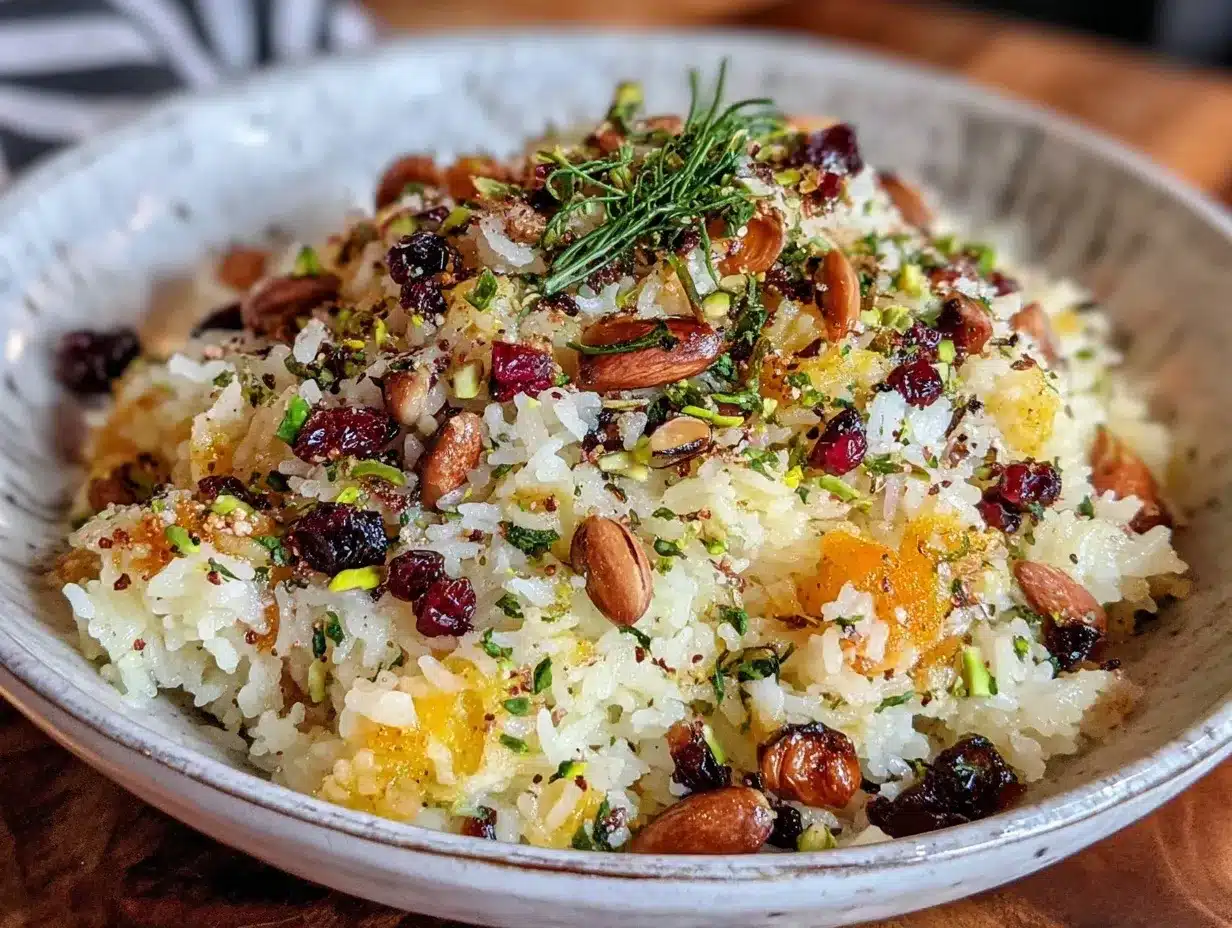
- Combine and Serve: Once the rice is steamed, gently fluff it with a fork, folding in the carrot, nut, and fruit mixture evenly. Serve warm on a large platter, letting the saffron’s aroma and jewel-like colors shine.
Tip: If you notice the rice sticking too much to the bottom or burning, lower the heat further and add a splash of water before covering. The tahdig should be golden but not burnt—patience is key here!
Cooking Tips & Techniques
Making this Persian jeweled rice is all about patience and layering flavors carefully. Here are some tips I’ve picked up along the way:
- Rinsing Rice Thoroughly: Don’t skip rinsing and soaking. It removes surface starch and prevents clumping, giving you that perfect fluffy texture.
- Saffron Infusion: Always steep your saffron threads in warm water or rose water for at least 10 minutes. It unlocks that vibrant golden color and rich aroma you want in every bite.
- Toasting Nuts: Toast pistachios and walnuts in a dry pan until fragrant but not burnt. This little step really boosts their flavor and adds crunch.
- Cooking the Rice: Boil the rice until just tender, then drain well. Overcooking at this stage can make the rice mushy when steamed.
- Creating Tahdig: The crispy golden crust at the bottom is a prized part of Persian rice. Use butter generously and cook on low heat. Cover the pot with a towel to trap steam and avoid condensation dripping back onto the rice.
- Folding in Add-ins: Fold the fruit and nut mixture into the rice gently to keep the grains intact and the texture light.
One thing I learned the hard way: rushing the steaming step ruins the tahdig and texture. So, give it the full 30-40 minutes on low heat, and you’ll be rewarded with that crisp, golden crust everyone raves about. Also, watch your heat carefully during nut toasting and carrot caramelizing — a minute too long and you’ll have bitter burnt bits instead of sweet, nutty flavors.
Variations & Adaptations
This jeweled rice recipe is flexible and lends itself well to tweaks depending on your mood, dietary needs, or what’s in season.
- Vegetarian/Vegan Version: Swap butter for olive oil or vegan margarine. Use vegetable broth in place of chicken broth for cooking the rice.
- Seasonal Fruits: In summer, fresh pomegranate seeds or chopped apricots can replace dried fruits for bright, juicy bursts of flavor.
- Nut Alternatives: Try almonds or pecans if pistachios aren’t available. Toast them lightly for the best flavor.
- Spice It Up: Add a pinch of cinnamon or cardamom to the carrot and nut mixture for a warm, fragrant twist.
- Low-Sodium Option: Reduce salt and use unsalted broth or water. The natural sweetness of the fruits and carrots keeps the dish flavorful.
Personally, I once added a handful of toasted pine nuts and a touch of rose water to the saffron soak for a slightly floral note that impressed my guests. It’s a fun way to make this dish your own without losing the essence of Persian flavors.
Serving & Storage Suggestions
This jeweled rice is best served warm, straight from the pot or platter, so the saffron aroma and textures shine. It pairs beautifully with grilled meats, stews, or even a simple yogurt cucumber salad for a refreshing counterpoint.
For a full Persian feast, I often serve it alongside comforting soups or vibrant roasted vegetable sides. The colors and flavors always make the table feel special.
If you have leftovers, store them in an airtight container in the fridge for up to 3 days. To reheat, sprinkle a little water over the rice and cover it with a damp paper towel or lid to retain moisture. Warm gently in the microwave or on the stovetop, stirring occasionally.
Flavors tend to meld beautifully after a day, so sometimes leftovers taste even better the next day. Just be sure to reheat thoroughly to bring back the aroma and texture.
Nutritional Information & Benefits
This Persian jeweled rice recipe offers more than just a feast for your taste buds. Per serving, it provides a balanced mix of carbohydrates, healthy fats, and a touch of protein from the nuts.
- Basmati rice is a good source of energy and has a lower glycemic index compared to other white rices, helping to keep blood sugar steadier.
- Saffron, while used in small amounts, has antioxidant properties and is known for mood-enhancing effects.
- Pistachios and walnuts contribute heart-healthy fats, protein, and fiber, supporting satiety and overall wellness.
- The dried fruits add natural sweetness and vitamins, along with a pop of tartness that balances the dish.
This dish is naturally gluten-free and can be adapted for vegan diets. Just be mindful if you have nut allergies—the nuts can be omitted or replaced with seeds like pumpkin or sunflower for crunch.
Conclusion
This Flavorful Persian Jeweled Rice with Saffron and Pistachios is one of those recipes that feels special without needing a fuss. It’s colorful, aromatic, and full of layers you can taste and see in every bite. Whether you’re wanting to impress guests or simply bring a little joy to your dinner routine, this jeweled rice has a way of making meals feel a bit more festive and cozy at the same time.
Feel free to customize the ingredients and spices to suit your preferences—you might even find yourself making it as often as I do! I love how it brings a touch of Persian tradition to my kitchen without overwhelm or complexity.
Give this recipe a try, and if you happen to enjoy it, I’d love to hear how you made it your own. Maybe it’ll become your new favorite comfort dish, just like it did for me.
FAQs
- Can I use regular white rice instead of basmati? You can, but basmati rice is preferred for its fragrance and fluffy texture. Regular rice might be stickier.
- What if I don’t have dried barberries? Dried cranberries or currants make excellent substitutes with similar tartness.
- How do I get the perfect tahdig (crispy rice crust)? Use low heat, butter generously, and cover the pot tightly with a towel to trap steam while cooking for 30-40 minutes.
- Can this recipe be made ahead of time? Yes, the rice can be cooked and mixed a few hours ahead and reheated gently before serving.
- Is there a vegan version of this jeweled rice? Absolutely! Swap butter for olive oil or vegan margarine and use vegetable broth instead of chicken broth.
Pin This Recipe!
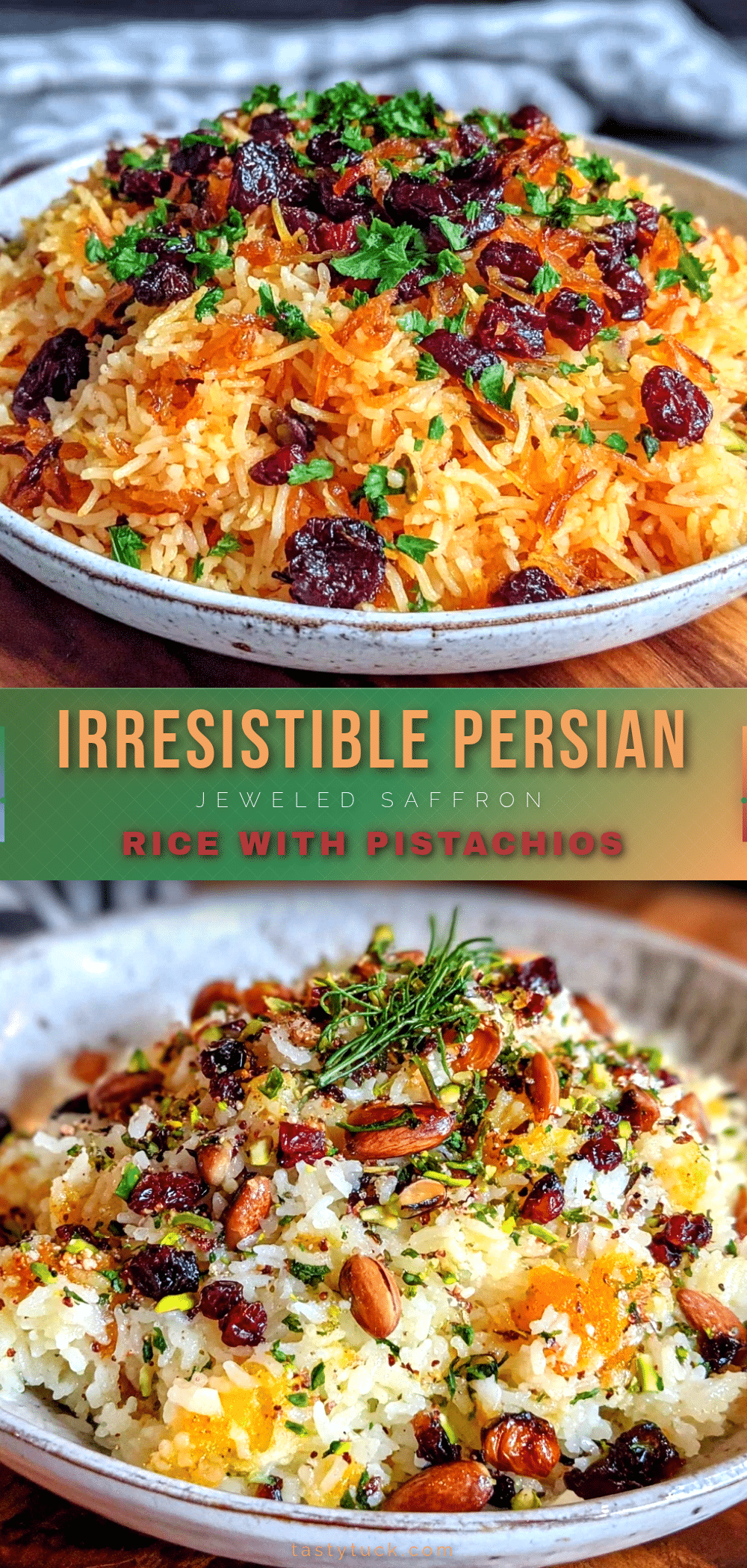
Flavorful Persian Jeweled Rice Recipe with Saffron and Pistachios Made Easy

A fragrant and colorful Persian jeweled rice dish featuring saffron, pistachios, dried fruits, and a golden crispy crust, perfect for celebrations or everyday meals.
- Prep Time: 40 minutes
- Cook Time: 40 minutes
- Total Time: 1 hour 20 minutes
- Yield: 6 servings 1x
- Category: Main Course
- Cuisine: Persian
Ingredients
- 2 cups long-grain basmati rice (about 400g), rinsed and soaked for 30 minutes
- 1/2 teaspoon saffron threads, soaked in 2 tablespoons hot water or rose water
- 3 tablespoons unsalted butter
- 1 medium onion, finely chopped
- 1/2 cup shelled pistachios, lightly toasted
- 1/3 cup walnuts, chopped and toasted
- 1/3 cup dried barberries or dried cranberries
- Zest from 1 medium orange, finely sliced into thin strips
- 1 large carrot, julienned or grated
- 2 tablespoons granulated sugar
- 1 teaspoon salt (adjust to taste)
- 3 cups water or chicken broth (720 ml) for cooking the rice
Instructions
- Rinse 2 cups (400g) of basmati rice under cold water until it runs clear to remove excess starch. Soak the rice in cold water for 30 minutes, then drain thoroughly.
- Place 1/2 teaspoon of saffron threads in a small bowl and pour 2 tablespoons of hot water or rose water over them. Let steep for at least 10 minutes to release color and flavor.
- Heat 3 tablespoons of unsalted butter in a nonstick skillet over medium heat. Add 1 finely chopped medium onion and sauté until translucent and soft, about 5 minutes.
- Stir in 1 large julienned carrot and cook for another 5 minutes until tender and slightly caramelized.
- Add 1/3 cup dried barberries (or cranberries), 1/2 cup toasted pistachios, and 1/3 cup toasted walnuts. Stir gently with 2 tablespoons sugar and the finely sliced zest of one orange. Cook for 2-3 minutes until the fruits plump slightly and the sugar melts, creating a glossy coating.
- Bring 3 cups (720 ml) of water or chicken broth to a boil in a large pot. Add 1 teaspoon salt and the drained rice. Boil uncovered until the rice is tender but still firm to bite, about 7-8 minutes. Drain the rice in a fine mesh sieve.
- Return the pot to medium heat and melt 1 tablespoon of butter. Add a thin layer of rice to the bottom, then drizzle half of the saffron water over it. Carefully layer the remaining rice on top.
- Cover the pot with a clean kitchen towel and secure the lid tightly to trap steam. Cook on low heat for 30-40 minutes to create the golden crust (tahdig) at the bottom.
- Once the rice is steamed, gently fluff it with a fork, folding in the carrot, nut, and fruit mixture evenly. Serve warm on a large platter.
Notes
Use low heat and cover the pot tightly with a towel to trap steam and create the prized tahdig crust. Toast nuts lightly until fragrant but not burnt. Soak saffron in warm water or rose water for at least 10 minutes to maximize color and aroma. For vegan version, substitute butter with olive oil or vegan margarine and use vegetable broth instead of chicken broth. Leftovers store well in the fridge for up to 3 days; reheat gently with a splash of water to retain moisture.
Nutrition
- Serving Size: 1 cup cooked rice mi
- Calories: 320
- Sugar: 7
- Sodium: 350
- Fat: 15
- Saturated Fat: 5
- Carbohydrates: 38
- Fiber: 3
- Protein: 7
Keywords: Persian rice, jeweled rice, saffron rice, pistachios, basmati rice, tahdig, Persian cuisine, festive rice dish, Middle Eastern rice