Bratwursts sizzling in the cast iron when the smell hit me—sharp, tangy, and downright comforting—and I realized I’d forgotten to pick up the rolls. It was one of those weeknights where the plan was solid but the execution was, well, wobbly. I had a pack of good brats from the butcher, a jar of sauerkraut that had been hiding in the back of the fridge, and maybe twenty minutes before everyone started circling the kitchen asking what was for dinner. No buns, no mustard, no fancy toppings. Just the sausages and that kraut staring at each other from opposite ends of the counter.
So I did what any reasonable, slightly frazzled home cook would do—I threw them in the same skillet and hoped for the best. I figured the kraut would keep the brats from drying out, and the brats would flavor the kraut with all that juicy, smoky goodness. And honestly? It was one of those accidents that turns into a staple. The sauerkraut softened and soaked up the sausage fat, getting mellow and almost sweet. The brats came out plump and tender, with crispy browned edges. We ate it straight out of the pan with forks, no bun needed. It was messy, perfect, and exactly what a cold Tuesday night needed.
That’s how this Bavarian Bratwurst and Sauerkraut Skillet was born—not from a trip to Munich or a family heirloom recipe, but from a pantry scramble and a hungry family. And now it’s the meal I turn to when I want something hearty, fast, and deeply satisfying without a lot of fuss. If you’ve ever stood in front of an open fridge wondering what to make, this one’s for you.
Why You’ll Love This Recipe
I’ve tested this skillet more times than I can count, tweaking the heat, the timing, and the add-ins until it was just right. Here’s why it keeps ending up on my table:
- Quick & Easy: From fridge to table in about 30 minutes. No marinating, no complicated steps—just one pan and a little patience.
- Simple Ingredients: You only need a handful of things, most of which you probably already have. No fancy grocery runs required.
- Perfect for Busy Weeknights: This is the kind of dinner that saves you when you’re tired, hungry, and out of ideas. It’s filling without being heavy.
- Crowd-Pleaser: Even folks who think they don’t like sauerkraut end up going back for seconds. The caramelized onions and apples do some serious heavy lifting here.
- Unbelievably Delicious: The contrast between the juicy, snappy bratwurst and the tangy, sweet kraut is next-level comfort food. It’s hearty, savory, and just a little bit special.
What makes this version different? It’s the layering of flavors—browning the brats first, then cooking the onions and apples in the rendered fat, and finally letting everything meld together in the skillet. It’s not just a dump-and-stir recipe. It’s a little more thoughtful, and you can taste it. Plus, it’s naturally gluten-free and low-carb if you skip the beer, making it a great option for almost any diet.
This isn’t just a good recipe—it’s the kind that makes you close your eyes after the first bite. It’s comfort food reimagined: rustic, honest, and deeply satisfying. Perfect for impressing guests without stress, or turning a simple Tuesday into something memorable.
What Ingredients You Will Need
This recipe uses simple, wholesome ingredients to deliver bold flavor and satisfying texture without the fuss. Most of these are pantry staples or easy to find at any grocery store.
- Bratwurst sausages (4-6 links, about 1.5 lbs): Look for fresh, uncooked bratwurst from the butcher counter or a good-quality brand like Johnsonville. Avoid pre-cooked or smoked brats—they won’t get that same juicy texture. If you can find traditional Bavarian-style brats with a hint of marjoram and nutmeg, even better.
- Sauerkraut (1 jar or bag, about 16 oz): I prefer refrigerated sauerkraut over the canned stuff—it’s crunchier and has a livelier tang. Rinse it briefly if you’re sensitive to saltiness, but I usually don’t bother. The flavor mellows as it cooks.
- Yellow onion (1 large): Sliced thin so it caramelizes and melts into the kraut. A sweet onion like Vidalia works great too.
- Apple (1 medium, preferably Granny Smith or Honeycrisp): This is my secret weapon. A grated or thinly sliced apple adds a subtle sweetness that balances the sour kraut beautifully. Don’t skip it—it makes the dish.
- Beer (1/2 cup, optional): A light lager or ale adds depth and helps deglaze the pan. Use a gluten-free beer if needed, or just swap in chicken broth—it’s still delicious.
- Butter or oil (2 tablespoons): For browning the brats and cooking the onions. Butter adds richness, but olive oil works fine.
- Caraway seeds (1 teaspoon): Optional but traditional. They add that classic rye-bread flavor that pairs so well with kraut. Crush them slightly before adding to release the oils.
- Salt and pepper: Go easy on the salt—the brats and kraut are already salty. A good crack of black pepper is all you need.
- Fresh parsley (for garnish): A sprinkle of green at the end makes it look finished and adds a fresh pop of flavor.
I recommend using a good-quality bratwurst—it makes a real difference. Johnsonville is reliable, but if your local butcher makes their own, grab those. The apple is non-negotiable in my book; it’s the little touch that turns this from good to great. For a dairy-free option, swap the butter for avocado oil.
Equipment Needed
You don’t need much for this one-pan wonder, which is part of the beauty.
- Large cast-iron skillet (12-inch): My go-to for even browning and heat retention. If you don’t have cast iron, a heavy-bottomed stainless steel or nonstick skillet works fine—just watch the heat so the brats don’t burn.
- Sharp knife and cutting board: For slicing the onion and apple. A mandoline makes quick work of thin, even slices if you have one.
- Tongs: Essential for flipping the brats without piercing them. Piercing releases the juices and dries them out.
- Wooden spoon or spatula: For stirring the kraut and scraping up the browned bits from the pan.
- Lid or foil: To cover the skillet during the final simmering stage. This traps steam and keeps everything moist.
If you’re new to cast iron, don’t be intimidated. A well-seasoned pan is naturally nonstick and gets better with use. Just make sure it’s hot before you add the brats, and let them brown undisturbed for a few minutes—they’ll release on their own when they’re ready.
Preparation Method

- Prep your ingredients first. Slice the onion into thin half-rings. Core the apple and slice it thinly (peel on is fine—it adds texture). Chop the parsley. Open the sauerkraut and drain it slightly, but don’t rinse unless you’re salt-sensitive.
- Brown the bratwurst. Heat your skillet over medium-high heat and add 1 tablespoon of butter or oil. Once it’s shimmering, add the bratwurst links in a single layer. Cook for 4-5 minutes per side, until they’re deep golden brown all over. Don’t crowd the pan—work in batches if needed. Set the brats aside on a plate. They won’t be fully cooked through yet, and that’s fine.
- Cook the onions and apple. Lower the heat to medium and add the remaining tablespoon of butter. Toss in the sliced onion and apple, plus the caraway seeds if using. Stir and scrape up any browned bits from the bottom of the pan—that’s pure flavor. Cook for 5-7 minutes, until the onion is soft and starting to turn golden at the edges.
- Deglaze with beer (or broth). Pour in the beer and let it bubble for a minute, scraping the pan with your wooden spoon. The alcohol will cook off, leaving behind a rich, malty flavor. If you’re using broth, just let it simmer for a minute to reduce slightly.
- Add the sauerkraut. Dump the drained sauerkraut into the skillet and stir everything together. Spread it into an even layer. Nestle the browned bratwurst back into the kraut, pushing them down so they’re partially submerged.
- Simmer and finish. Reduce the heat to low, cover the skillet with a lid or foil, and let it cook for 15-20 minutes. The brats will finish cooking through, and the kraut will soak up all those delicious juices. The smell at this point is absolutely intoxicating—tangy, savory, and a little sweet.
- Check for doneness. An instant-read thermometer should read 160°F in the center of the brats. If not, cover and cook for another 5 minutes. Once done, let the skillet rest uncovered for 2-3 minutes—this lets the juices settle.
- Serve and garnish. Sprinkle with fresh parsley and serve straight from the skillet. Spoon the kraut over the brats, or slice the brats and mix everything together. Either way, it’s fantastic.
Pro tip: If you want extra crispy edges on your brats, after simmering, remove the lid and crank the heat to high for 1-2 minutes. Watch closely so they don’t burn—you’re just looking to crisp up the casings.
Cooking Tips & Techniques
I’ve made this skillet more times than I can count, and I’ve learned a few things the hard way. Here’s what I wish I’d known from the start:
- Don’t pierce the brats. I know it’s tempting to poke them with a fork to check doneness, but resist. Every puncture lets precious juices escape, and you’ll end up with dry sausages. Use tongs to flip them gently.
- Low and slow for the kraut. Sauerkraut benefits from a gentle simmer. High heat makes it tough and overly sour. Let it cozy up in the pan with the brats and onions, and it’ll mellow into something almost creamy.
- Taste as you go. Kraut brands vary wildly in saltiness and tang. Taste it before adding any extra salt—you might not need any. I usually add just a pinch of black pepper and call it done.
- Let the skillet rest. I know you’re hungry, but letting the pan sit for a few minutes off the heat allows the flavors to meld. The brats will be juicier, and the kraut will be more cohesive.
- Multitask like a pro. While the brats are browning, slice the onion and apple. While the onions cook, open the kraut and chop the parsley. By the time you’re ready to simmer, everything else is done.
One time I forgot to add the apple, and the dish was noticeably flatter—still good, but missing that little spark of sweetness. The apple isn’t just a garnish; it’s a balancing act. Don’t skip it.
Variations & Adaptations
This skillet is endlessly adaptable, and I love playing around with it depending on the season or what’s in the fridge.
- Beer-Free Version: Swap the beer for chicken or vegetable broth, plus a splash of apple cider vinegar for tang. It’s just as flavorful and works for anyone avoiding alcohol.
- Spicy Twist: Use hot Italian sausage or andouille instead of bratwurst, and add a diced jalapeño or a pinch of red pepper flakes with the onions. It’s a fun, fiery take on the classic.
- Add Potatoes: Cube 2-3 Yukon Gold potatoes, parboil them for 5 minutes, then add them to the skillet with the kraut. They’ll soak up all the juices and turn into little flavor bombs. This makes it a complete one-pan meal.
- Keto-Friendly: Skip the apple and beer, and use extra butter or bacon fat. Serve with a side of roasted Brussels sprouts or cauliflower mash. The brats and kraut are naturally low-carb.
- Smoky Version: Add 4-5 slices of chopped bacon to the pan before the onions. Cook until crispy, then remove the bacon and proceed with the recipe. Crumble the bacon over the finished dish. It’s indulgent and incredible.
- Dairy-Free: Use olive oil or avocado oil instead of butter. Everything else is naturally dairy-free, so you’re good to go.
I’ve tried the potato variation on a chilly fall evening, and it was exactly what I needed—hearty, warming, and deeply satisfying. The potatoes absorbed all the bratwurst drippings and turned golden on the bottom. Highly recommend.
Serving & Storage Suggestions
This skillet is a meal in itself, but a few simple sides can round it out beautifully.
- Serving Temperature: Serve hot, straight from the skillet. The kraut should be steaming, and the brats should be juicy and warm. Room temperature leftovers are also surprisingly good the next day.
- Presentation: Garnish with fresh parsley or chives for a pop of green. A dollop of whole-grain mustard on the side is traditional and adds a nice sharpness. If you have rye bread or crusty sourdough, serve it alongside for sopping up the juices.
- Complementary Dishes: A simple cucumber salad with dill and vinegar cuts through the richness. Roasted carrots or a crisp green salad with a tangy vinaigrette also work well. For a heartier meal, serve with crispy cast iron cornbread or loaded potato salad for a true comfort food feast.
- Storage: Store leftovers in an airtight container in the fridge for up to 4 days. The flavors actually get better as they meld overnight. Reheat gently in a skillet over medium-low heat, adding a splash of water or broth if the kraut seems dry. Avoid the microwave—it can make the brats rubbery.
- Freezing: This freezes well for up to 3 months. Let it cool completely, then transfer to a freezer-safe container. Thaw overnight in the fridge and reheat in a skillet. The texture of the kraut softens a bit, but the flavor remains excellent.
I’ve found that leftover skillet makes an incredible next-day lunch. The brats slice easily, and the kraut is even more mellow and flavorful. It’s one of those rare dishes that improves with a little time.
Nutritional Information & Benefits
This recipe is naturally high in protein and low in carbs, making it a great option for balanced eating. Here’s an approximate breakdown per serving (based on 4 servings, with beer):
- Calories: 420-480
- Protein: 22-26g
- Fat: 30-35g
- Carbohydrates: 12-15g
- Fiber: 4-6g
- Sugar: 6-8g (from apple and onion)
- Sodium: 900-1100mg (varies by kraut brand)
Health benefits: Sauerkraut is a fermented food, rich in probiotics that support gut health. It’s also packed with vitamin C and antioxidants. The apple adds fiber and natural sweetness without refined sugar. Bratwurst provides high-quality protein and B vitamins. If you’re watching your sodium, rinse the sauerkraut before cooking to reduce salt content.
This dish is naturally gluten-free (if you use gluten-free beer or broth) and can be made dairy-free easily. It’s also suitable for low-carb and keto diets with the apple omitted. I love that I can serve this to my family knowing it’s both satisfying and nourishing—no guilt, just good food.
Conclusion
This Bavarian Bratwurst and Sauerkraut Skillet is the kind of recipe that proves you don’t need a dozen ingredients or hours in the kitchen to make something truly memorable. It’s rustic, honest, and packed with flavor that tastes like it simmered all day—even though it only takes about 30 minutes. The juicy brats, the tangy-sweet kraut, the soft caramelized onions and apple—every bite is a little piece of comfort.
I hope you make this your own. Add more apple, swap in a different sausage, pile it on a bun—whatever feels right. That’s the beauty of a one-pan meal; it’s forgiving, flexible, and always delicious. If you try it, I’d love to hear how it turned out. Leave a comment below or tag me in your photos—it honestly makes my day to see these recipes in your kitchens.
So grab that skillet, open a jar of kraut, and get cooking. Your taste buds (and your busy schedule) will thank you. And if you’re looking for another easy, comforting one-pan meal, don’t miss this Midwest walking taco casserole—it’s another family favorite that comes together fast.
Frequently Asked Questions
Can I use pre-cooked bratwurst for this recipe?
Yes, but the texture will be different. Pre-cooked brats are already fully cooked, so you’ll just be browning and heating them through. Reduce the simmering time to 5-7 minutes to avoid drying them out. Fresh brats give you that juicy, snappy texture that’s really the star of this dish.
How do I keep the bratwurst from drying out?
Don’t pierce them with a fork, and don’t overcook them. Browning them first at medium-high heat seals in the juices, and the gentle simmer in the kraat keeps them moist. Using a meat thermometer ensures you hit 160°F without going over.
Can I make this in a slow cooker or Instant Pot?
Absolutely. For a slow cooker, brown the brats and onions first in a skillet, then transfer everything to the slow cooker and cook on low for 4-6 hours. For an Instant Pot, use the sauté function to brown, then pressure cook on high for 10 minutes with a quick release. The texture will be softer but still delicious.
What’s the best beer to use for this recipe?
A light lager or pilsner is ideal—think something crisp and not too hoppy. A German-style beer like Oktoberfest or a simple Budweiser works great. Dark beers can be too bitter. If you don’t drink beer, chicken broth with a splash of apple cider vinegar is a perfect substitute.
Can I add other vegetables to the skillet?
Yes! Sliced bell peppers, shredded carrots, or even green beans are great additions. Add them with the onions so they have time to soften. For a heartier meal, cubed potatoes or sliced mushrooms are fantastic. Just adjust the cooking time as needed.
If you enjoyed this recipe, you might also love this flavorful Cajun gumbo for another one-pot wonder that’s big on flavor and short on fuss.
Pin This Recipe!
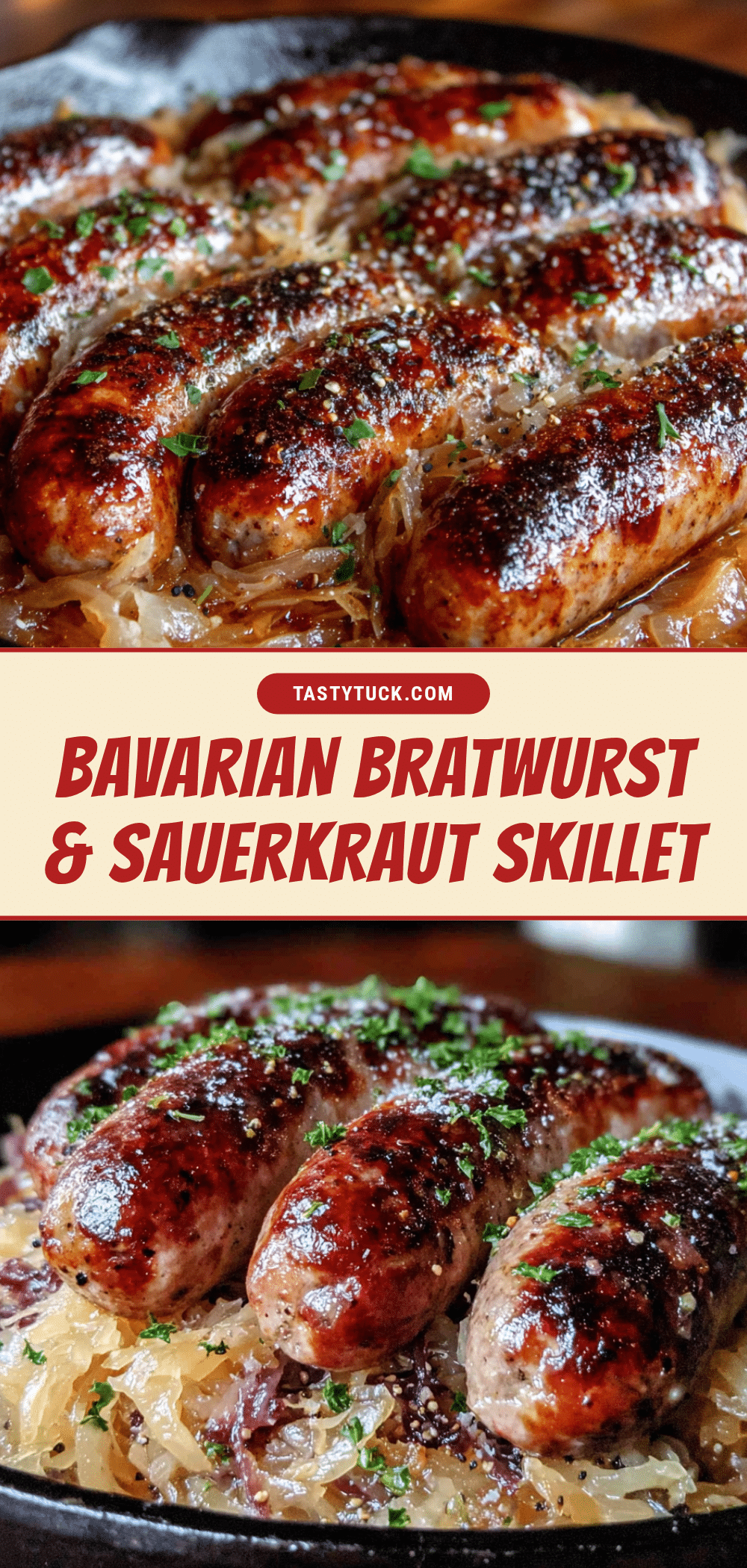
Best Easy Bavarian Bratwurst and Sauerkraut Skillet Recipe

A quick and easy one-pan meal featuring juicy bratwurst, tangy sauerkraut, caramelized onions, and sweet apples. Perfect for busy weeknights, this rustic skillet dinner is hearty, comforting, and ready in about 30 minutes.
- Prep Time: 10 minutes
- Cook Time: 25 minutes
- Total Time: 35 minutes
- Yield: 4 servings 1x
- Category: Main Course
- Cuisine: German
Ingredients
- 4–6 bratwurst sausages (about 1.5 lbs)
- 1 jar or bag sauerkraut (about 16 oz)
- 1 large yellow onion, sliced thin
- 1 medium apple (Granny Smith or Honeycrisp), sliced thin
- 1/2 cup beer (optional, or use chicken broth)
- 2 tablespoons butter or oil
- 1 teaspoon caraway seeds (optional)
- Salt and pepper to taste
- Fresh parsley for garnish
Instructions
- Prep ingredients: slice onion into thin half-rings, core and slice apple, chop parsley, drain sauerkraut slightly.
- Heat skillet over medium-high heat, add 1 tablespoon butter or oil. Brown bratwurst for 4-5 minutes per side until deep golden brown. Set aside.
- Reduce heat to medium, add remaining butter. Cook onion, apple, and caraway seeds for 5-7 minutes until soft and golden, scraping up browned bits.
- Deglaze with beer or broth, let bubble for 1 minute.
- Add sauerkraut, stir to combine. Nestle bratwurst back into the kraut.
- Reduce heat to low, cover, and simmer for 15-20 minutes until brats reach 160°F internally.
- Let rest uncovered for 2-3 minutes. Garnish with parsley and serve.
Notes
Don’t pierce the brats to keep them juicy. The apple adds sweetness that balances the sauerkraut. For extra crispy edges, uncover and increase heat for 1-2 minutes at the end.
Nutrition
- Serving Size: 1 serving (about 1 b
- Calories: 450
- Sugar: 7
- Sodium: 1000
- Fat: 32
- Saturated Fat: 12
- Carbohydrates: 14
- Fiber: 5
- Protein: 24
Keywords: bratwurst, sauerkraut, skillet, one-pan, German, quick dinner, weeknight meal