I wasn’t expecting baking advice from the man fixing my washing machine, but there I was, standing in my kitchen on a drizzly Tuesday morning, a wrench in his hand and a recipe on his lips. He’d noticed the persimmons ripening on my counter and simply said, “You know, my grandmother used to make a cake with those that would stop a family fight cold.” I laughed, thinking he was exaggerating. But the way he described it—caramel bubbling like amber, fruit turning jammy and sweet—I couldn’t shake the image. He was a quiet guy, the kind who talks more to the machine than to people, so when he started scribbling on a scrap of paper from his truck, I paid attention. Honestly, I almost lost the note in the pile of mail on my desk, but something told me to hold onto it. Maybe you’ve been there—where a recipe finds you, not the other way around.
That scrap of paper became my obsession for a week. I tried it the first time and, okay, I’ll admit it, I flipped the cake too early and half of it stuck to the pan. What a mess. But the part that survived? It was this incredible, sticky, fragrant thing that smelled like autumn in a skillet. I knew I had to get it right. This Cozy Sticky Caramel Persimmon Upside-Down Cake is the result of that persistence. It’s the kind of dessert that feels like a warm blanket on a cold day, the one you pull out when you need a little sweetness in your life. And honestly, I keep making it because it reminds me that the best things often come from the most unexpected places—and from the quietest people.
Why You’ll Love This Recipe
This isn’t just another upside-down cake. This is the one that will make you close your eyes after the first bite. I’ve tested this recipe more times than I’d like to admit, tweaking the caramel so it stays sticky but not hard, and figuring out the perfect ripeness for the persimmons. It’s comfort food reimagined—richer, warmer, and with that soul-soothing satisfaction you crave on a slow evening at home.
- Quick & Easy: Comes together in under an hour, perfect for when you need a cozy dessert fix without a complicated project.
- Simple Ingredients: No fancy grocery trips needed. If you have flour, sugar, butter, and a few ripe persimmons, you’re already halfway there.
- Perfect for a Cozy Night: Great for a cold weather weekend, a holiday gathering, or just a Tuesday that needs a little fixing.
- Crowd-Pleaser: The sticky caramel and tender fruit get rave reviews from everyone, from kids to the pickiest eaters.
- Unbelievably Delicious: The texture is incredible—a soft, buttery cake against that luscious, jammy persimmon topping. It’s next-level comfort food.
What makes this recipe different? It’s the balance. The caramel isn’t too sweet, the persimmons bring a honeyed floral note, and the cake itself is sturdy enough to hold everything together. It’s your best version of an upside-down cake, perfected through trial and a little bit of error.
What Ingredients You Will Need
This recipe uses simple, wholesome ingredients to deliver bold flavor and satisfying texture without the fuss. Most of these are pantry staples, and the persimmons are the star of the show. Here’s what you’ll need:
For the Caramel Topping
- 1/2 cup (113g) unsalted butter, cut into pieces
- 1 cup (200g) packed light brown sugar (I prefer Domino for consistent results)
- 1/4 cup (60ml) heavy cream (adds richness)
- 1 teaspoon vanilla extract
- Pinch of sea salt (to balance the sweetness)
For the Persimmon Layer
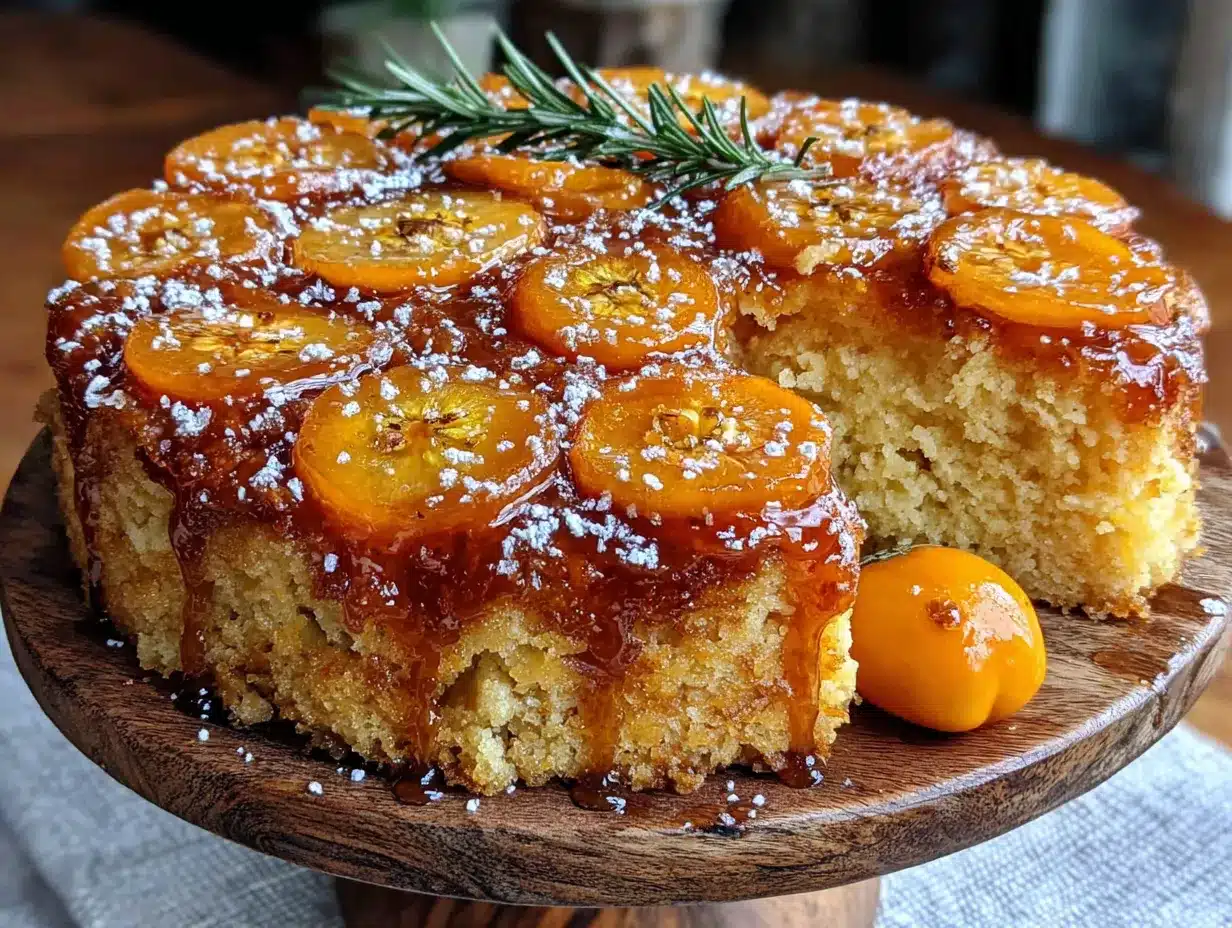
- 3-4 ripe Fuyu persimmons, peeled and sliced into 1/4-inch rounds (look for ones that are firm but give slightly to pressure, like a ripe tomato)
- 1 tablespoon lemon juice (keeps them from browning and brightens the flavor)
For the Cake Batter
- 1 1/2 cups (190g) all-purpose flour
- 1 1/2 teaspoons baking powder
- 1/2 teaspoon baking soda
- 1/2 teaspoon salt
- 1 teaspoon ground cinnamon (adds warmth)
- 1/2 teaspoon ground ginger (optional, but I love the subtle kick)
- 1/2 cup (113g) unsalted butter, softened
- 3/4 cup (150g) granulated sugar
- 2 large eggs, room temperature
- 1 teaspoon vanilla extract
- 1/2 cup (120ml) buttermilk (or use 1/2 cup milk + 1/2 tablespoon lemon juice, let sit 5 minutes)
Ingredient Tips: For the persimmons, I recommend using Fuyu persimmons (the squat, tomato-shaped ones) as they stay firm when baked. Hachiya persimmons are too soft and astringent unless fully ripe, and even then, they can get mushy. If you can’t find buttermilk, the milk and lemon juice trick works perfectly. For a dairy-free option, swap the butter for a high-quality vegan butter and use a dairy-free cream in the caramel.
Equipment Needed
You don’t need a fancy kitchen to pull this off, but having the right tools makes everything smoother. Here’s what you’ll need:
- 9-inch round cake pan: A metal or heavy-duty nonstick pan works best for even caramelization. I’ve used a glass dish before, but the caramel can stick more.
- Electric mixer: A hand mixer or stand mixer works fine. You can do it by hand, but your arm will get a workout.
- Mixing bowls: One large, one medium.
- Whisk and spatula: A silicone spatula is your best friend for scraping every bit of caramel.
- Sharp knife and cutting board: For slicing the persimmons evenly.
- Cooling rack: Essential for letting the cake rest before flipping.
- Serving plate: A flat plate with a slight lip is ideal to catch any extra caramel drips.
Budget-Friendly Tip: If you don’t have a cooling rack, you can use the grates from your oven (after they’ve cooled down, of course). And if you’re using a nonstick pan, you can skip greasing it heavily, but I still recommend a light buttering for insurance.
Preparation Method
Let’s get to the good part. This method is broken down into clear steps, and I’ve added a few notes from my own trials to help you avoid my sticky mistakes.
Step 1: Prepare the Caramel Topping
- Preheat your oven to 350°F (175°C). Place your 9-inch cake pan on a baking sheet (this catches any drips and makes handling easier).
- In a small saucepan over medium heat, melt the 1/2 cup (113g) of unsalted butter. Once melted, add the 1 cup (200g) of packed light brown sugar and the 1/4 cup (60ml) of heavy cream.
- Stir constantly with a whisk until the mixture is smooth and bubbly, about 2-3 minutes. It should look like a thick, glossy caramel sauce. Remove from heat and stir in the vanilla extract and a pinch of sea salt.
- Pour the caramel into the bottom of your prepared cake pan. Tilt the pan to spread it evenly. Let it cool for 5 minutes while you prepare the fruit.
Personal Tip: Don’t walk away from the caramel. I did once, and it bubbled over the pan. A mess, but also a lesson. Keep the heat on medium, not high.
Step 2: Arrange the Persimmons
- Peel the persimmons and slice them into even 1/4-inch (6mm) rounds. You should get about 4-5 slices per persimmon.
- Toss the slices gently with the 1 tablespoon of lemon juice. This prevents browning and adds a tiny bit of acidity to balance the sweet caramel.
- Arrange the persimmon slices over the warm caramel in a single, overlapping layer. Start from the outside and work your way in, like you’re tiling a floor. Don’t worry if there are small gaps—the cake will fill them in.
Sensory Cue: The persimmons should look glossy and jewel-like against the amber caramel. It’s already beautiful, and you haven’t even added the batter yet.
Step 3: Make the Cake Batter
- In a medium bowl, whisk together the 1 1/2 cups (190g) all-purpose flour, 1 1/2 teaspoons baking powder, 1/2 teaspoon baking soda, 1/2 teaspoon salt, 1 teaspoon ground cinnamon, and 1/2 teaspoon ground ginger. Set aside.
- In a large bowl, beat the 1/2 cup (113g) softened unsalted butter and 3/4 cup (150g) granulated sugar together with an electric mixer on medium speed until light and fluffy, about 3 minutes. It should look pale and creamy.
- Add the 2 large eggs, one at a time, beating well after each addition. Scrape down the sides of the bowl as needed. Beat in the 1 teaspoon of vanilla extract.
- With the mixer on low speed, add the flour mixture in three additions, alternating with the 1/2 cup (120ml) of buttermilk. Start and end with the flour. Mix just until combined—do not overmix, or the cake will be tough.
- The batter will be thick and fluffy. Give it one last stir with a spatula to make sure everything is incorporated from the bottom.
Troubleshooting Tip: If your batter looks curdled after adding the eggs, it’s likely because the butter and eggs were too cold. Room temperature ingredients are key here. If it happens, don’t panic—the cake will still bake up fine, just maybe a little denser.
Step 4: Assemble and Bake
- Carefully spoon the batter over the arranged persimmons. Use a spatula to spread it evenly, reaching all the way to the edges of the pan. It’s okay if the batter doesn’t completely cover every bit of fruit at first—it will spread as it bakes.
- Place the pan (on its baking sheet) in the preheated oven. Bake for 35-40 minutes, or until the top is golden brown and a toothpick inserted into the center of the cake comes out clean or with a few moist crumbs.
- Let the cake cool in the pan on a wire rack for exactly 10 minutes. This is critical—too short, and the caramel won’t have set enough to hold the fruit; too long, and the caramel will stick to the pan.
Warning: Do not skip the cooling time. I learned this the hard way. After 10 minutes, run a knife around the edge of the pan to loosen any caramel that might have crept up the sides.
Step 5: Flip the Cake
- Place your serving plate upside down on top of the cake pan. Using oven mitts (the pan is still hot), carefully flip the pan and plate together in one swift, confident motion.
- Let the pan sit on top of the plate for 2-3 minutes without lifting it. This allows the caramel to slowly drizzle down over the cake. Then, slowly lift the pan off. If any persimmon slices stick, just nudge them back into place with a spatula.
- Serve the cake warm or at room temperature. The caramel will be sticky and glorious.
Sensory Cue: The sound of the caramel dripping onto the plate is pure satisfaction. The aroma of cinnamon, ginger, and caramelized fruit will fill your entire house.
Cooking Tips & Techniques
Over the course of perfecting this cake, I’ve made every mistake you can imagine. Here’s what I’ve learned so you don’t have to repeat my failures.
Master the Caramel: The key to a sticky, not hard, caramel is not overcooking it. Once the butter and sugar have melted and the mixture is bubbly, take it off the heat. If you cook it too long, the caramel will turn into hard candy in the pan. I’ve had to chisel a cake out before—not fun.
Persimmon Ripeness: Fuyu persimmons should be ripe but firm. If they’re too soft, they’ll turn into mush during baking. If they’re too hard, they won’t soften enough and will be crunchy. The perfect persimmon feels like a ripe peach—a little give when you squeeze it gently.
Timing is Everything: The 10-minute cooling time before flipping is non-negotiable. Set a timer. I once got distracted by a phone call and let it cool for 20 minutes. The caramel had set so firmly that half the fruit stayed in the pan. A spatula and some patience fixed it, but it wasn’t pretty.
Multitasking Strategy: While the cake is baking, clean up your dishes. You’ll thank yourself later. Also, this is a good time to whip some cream if you’re serving it with it—just a little heavy cream, sugar, and vanilla, whipped to soft peaks.
Consistency Check: If your batter seems too thick, add an extra tablespoon of buttermilk. If it’s too thin (which shouldn’t happen with this ratio), add a tablespoon of flour. Trust your instincts—baking is science, but it’s also feel.
Variations & Adaptations
This recipe is wonderfully adaptable. Here are a few ways to make it your own, based on what I’ve tried in my own kitchen.
Seasonal Fruit Swap: Not in persimmon season? You can use thinly sliced apples (like Honeycrisp or Fuji), ripe pears, or even pineapple rings. The cooking time stays the same. I’ve made it with apples in the fall, and it’s just as cozy.
Gluten-Free Version: Substitute the all-purpose flour with a 1:1 gluten-free baking flour blend that contains xanthan gum. I’ve used Bob’s Red Mill with great success. The texture will be slightly more tender, but the flavor is spot on.
Dairy-Free Adaptation: Use a plant-based butter (like Miyoko’s) and a dairy-free cream (like oat or coconut cream) for the caramel. For the cake, swap the butter for vegan butter and use almond milk with a splash of apple cider vinegar in place of buttermilk. It works beautifully.
Spice It Up: Add 1/4 teaspoon of cardamom or nutmeg to the flour mixture for a more complex warmth. I tried a version with cardamom and a pinch of black pepper, and it was unexpectedly amazing—like a chai-spiced cake.
Add a Crunch: Sprinkle 1/4 cup of chopped pecans or walnuts over the caramel before adding the persimmons. The nuts get toasted and add a lovely textural contrast to the soft fruit and cake.
Serving & Storage Suggestions
This cake is best served warm, when the caramel is at its stickiest and most luscious. But it’s also fantastic at room temperature the next day, if it lasts that long.
Serving: Place a slice on a plate with a generous dollop of lightly sweetened whipped cream or a scoop of vanilla ice cream. The cold creaminess against the warm, sticky cake is a match made in heaven. For a special touch, drizzle a little extra caramel sauce (you can make extra or just use what’s on the plate) and a sprinkle of flaky sea salt.
Complementary Dishes: This cake pairs wonderfully with a cup of hot chai tea, a bold black coffee, or even a glass of dessert wine like a late-harvest Riesling. It’s also lovely alongside a simple green salad with a tangy vinaigrette to cut the sweetness.
Storage: Store leftover cake in an airtight container at room temperature for up to 2 days, or in the refrigerator for up to 5 days. The caramel will soften the cake slightly over time, which I personally love—it becomes almost pudding-like.
Reheating: To recapture that fresh-from-the-oven warmth, reheat individual slices in the microwave for 15-20 seconds. For a crispier edge, place slices on a baking sheet and warm in a 300°F (150°C) oven for 5-7 minutes.
Freezing: This cake freezes beautifully. Wrap the cooled, unfrosted cake (without the serving plate) tightly in plastic wrap, then in a layer of foil. Freeze for up to 3 months. Thaw overnight in the refrigerator, then reheat as directed above.
Nutritional Information & Benefits
While this is definitely a treat, it does have some redeeming qualities. Here’s a rough estimate per serving (based on 8 servings):
- Calories: ~380
- Fat: 18g
- Carbohydrates: 52g
- Fiber: 3g
- Sugar: 35g
- Protein: 4g
Health Highlights: Persimmons are packed with vitamins A and C, as well as antioxidants that support immune health. They also contain fiber, which aids digestion. The cinnamon and ginger in the cake have anti-inflammatory properties. Of course, this is still a dessert, so moderation is key—but it’s a dessert that brings joy and a little bit of goodness.
Dietary Considerations: This recipe contains gluten, dairy, and eggs. For gluten-free and dairy-free options, see the variations section above.
Personal Note: I believe in balance. Life is too short to skip dessert, but I also love knowing that the ingredients I’m using have some nutritional value. This cake feels indulgent, but it’s made with real, whole foods.
Conclusion
This Cozy Sticky Caramel Persimmon Upside-Down Cake is more than just a recipe—it’s a little moment of warmth you can create in your own kitchen. It came to me from the most unexpected source, and now it’s become a fall staple in my home. The caramel is sticky, the persimmons are tender and sweet, and the cake is soft and spiced. It’s the kind of dessert that makes you slow down, take a breath, and enjoy the simple things.
I’d love for you to try it and make it your own. Maybe you’ll add a different spice, swap the fruit, or serve it with a scoop of something cold. Whatever you do, I hope it brings you the same comfort it brings me. If you make it, please leave a comment below and let me know how it turned out—or tag me on social media. I can’t wait to see your sticky, beautiful creations!
Happy baking, friends. And remember: the best recipes often come from the quietest moments.
Frequently Asked Questions
Can I use Hachiya persimmons instead of Fuyu?
I wouldn’t recommend it unless you’re very careful. Hachiya persimmons are astringent and must be fully, almost over-ripe to be sweet. Even then, they are very soft and can turn into mush in the cake. Fuyu persimmons hold their shape much better and are reliably sweet. Stick with Fuyu for the best texture.
My caramel turned out too hard. What did I do wrong?
This usually happens when the caramel is cooked for too long or at too high a heat. The sugar can crystallize and harden. Next time, keep the heat on medium and remove the caramel from the stove as soon as it’s smooth and bubbly. Also, make sure you’re using light brown sugar, not dark, which has more molasses and can affect the texture.
Can I make this cake ahead of time?
Absolutely. You can bake the cake a day ahead, let it cool completely in the pan (do not flip it), cover it tightly, and store it at room temperature. When you’re ready to serve, warm the pan in a 300°F (150°C) oven for 10 minutes, then flip it onto a plate. This actually helps the caramel stay extra runny.
Why did my cake stick to the pan when I flipped it?
There are a few reasons. First, you might not have let it cool for the full 10 minutes. Second, you might need to run a knife around the edge more thoroughly before flipping. Third, your pan might not be nonstick enough. I always use a heavy-duty nonstick pan and still give it a good buttering before adding the caramel.
Can I use a different type of sugar in the caramel?
Yes, but the results will vary. Dark brown sugar will give a deeper, more molasses-like flavor. Coconut sugar will work but may make the caramel grainier. White sugar will work but will lack the depth and color. For the best sticky caramel, I recommend sticking with light brown sugar.
Pin This Recipe!
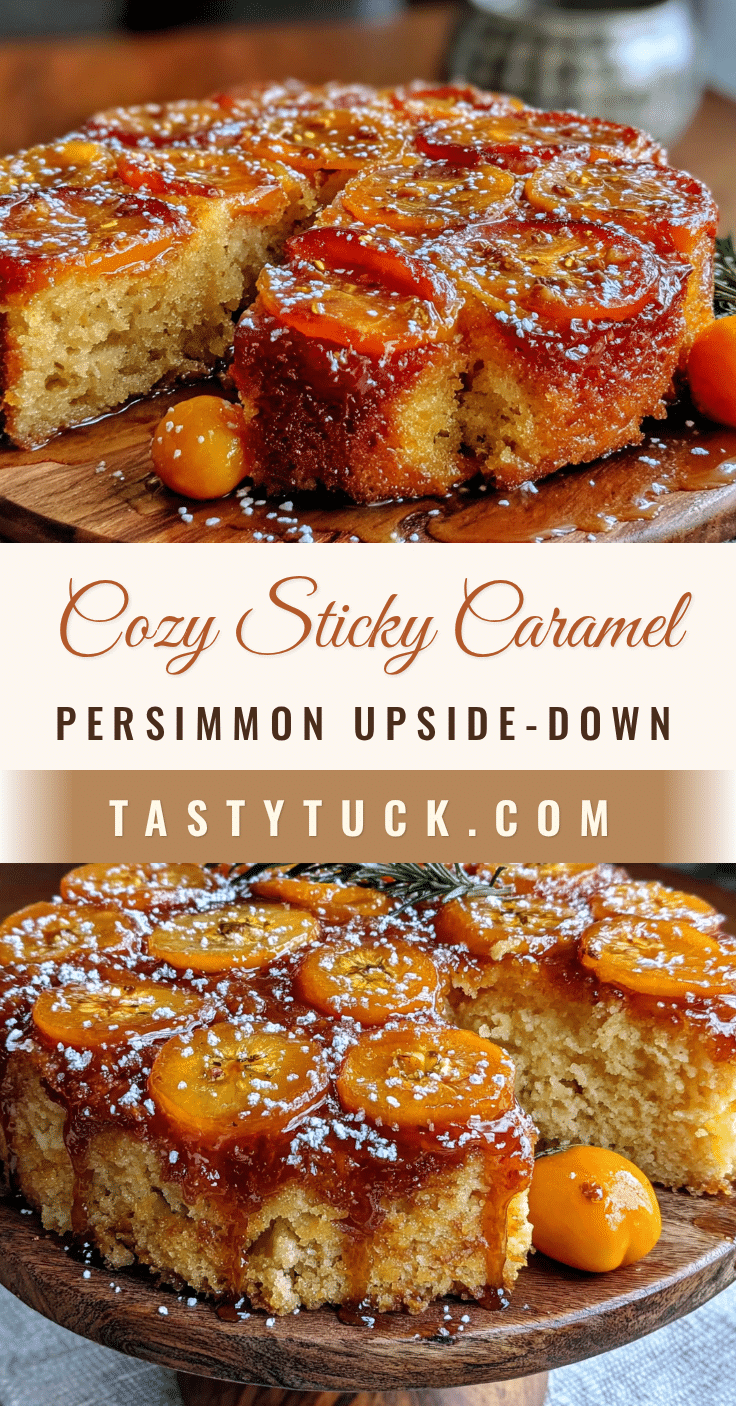
Cozy Caramel Persimmon Upside-Down Cake: Best Easy Recipe
A warm, sticky caramel persimmon upside-down cake that feels like a cozy blanket on a cold day. This easy recipe combines a soft, buttery cake with luscious, jammy persimmons and a perfectly balanced caramel topping.
- Prep Time: 20 minutes
- Cook Time: 35-40 minutes
- Total Time: 55-60 minutes
- Yield: 8 servings 1x
- Category: Dessert
- Cuisine: American
Ingredients
- 1/2 cup (113g) unsalted butter, cut into pieces
- 1 cup (200g) packed light brown sugar
- 1/4 cup (60ml) heavy cream
- 1 teaspoon vanilla extract
- Pinch of sea salt
- 3–4 ripe Fuyu persimmons, peeled and sliced into 1/4-inch rounds
- 1 tablespoon lemon juice
- 1 1/2 cups (190g) all-purpose flour
- 1 1/2 teaspoons baking powder
- 1/2 teaspoon baking soda
- 1/2 teaspoon salt
- 1 teaspoon ground cinnamon
- 1/2 teaspoon ground ginger (optional)
- 1/2 cup (113g) unsalted butter, softened
- 3/4 cup (150g) granulated sugar
- 2 large eggs, room temperature
- 1 teaspoon vanilla extract
- 1/2 cup (120ml) buttermilk
Instructions
- Preheat oven to 350°F (175°C). Place a 9-inch cake pan on a baking sheet.
- In a small saucepan over medium heat, melt 1/2 cup unsalted butter. Add 1 cup packed light brown sugar and 1/4 cup heavy cream. Stir constantly until smooth and bubbly, about 2-3 minutes. Remove from heat and stir in 1 teaspoon vanilla extract and a pinch of sea salt.
- Pour caramel into the bottom of the prepared cake pan. Tilt to spread evenly. Let cool for 5 minutes.
- Peel and slice persimmons into 1/4-inch rounds. Toss with 1 tablespoon lemon juice.
- Arrange persimmon slices over the warm caramel in a single, overlapping layer.
- In a medium bowl, whisk together flour, baking powder, baking soda, salt, cinnamon, and ginger (if using). Set aside.
- In a large bowl, beat softened butter and granulated sugar with an electric mixer on medium speed until light and fluffy, about 3 minutes.
- Add eggs one at a time, beating well after each addition. Beat in vanilla extract.
- With mixer on low, add flour mixture in three additions, alternating with buttermilk, starting and ending with flour. Mix just until combined.
- Spoon batter over persimmons and spread evenly to edges.
- Bake for 35-40 minutes, until golden brown and a toothpick inserted in center comes out clean or with a few moist crumbs.
- Let cake cool in pan on a wire rack for exactly 10 minutes. Run a knife around the edge to loosen.
- Place serving plate upside down on top of pan. Carefully flip pan and plate together. Let pan sit on plate for 2-3 minutes, then slowly lift pan off. Nudge any stuck persimmon slices back into place.
- Serve warm or at room temperature.
Notes
Use Fuyu persimmons (firm but slightly soft). Do not overcook caramel; remove from heat as soon as bubbly. The 10-minute cooling time before flipping is critical. For dairy-free, use vegan butter and dairy-free cream. For gluten-free, use a 1:1 gluten-free flour blend with xanthan gum.
Nutrition
- Serving Size: 1 slice
- Calories: 380
- Sugar: 35
- Sodium: 280
- Fat: 18
- Saturated Fat: 11
- Carbohydrates: 52
- Fiber: 3
- Protein: 4
Keywords: persimmon upside-down cake, caramel persimmon cake, easy persimmon dessert, fall cake recipe, sticky caramel cake