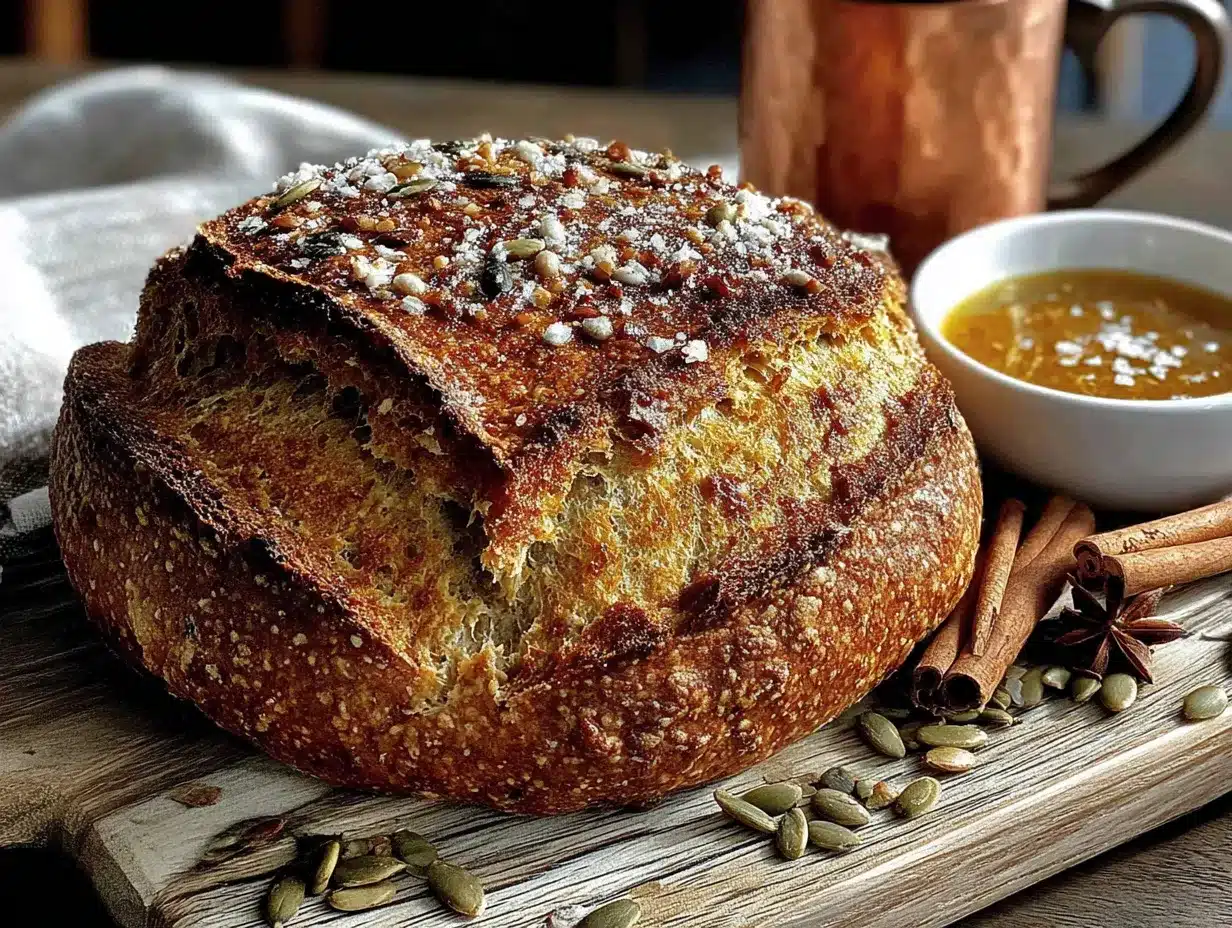
The faintly tacky, blistered crust gives way with a quiet crackle, and inside, the crumb is the color of October twilight—deep orange, soft, and shot through with tiny air pockets. That’s the whole point of this loaf. It’s not about the pumpkin spice fanfare or the Instagram aesthetic. It’s about the way the sourdough tang nuzzles up against the quiet sweetness of the squash, creating a bread that tastes like a warm sweater feels.
I stumbled into this recipe on a Thursday afternoon that felt more like November than September. My sourdough starter, a perpetually hungry beast I’ve kept alive for three years, was overflowing its jar. I had a half-can of pumpkin puree in the fridge from a batch of pancakes, and the idea of tossing either one felt wasteful. So I did what any slightly obsessive home baker would do—I mixed them together and hoped for the best. The first loaf came out dense and a little gummy. The second was better. The third? That one disappeared before it had even fully cooled.
This cozy pumpkin sourdough discard bread is the result of those happy accidents. It’s the loaf I make when I want the house to smell like fall without turning on the oven for a complicated pie. It’s forgiving, it’s flexible, and it uses up that starter discard you’ve been guiltily shoving to the back of the fridge. Honestly, it might be the best thing to come out of my kitchen all season. And I think you’re going to feel the same way.
Why You’ll Love This Recipe
Let me tell you why this loaf has earned a permanent spot in my fall baking rotation. It’s not just another pumpkin bread recipe—it’s the one I’ve tested, tweaked, and burned my fingers on more times than I care to admit.
- Uses Up Starter Discard: No more pouring that liquid gold down the drain. This recipe turns your discard into something genuinely delicious.
- Perfectly Moist Crumb: The pumpkin puree keeps the bread tender for days, while the sourdough adds a subtle tang that cuts through the sweetness.
- Simple Pantry Ingredients: You probably have everything already. No fancy flours or hard-to-find spices here.
- No Yeast Packet Required: The wild yeast in your starter does all the work. It’s basically magic that lives in your fridge.
- Make-Ahead Friendly: This bread actually tastes better on day two. The flavors meld, the texture settles, and the crust softens just enough.
- Beginner-Proof: I’ve taught this recipe to friends who’ve never baked with sourdough before, and every single one has succeeded.
What makes this different from every other pumpkin bread out there? It’s the fermentation. The sourdough discard adds a layer of complexity that straight baking soda and powder can’t touch. It’s not a sweet, cupcake-like loaf. It’s a bread you can eat with butter in the morning, slathered with cream cheese for a snack, or even toasted and topped with a fried egg for a weirdly perfect dinner. It’s comfort food that actually has some character.
This is the kind of bread that makes you slow down. The kind you slice thick, butter generously, and eat over the kitchen sink because you can’t wait to sit down. It’s fall in a loaf pan, and it’s here for you whenever you need it.
What Ingredients You Will Need
This recipe uses straightforward ingredients, but each one plays a specific role in the final texture and flavor. Let me walk you through what you’ll need and why it matters.
- Pumpkin Puree (1 cup / 245g): Not pumpkin pie filling—make sure you grab the plain, 100% pure pumpkin. I prefer Libby’s for consistent moisture content, but store brands work fine too. If your puree looks watery, blot it with a paper towel before using.
- Sourdough Discard (1 cup / 240g): Unfed, straight from the fridge discard is perfect here. It can be bubbly or flat, fresh or a few days old. The tangier the discard, the more pronounced the sour flavor will be in the final loaf.
- All-Purpose Flour (2 cups / 260g): Regular AP flour gives this bread the perfect structure. You can substitute up to half with whole wheat pastry flour for a nuttier flavor, but don’t go full whole wheat—it’ll get too dense.
- Brown Sugar (3/4 cup / 150g): Packed firmly. Brown sugar adds moisture and a subtle molasses note that pairs beautifully with pumpkin. Light or dark both work, though dark brown sugar gives a deeper flavor.
- Granulated Sugar (1/4 cup / 50g): Just enough to balance the tang without making the bread taste like cake. You can reduce this slightly if you prefer a less sweet loaf.
- Vegetable Oil (1/3 cup / 80ml): A neutral oil keeps the crumb tender and moist. Canola, grapeseed, or avocado oil all work. Melted coconut oil is fine too, but it will add a faint coconut flavor.
- Eggs (2 large): Room temperature eggs incorporate more evenly into the batter. If you forget to take them out ahead of time, place them in a bowl of warm water for 5 minutes.
- Pumpkin Pie Spice (2 teaspoons): You can use store-bought or make your own with 1 teaspoon cinnamon, 1/2 teaspoon ginger, 1/4 teaspoon nutmeg, 1/4 teaspoon allspice, and a pinch of cloves.
- Baking Soda (1 teaspoon): This is the main leavener. The acidity in the sourdough discard activates the baking soda, so don’t skip it or try to substitute baking powder.
- Salt (1/2 teaspoon): Fine sea salt or table salt. It enhances all the flavors and balances the sweetness.
- Vanilla Extract (1 teaspoon): Pure vanilla adds warmth and depth. Imitation vanilla works in a pinch, but the real stuff makes a noticeable difference here.
- Optional Mix-Ins: Chocolate chips, chopped pecans, or dried cranberries all work beautifully. I’m partial to dark chocolate chips—the bitterness plays off the pumpkin and sourdough tang perfectly.
Equipment Needed
You don’t need a professional bakery setup for this bread. Here’s what you’ll actually use:
- 9×5-inch Loaf Pan: Standard size works best. If you use an 8×4 pan, you’ll need to increase the baking time by 10-15 minutes. I like a light-colored metal pan for even browning.
- Large Mixing Bowl: Any bowl big enough to hold all the ingredients without splashing.
- Whisk and Rubber Spatula: The whisk for dry ingredients, the spatula for folding everything together without overmixing.
- Parchment Paper: Lining the pan makes removal effortless. You can also grease the pan well with butter or nonstick spray.
- Cooling Rack: Essential for letting the bread cool completely before slicing. Cutting into warm bread is tempting, but it’ll turn gummy.
- Kitchen Scale (Optional): I highly recommend weighing your flour and pumpkin puree for consistent results. But measuring cups work perfectly fine too.
If you don’t have a loaf pan, you can bake this in an 8×8 square pan for about 35 minutes or turn it into muffins (bake for 18-22 minutes). I’ve done all three versions, and they each have their own charm.
Preparation Method
- Preheat and Prep: Preheat your oven to 350°F (175°C). Line your loaf pan with parchment paper, leaving an overhang on the long sides. This creates handles that make lifting the bread out a breeze.
- Whisk Dry Ingredients: In a medium bowl, whisk together the all-purpose flour, pumpkin pie spice, baking soda, and salt. Make sure the baking soda is evenly distributed—clumps of it will create bitter spots in the finished bread.
- Mix Wet Ingredients: In a large bowl, whisk together the pumpkin puree, sourdough discard, brown sugar, granulated sugar, vegetable oil, eggs, and vanilla extract. Whisk until smooth and fully combined. The mixture should look like thick, glossy orange paint.
- Combine Wet and Dry: Pour the dry ingredients into the wet ingredients. Use your rubber spatula to fold everything together gently. Stop mixing as soon as you no longer see streaks of flour. A few lumps are totally fine—overmixing will make the bread tough.
- Fold in Mix-Ins (Optional): If you’re adding chocolate chips or nuts, fold them in at this point. Use about 3-4 quick strokes to distribute them evenly.
- Pour Into Pan: Scrape the batter into your prepared loaf pan. Use the spatula to spread it into an even layer. The batter will be thick—that’s normal.
- Bake: Place the pan in the center of the oven and bake for 50-60 minutes. At the 45-minute mark, check the loaf. If the top is browning too quickly, tent it loosely with aluminum foil.
- Test for Doneness: Insert a wooden skewer or toothpick into the center of the loaf. It should come out clean or with just a few moist crumbs attached. If it’s wet with batter, bake for another 5-10 minutes and test again.
- Cool in Pan: Let the bread cool in the pan for 15 minutes. This allows the structure to set before you try to move it.
- Transfer to Rack: Use the parchment paper handles to lift the bread out of the pan. Transfer it to a cooling rack and let it cool completely before slicing. I know it’s hard to wait, but trust me—slicing too early will give you a crumbly, gummy mess.
Sensory Cues to Watch For: The batter should be thick but scoopable, like a very dense muffin batter. When the bread is done, the top will be deep golden brown, cracked in the center, and the loaf will feel firm when you gently press the top. Your kitchen will smell like a fall candle factory—in the best way.
Cooking Tips & Techniques
I’ve made this recipe more times than I can count, and I’ve learned a few things the hard way. Here are the tips I wish someone had told me.
Don’t Overmix the Batter: I cannot stress this enough. Overmixing develops the gluten too much, and you’ll end up with a tough, dense loaf instead of a tender, fluffy one. Mix until just combined, then stop. A few flour streaks are your friend.
Check Your Pumpkin Puree: Some brands of pumpkin puree are wetter than others. If your puree looks watery or separates in the can, blot it with a paper towel before measuring. Too much liquid will make the bread sink in the middle and turn gummy.
Room Temperature Eggs Matter: Cold eggs will seize up the oil and create an uneven batter. If you forgot to take them out of the fridge, place them in a bowl of warm water for 5 minutes. They’ll come to room temperature quickly.
The Toothpick Test Isn’t Foolproof: Sometimes the toothpick comes out clean, but the bread is still underbaked in the center. I like to also check the internal temperature with an instant-read thermometer—it should read 200°F (93°C) in the center.
Let It Cool Completely: I know, I know. The smell is intoxicating, and you want a slice immediately. But cutting into warm bread will give you a gummy, sticky texture. The crumb needs time to set. I’ve ruined two loaves by being impatient. Don’t be me.
Toast It for Breakfast: This bread is amazing fresh, but it truly shines when toasted the next day. The heat brings out the pumpkin flavor and crisps up the edges beautifully. Slather it with salted butter and thank me later.
Variations & Adaptations
One of the best things about this recipe is how adaptable it is. Here are a few ways to make it your own.
Gluten-Free Version: Substitute the all-purpose flour with a 1:1 gluten-free baking flour blend that contains xanthan gum. I’ve had great results with King Arthur’s Measure for Measure blend. The texture will be slightly more tender and less chewy, but it’s still delicious.
Vegan Option: Replace the eggs with two flax eggs (2 tablespoons ground flaxseed mixed with 6 tablespoons water, let sit for 5 minutes). Use a plant-based milk if needed, though the pumpkin puree and oil provide plenty of moisture already. The bread will be slightly denser but still very good.
Chocolate Chip Pumpkin Bread: Fold in 1 cup of semi-sweet or dark chocolate chips. The bitterness of the chocolate is a perfect counterpoint to the sweet, tangy bread. I’ve also used white chocolate chips for a sweeter version, and it’s dangerously good.
Spiced Nut Loaf: Add 1/2 cup of toasted, chopped pecans or walnuts along with 1/4 teaspoon of extra cinnamon. Toast the nuts first in a dry skillet for 3-4 minutes to bring out their oils and deepen the flavor.
Pumpkin Cream Cheese Swirl: Before baking, drop dollops of a cream cheese mixture (4 oz softened cream cheese, 2 tablespoons sugar, 1 egg yolk) on top of the batter and swirl it in with a knife. It creates a beautiful marbled effect and adds a tangy richness.
I once made a version with dried cranberries and orange zest for a holiday brunch, and it was a hit. The tartness of the cranberries cuts through the sweetness perfectly. Don’t be afraid to experiment—this bread is forgiving.
Serving & Storage Suggestions
This bread is incredibly versatile when it comes to serving. Here’s how I like to enjoy it, and how to keep it fresh.
Serving Temperature: This bread is excellent at room temperature, but I prefer it lightly toasted. A few minutes in the toaster or under the broiler crisps up the edges and warms the interior just enough to make the butter melt into every bite.
What to Serve With It: A generous pat of salted butter is all you really need. But it’s also wonderful with honey butter, cream cheese, apple butter, or a drizzle of maple syrup. For a savory twist, try it with a smear of goat cheese and a drizzle of honey.
Complementary Dishes: This bread pairs beautifully with a hot cup of coffee or chai tea. For a full fall breakfast, serve it alongside a bowl of pasta e fagioli soup for a cozy contrast of sweet and savory. It’s also a great side for a simple strawberry poppyseed salad if you want something lighter.
Storage Instructions: Store the bread tightly wrapped in plastic wrap or in an airtight container at room temperature for up to 4 days. The moisture from the pumpkin keeps it tender, but the sourdough tang actually helps prevent mold, so it lasts longer than regular quick breads.
Freezing Tips: This bread freezes beautifully. Wrap the completely cooled loaf tightly in plastic wrap, then in aluminum foil, and freeze for up to 3 months. To thaw, leave it on the counter overnight, or slice the frozen loaf and toast individual slices straight from the freezer.
Flavor Development: Here’s a secret—this bread actually tastes better on day two. The flavors meld together overnight, the sourdough tang becomes more pronounced, and the texture evens out. If you can resist eating it all on day one, you’ll be rewarded on day two.
Nutritional Information & Benefits
While this is definitely a treat, it does have some redeeming qualities. Here’s a rough nutritional breakdown per slice (assuming 12 slices):
| Nutrient | Amount Per Slice |
|---|---|
| Calories | 245 |
| Total Fat | 9g |
| Saturated Fat | 1.5g |
| Carbohydrates | 38g |
| Fiber | 2g |
| Sugar | 18g |
| Protein | 5g |
Health Benefits: Pumpkin is packed with vitamin A (in the form of beta-carotene), which supports eye health and immune function. It’s also a good source of fiber, which helps with digestion and keeps you feeling full. The sourdough fermentation process breaks down some of the gluten and phytic acid in the flour, making the nutrients more bioavailable and potentially easier to digest for some people.
Dietary Considerations: This recipe is vegetarian and can be made vegan with the substitutions mentioned above. It contains gluten, eggs, and dairy (if using butter for serving). If you’re avoiding refined sugar, you can substitute the granulated sugar with coconut sugar, though it will darken the loaf and add a slight caramel flavor.
I’m not a nutritionist, and I don’t pretend to be. But I do believe that food should nourish you—sometimes that means a bowl of kale salad, and sometimes that means a thick slice of pumpkin bread with butter. Balance, you know?
Conclusion
This cozy pumpkin sourdough discard bread is everything I want in a fall recipe. It’s forgiving enough for beginners, interesting enough for experienced bakers, and delicious enough to earn a permanent spot in your rotation. It uses up ingredients you probably already have, fills your kitchen with the best possible smells, and tastes like a warm hug in bread form.
I love this recipe because it feels like a small victory every time I make it. That moment when you pull the golden loaf out of the oven, the crust crackling and the kitchen smelling like cinnamon and pumpkin—it never gets old. And knowing that I used up my starter discard instead of pouring it down the sink? That’s a bonus that makes me feel slightly more virtuous about eating bread for breakfast.
Try this recipe and make it your own. Add chocolate chips if that’s your thing. Skip the nuts if you’re not a fan. Slather it with butter or eat it plain. However you make it, I think you’ll love it.
I’d love to hear how it turns out for you! Drop a comment below with your variations or questions. And if you’re looking for more cozy baking ideas, don’t miss this cast iron peach cobbler or this southern squash casserole for more seasonal comfort food. Happy baking, friends!
Frequently Asked Questions
Can I use active sourdough starter instead of discard?
Yes, you absolutely can. If you use active, bubbly starter, the bread will have a slightly less tangy flavor and a slightly lighter texture. You don’t need to adjust anything else in the recipe—just swap it in cup for cup.
Why did my bread sink in the middle?
This usually happens for one of three reasons: the oven wasn’t hot enough (check your oven temperature with a thermometer), the batter was overmixed (developing too much gluten), or the pumpkin puree was too watery. Blotting the puree with a paper towel before measuring helps prevent this.
Can I make this into muffins instead of a loaf?
Absolutely! Grease a 12-cup muffin tin or line it with paper liners. Divide the batter evenly among the cups (about 3/4 full each) and bake at 350°F for 18-22 minutes, or until a toothpick inserted in the center comes out clean. You’ll get about 12 muffins.
How do I make this bread less sweet?
Reduce the granulated sugar to 2 tablespoons and the brown sugar to 1/2 cup. The bread will be less sweet but still flavorful. You can also add an extra 1/2 teaspoon of salt to balance the flavors. The sourdough tang will be more pronounced, which I personally love.
Can I use fresh pumpkin instead of canned?
Yes, but you need to cook and puree it first, and then drain off as much liquid as possible. Fresh pumpkin puree is much wetter than canned, so spread it on a paper towel-lined plate for 10-15 minutes to absorb excess moisture before measuring. Otherwise, your bread might turn out gummy.
Pin This Recipe!
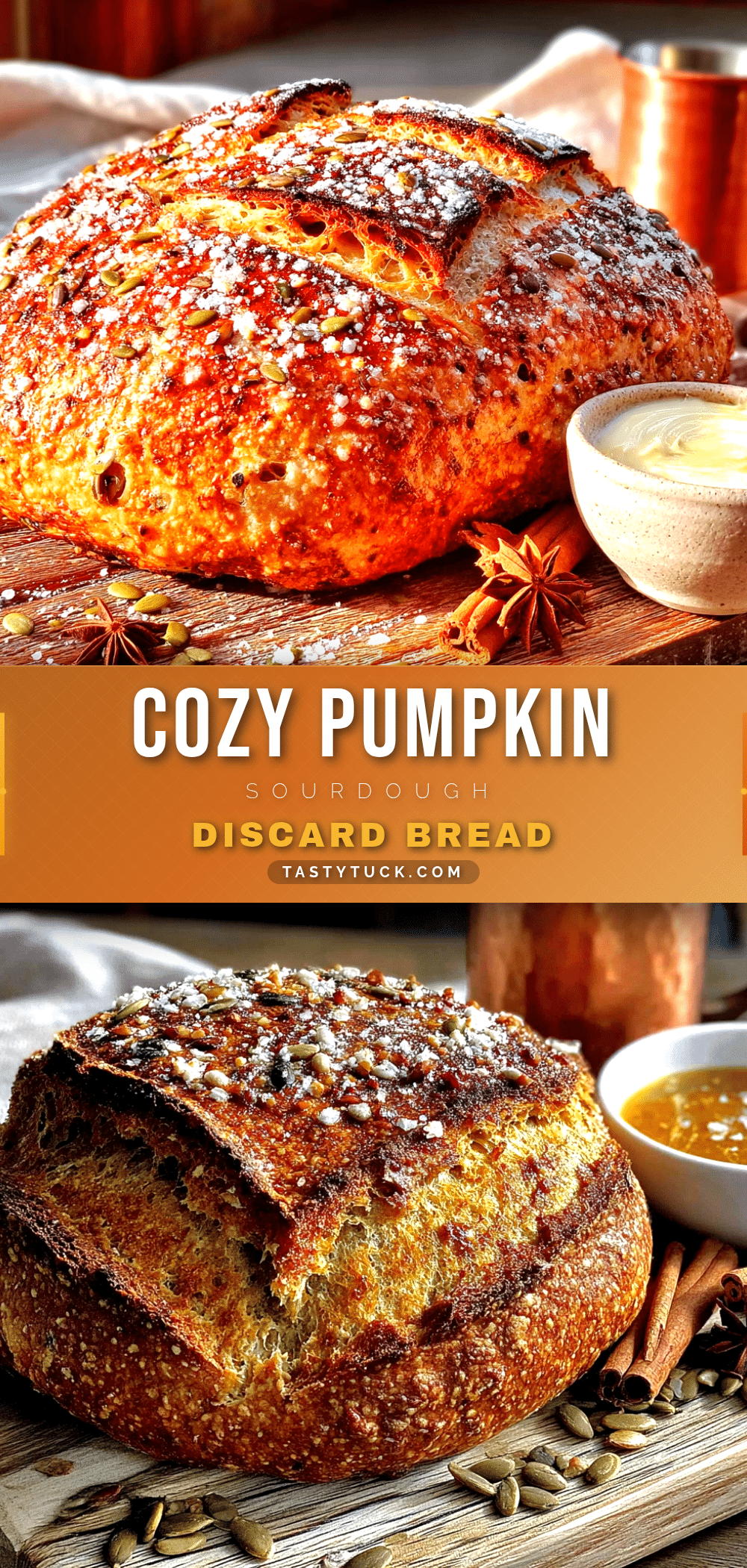
Cozy Pumpkin Sourdough Discard Bread: Easy Fall Recipe
This cozy pumpkin sourdough discard bread is a forgiving, flexible loaf that uses up starter discard and pumpkin puree. The sourdough tang pairs beautifully with the quiet sweetness of the squash, creating a bread that tastes like a warm sweater feels.
- Prep Time: 15 minutes
- Cook Time: 55 minutes
- Total Time: 1 hour 10 minutes
- Yield: 12 servings 1x
- Category: Bread
- Cuisine: American
Ingredients
- 1 cup (245g) pumpkin puree (not pumpkin pie filling)
- 1 cup (240g) sourdough discard (unfed, straight from the fridge)
- 2 cups (260g) all-purpose flour
- 3/4 cup (150g) brown sugar, packed firmly
- 1/4 cup (50g) granulated sugar
- 1/3 cup (80ml) vegetable oil (canola, grapeseed, or avocado oil)
- 2 large eggs, room temperature
- 2 teaspoons pumpkin pie spice (or 1 tsp cinnamon, 1/2 tsp ginger, 1/4 tsp nutmeg, 1/4 tsp allspice, pinch cloves)
- 1 teaspoon baking soda
- 1/2 teaspoon fine sea salt or table salt
- 1 teaspoon vanilla extract
- Optional mix-ins: chocolate chips, chopped pecans, or dried cranberries
Instructions
- Preheat your oven to 350°F (175°C). Line a 9×5-inch loaf pan with parchment paper, leaving an overhang on the long sides.
- In a medium bowl, whisk together the all-purpose flour, pumpkin pie spice, baking soda, and salt until evenly combined.
- In a large bowl, whisk together the pumpkin puree, sourdough discard, brown sugar, granulated sugar, vegetable oil, eggs, and vanilla extract until smooth and fully combined.
- Pour the dry ingredients into the wet ingredients. Use a rubber spatula to fold together gently until just combined (a few lumps are fine; do not overmix).
- If using optional mix-ins (chocolate chips, nuts, etc.), fold them in with 3-4 quick strokes.
- Scrape the batter into the prepared loaf pan and spread into an even layer.
- Bake in the center of the oven for 50-60 minutes. At the 45-minute mark, check the loaf; if the top is browning too quickly, tent loosely with aluminum foil.
- Test for doneness by inserting a wooden skewer or toothpick into the center—it should come out clean or with just a few moist crumbs. Alternatively, check internal temperature with an instant-read thermometer (should read 200°F / 93°C).
- Let the bread cool in the pan for 15 minutes, then use the parchment paper handles to lift it out and transfer to a cooling rack. Cool completely before slicing.
Notes
Don’t overmix the batter—overmixing develops gluten and makes the bread tough. Check your pumpkin puree for excess water; blot with a paper towel if watery. Room temperature eggs incorporate better. Let the bread cool completely before slicing to avoid a gummy texture. This bread tastes even better on day two.
Nutrition
- Serving Size: 1 slice
- Calories: 245
- Sugar: 18
- Sodium: 240
- Fat: 9
- Saturated Fat: 1.5
- Carbohydrates: 38
- Fiber: 2
- Protein: 5
Keywords: pumpkin bread, sourdough discard, fall recipe, easy bread, pumpkin sourdough, quick bread