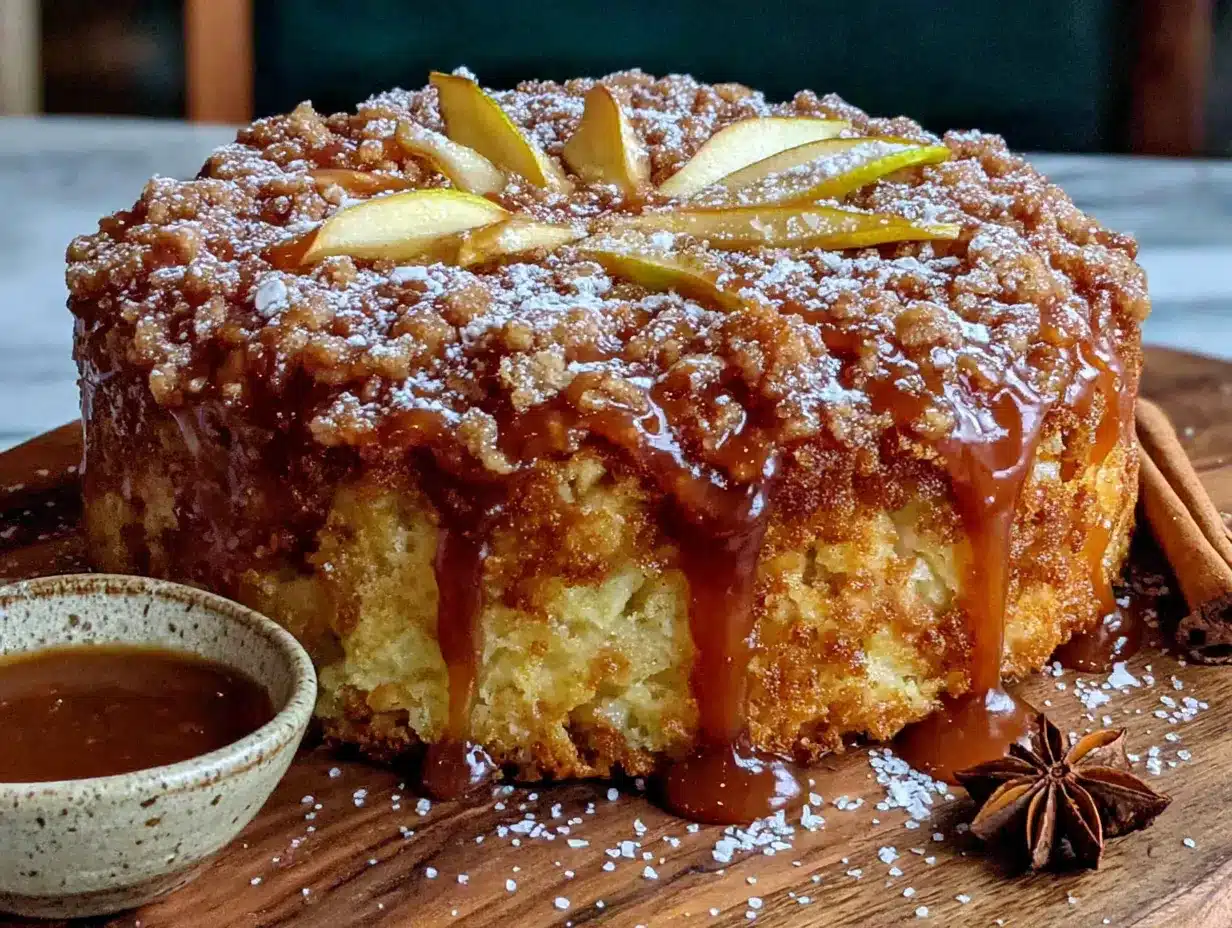
“This tastes like a hug from a donut.” My sister said it first, standing in my kitchen with a fork in one hand and a napkin in the other. She had just taken a bite of this cake fresh out of the oven, and the butter-caramel glaze was still pooling around the edges of the slice. I hadn’t planned on making a cake that day. Honestly, I was trying to use up a half-gallon of apple cider that was about to turn, and I had this sudden, stubborn craving for something warm and spiced. That’s how this whole thing started.
I love a good apple cider donut. Who doesn’t? But let’s face it, frying a batch of donuts on a Tuesday afternoon is a whole production. The oil, the mess, the way your whole house smells like a fairground for three days. I wanted that same cozy, cinnamon-sugar flavor, but in a way that felt more like a lazy weekend morning. I wanted a cake. A soft, tender, buttery cake that tasted just like those little donuts from the orchard, but without the deep fryer.
So, I started experimenting. I swapped some of the milk for reduced apple cider, added a pinch of nutmeg, and then I did something a little extra. I swirled in a salted caramel sauce right before it went into the pan. The first time I pulled it out, the kitchen smelled like a bakery in the middle of October. The top was crackly with cinnamon sugar, and the inside was so moist it practically melted. When I cut into it, that caramel ribbon was hiding inside, all gooey and perfect. My sister didn’t even say anything. She just looked at me with that fork in her hand, and I knew. This was the one.
Why You’ll Love This Recipe
This cake is everything you love about fall, packed into one simple, stunning dessert. It gives you the soul of a fried donut without the hassle. Here is why it works so well.
- Quick & Easy: You don’t need a stand mixer or any fancy equipment. Just a couple of bowls, a whisk, and a loaf pan. It comes together in about 15 minutes of active work.
- Simple Ingredients: No weird extracts or hard-to-find spices. You probably have most of this in your pantry already, especially if you keep apple cider in the fridge during the fall.
- Perfect for Cozy Gatherings: This is the kind of dessert you bring to a Friendsgiving, a Sunday brunch, or just make for yourself on a rainy afternoon. It feels special without being fussy.
- Crowd-Pleaser: I have yet to meet someone who doesn’t love this cake. It hits that sweet-salty spot that everyone craves. Kids love the cinnamon sugar top, and adults go crazy for the caramel swirl.
- Unbelievably Delicious: The texture is the real star here. It is incredibly moist and tender from the reduced cider, with a crunchy, sparkly crust. The salted caramel adds a deep, buttery richness that takes it over the top.
What makes this different from other apple cider cakes is the technique of reducing the cider first. It concentrates the apple flavor so you get a real punch of tart, fruity taste, not just a hint. Plus, that hidden ribbon of homemade salted caramel is a little surprise in every slice. It is comfort food that feels like a warm sweater.
What Ingredients You Will Need
This recipe uses simple, wholesome ingredients to deliver that iconic donut shop flavor. You don’t need anything crazy here, just good quality basics.
For the Cake
- Apple Cider (1 ½ cups / 360 ml): This is the star. Use fresh, unfiltered cider if you can find it. It has a cloudier look and a stronger apple taste. Do not use apple juice, it is too sweet and lacks the tang.
- Unsalted Butter (½ cup / 1 stick, softened): Make sure it is at room temperature. This helps it cream properly with the sugar. I always use unsalted so I can control the salt level.
- Granulated Sugar (1 cup / 200 g): Adds sweetness and helps create that tender crumb.
- Light Brown Sugar (½ cup / 100 g, packed): This adds moisture and a hint of molasses flavor that pairs beautifully with the apple and caramel.
- Large Eggs (2, room temperature): Room temperature eggs emulsify better into the batter, giving you a smoother, more even crumb.
- Vanilla Extract (2 teaspoons): Use pure vanilla extract if you have it. It rounds out all the warm spices.
- All-Purpose Flour (2 ½ cups / 312 g): Spoon and level your flour for the most accurate measurement. Scooping directly can pack it down and make the cake dry.
- Baking Powder (1 ½ teaspoons): Our main leavening agent for lift.
- Baking Soda (½ teaspoon): Helps neutralize the acidity of the cider and adds extra tenderness.
- Salt (½ teaspoon): Balances the sweetness.
- Ground Cinnamon (1 ½ teaspoons): A must for that donut shop vibe.
- Ground Nutmeg (½ teaspoon): Just a pinch. It adds a warm, aromatic depth.
- Buttermilk (½ cup / 120 ml, room temperature): The acid in the buttermilk reacts with the baking soda to make the cake extra tender. If you don’t have buttermilk, add ½ tablespoon of lemon juice to regular milk and let it sit for 5 minutes.
For the Salted Caramel Swirl
- Granulated Sugar (1 cup / 200 g): For the caramel base.
- Unsalted Butter (6 tablespoons, cut into cubes): Adds richness and stops the sugar from crystallizing.
- Heavy Cream (½ cup / 120 ml, room temperature): This is what makes the caramel smooth and pourable.
- Flaky Sea Salt (1 teaspoon): I love Maldon or Fleur de Sel here. It gives you those little pops of salt that make the caramel so addictive.
For the Cinnamon Sugar Coating
- Unsalted Butter (3 tablespoons, melted): Brushed on top while the cake is still warm so the sugar sticks.
- Granulated Sugar (¼ cup / 50 g): For the coating.
- Ground Cinnamon (1 tablespoon): Mixed with the sugar for that classic donut finish.
Ingredient Tip: I always recommend using a good quality apple cider. I personally look for one that is pasteurized but not from concentrate. The flavor is just brighter. If you want a dairy-free version, you can substitute the buttermilk with a dairy-free milk mixed with a little lemon juice, and use plant-based butter.
Equipment Needed
You don’t need a bakery-level kitchen for this. A few basic tools will get the job done perfectly.
- 9×5-inch Loaf Pan: This is the standard size for this cake. I prefer a light-colored metal pan for even baking. Glass or dark pans can cause the edges to brown too fast.
- Medium Saucepan: For reducing the apple cider and making the caramel. A heavy-bottomed pan is best to prevent the caramel from scorching.
- Large Mixing Bowls: One for the dry ingredients and one for the wet. I like using glass or stainless steel.
- Whisk and Wooden Spoon: A whisk for the dry ingredients and a sturdy spoon or spatula for folding the wet into the dry.
- Parchment Paper: Lining the loaf pan makes lifting the cake out a breeze. It also helps with clean up.
- Pastry Brush: For brushing the melted butter onto the warm cake. A silicone one works great and is easy to clean.
- Wire Rack: For cooling the cake properly so the bottom doesn’t get soggy.
If you don’t have a candy thermometer for the caramel, don’t worry. You can use the cold water test. Drop a small spoonful of the hot caramel into a glass of cold water. If it forms a soft ball that you can pick up, it is ready.
Preparation Method
Let’s get baking. This process is straightforward, but a few little steps make a big difference in the final cake.
- Reduce the Apple Cider: Pour the 1 ½ cups of apple cider into your medium saucepan. Bring it to a boil over medium-high heat, then reduce the heat to a steady simmer. Let it cook for about 15-20 minutes, stirring occasionally, until it has reduced to about ½ cup. It will look syrupy and smell intensely of apples. Set it aside to cool completely. You can even do this the night before and keep it in the fridge.
- Make the Salted Caramel: While the cider is reducing, make your caramel. In a clean, heavy-bottomed saucepan, spread the 1 cup of granulated sugar in an even layer. Cook over medium heat, gently swirling the pan (do not stir) until the sugar melts and turns a deep amber color. This takes about 6-8 minutes. Watch it closely, it can go from perfect to burnt very fast.
- Finish the Caramel: Once the sugar is amber, remove the pan from the heat. Carefully whisk in the 6 tablespoons of cubed butter. It will bubble up violently, so be careful. Whisk until the butter is completely melted. Slowly pour in the ½ cup of heavy cream while whisking continuously. The mixture will steam and bubble again. Whisk until smooth. Stir in the 1 teaspoon of flaky sea salt. Pour the caramel into a heat-safe jar or bowl and let it cool slightly. It will thicken as it cools.
- Preheat and Prep: Preheat your oven to 350°F (175°C). Grease your 9×5-inch loaf pan and line it with a strip of parchment paper, leaving an overhang on the two long sides. This creates a little sling for lifting the cake out later.
- Whisk Dry Ingredients: In a large bowl, whisk together the 2 ½ cups of all-purpose flour, 1 ½ teaspoons of baking powder, ½ teaspoon of baking soda, ½ teaspoon of salt, 1 ½ teaspoons of cinnamon, and ½ teaspoon of nutmeg. Set aside.
- Cream Butter and Sugars: In another large bowl, beat the ½ cup of softened butter, 1 cup of granulated sugar, and ½ cup of packed brown sugar together until light and fluffy. This takes about 3-4 minutes with an electric mixer or a strong arm and a wooden spoon. Scrape down the sides of the bowl.
- Add Wet Ingredients: Beat in the 2 room-temperature eggs, one at a time, mixing well after each addition. Stir in the 2 teaspoons of vanilla extract and the cooled, reduced apple cider. The mixture might look a little curdled at this point, that is totally normal.
- Alternate Dry and Wet: With the mixer on low speed, add the flour mixture in three parts, alternating with the ½ cup of buttermilk. Start and end with the flour mixture. Mix until just combined. Do not overmix. A few streaks of flour are okay. Overmixing will make the cake tough.
- Layer the Batter: Pour half of the batter into the prepared loaf pan and spread it into an even layer. Drizzle about ⅓ cup of your salted caramel sauce over the batter. Try to avoid getting it too close to the edges of the pan. Swirl it gently with a knife.
- Add Remaining Batter: Carefully spoon the remaining batter over the caramel layer and spread it gently to cover. It is okay if a little caramel peeks through. Drizzle another 2 tablespoons of caramel on top and give it one more gentle swirl with a knife.
- Bake: Place the pan in the preheated oven and bake for 55-65 minutes. The cake is done when a toothpick inserted into the center comes out clean or with just a few moist crumbs. If the top is browning too quickly after 40 minutes, tent it loosely with aluminum foil.
- Cool and Coat: Let the cake cool in the pan for 15 minutes. Then, use the parchment sling to lift it out onto a wire rack. While the cake is still warm, brush the top with the 3 tablespoons of melted butter. Mix the ¼ cup of sugar and 1 tablespoon of cinnamon together and generously sprinkle it all over the top and sides of the warm cake. Let it cool completely before slicing.
Pro Tip: Your cake might sink a tiny bit in the center if the caramel swirl was too heavy. Don’t stress about it. That little divot is just a pocket of caramel goodness waiting for you.
Cooking Tips & Techniques
I have made this cake about a dozen times, and I have learned a few things the hard way so you don’t have to.
- Don’t Skip Reducing the Cider: This is the most important step. If you just add regular cider, your cake will be too liquid and the apple flavor will be weak. Reducing it concentrates the flavor and the natural sugars, making the cake incredibly moist and flavorful.
- Room Temperature Ingredients Matter: I know it is tempting to use cold eggs and buttermilk straight from the fridge, but trust me on this. Room temperature ingredients emulsify together much better, creating a smooth, tender crumb. If you are in a hurry, place the eggs in a bowl of warm water for 5 minutes.
- Watch Your Caramel: Making caramel can be intimidating, but it doesn’t have to be. The key is patience. Swirl the pan gently, don’t stir with a spoon. And when you add the butter and cream, stand back a little. The mixture will bubble up. Just keep whisking and it will come together into a beautiful, glossy sauce.
- The Toothpick Test: I always check my cake at the 55-minute mark. Every oven runs a little differently. If the toothpick comes out with wet batter, give it 5 more minutes. If it comes out clean, it is done. Overbaking is the number one cause of dry cake.
- Let It Rest: I know you will want to cut into it immediately. Resist the urge. Letting the cake cool in the pan for 15 minutes allows the structure to set. If you cut it too soon, it might crumble. The wait is worth it.
I once forgot to add the sugar to the batter. I was so focused on the caramel that I completely blanked on the main sweetener. The cake was a dense, sad, unsweetened brick. It was a good reminder to always double check my ingredients before I start mixing!
Variations & Adaptations
This recipe is a great base for getting creative. Here are a few ways I have changed it up.
- Gluten-Free Option: Substitute the all-purpose flour with a good 1:1 gluten-free baking flour blend. I have used King Arthur Measure for Measure with great success. Add an extra tablespoon of buttermilk as gluten-free flours tend to absorb more liquid.
- Spiced Apple Cake: Add ½ teaspoon of ground ginger and ¼ teaspoon of ground cloves to the flour mixture for a more complex, chai-like spice profile. It pairs beautifully with the caramel.
- Nutty Crunch: Fold ½ cup of toasted, chopped pecans or walnuts into the batter along with the last addition of flour. The crunch adds a lovely texture against the soft cake and gooey caramel.
- Dairy-Free Version: Use a high-quality vegan butter stick (like Miyoko’s or Earth Balance) and substitute the buttermilk with ½ cup of unsweetened oat milk mixed with ½ tablespoon of lemon juice. The caramel is trickier, but you can use a good store-bought vegan salted caramel sauce to keep things simple.
- Bundt Pan Adaptation: You can bake this in a well-greased 10-cup Bundt pan. Increase the baking time to 45-55 minutes. The caramel swirl might settle a little differently, but it makes a gorgeous presentation.
My personal favorite variation is adding a handful of fresh, chopped apple to the batter. I use a Honeycrisp, peeled and diced into small cubes. It adds little pockets of tender fruit that make the cake even more rustic and delicious.
Serving & Storage Suggestions
This cake is wonderful at room temperature, but it is absolutely magical when served slightly warm.
- Serving Temperature: I love to serve this cake just barely warm. You can pop individual slices in the microwave for about 10-15 seconds. The caramel gets a little gooey again, and the cinnamon sugar smells incredible.
- How to Serve: A slice of this cake is perfect on its own, but a dollop of lightly sweetened whipped cream or a scoop of vanilla bean ice cream takes it to the next level. For a real treat, drizzle a little extra salted caramel over the top.
- Complementary Drinks: This cake is a natural partner for a hot cup of coffee, a chai latte, or a warm mug of spiced apple cider. It is the perfect fall afternoon snack.
- Storage: Store the cake in an airtight container at room temperature for up to 3 days. The cinnamon sugar coating might soften a little, but the flavor will still be amazing.
- Freezing: This cake freezes beautifully. Wrap the completely cooled cake (without the cinnamon sugar coating) tightly in plastic wrap, then in a layer of aluminum foil. Freeze for up to 3 months. When you are ready to serve, thaw it overnight in the fridge, then brush with melted butter and coat with the cinnamon sugar before serving.
I find that the flavors actually get even better on the second day. The apple and caramel have a chance to meld together, and the cake becomes even more moist.
Nutritional Information & Benefits
This is a treat, so let’s be honest about that. But it does have a few redeeming qualities!
- Estimated Per Slice (based on 10 slices): Approximately 380 calories, 18g fat, 52g carbohydrates, 4g protein, 2g fiber. These are rough estimates and will vary based on specific ingredients used.
- Health Benefits: The apple cider provides a small amount of Vitamin C and antioxidants. Cinnamon is known for its anti-inflammatory properties and can help regulate blood sugar. The nuts in the variation add healthy fats and protein.
- Dietary Considerations: This recipe contains gluten, dairy, and eggs. It can be adapted for gluten-free and dairy-free diets as noted in the variations section.
- Allergens: Contains wheat, milk, and eggs. If you use the nut variation, it will also contain tree nuts.
I like to think of this cake as a “sometimes food.” It is a special occasion dessert meant to be shared and enjoyed. It is not an everyday breakfast, but it is a wonderful way to celebrate a crisp autumn day.
Conclusion
This Cozy Salted Caramel Apple Cider Donut Cake is everything I want in a fall dessert. It is warm, spiced, sweet, and salty. It has that nostalgic flavor of a trip to the apple orchard, but it is so much easier to make than a batch of fried donuts. The texture is incredibly moist and tender, and that hidden ribbon of salted caramel is a little surprise in every single bite.
I hope you give this recipe a try and make it your own. Maybe you add a little extra cinnamon, or you swap the caramel for a pecan praline. That is the beauty of baking. You can experiment and find what makes you happy. If you make this cake, I would love to hear about it. Leave a comment below and let me know how it turned out. Did you try a fun variation? Share your photos and tag me on social media!
Happy baking, friends. Here is to cozy kitchens, warm slices of cake, and the people we share them with.
Frequently Asked Questions
Can I use apple juice instead of apple cider?
I wouldn’t recommend it. Apple juice is much sweeter and lacks the tart, tangy flavor that makes this cake special. The reduced cider gives the cake a concentrated apple taste that you just can’t get from juice. Stick with fresh, unfiltered apple cider for the best results.
My caramel seized up when I added the cream. What did I do wrong?
This happens when the cream is too cold. The temperature shock can cause the sugar to harden. Always use room temperature cream. If it does seize, don’t panic. Return the pan to low heat and stir gently until it melts back into a smooth sauce. A few lumps are okay, they will melt.
Can I use a store-bought caramel sauce instead of making my own?
You absolutely can. If you are short on time, use a high-quality jarred salted caramel sauce. Just make sure it is a thick, spoonable sauce, not a thin syrup. It will still be delicious, just not quite as rich as the homemade version.
Why did my cake sink in the middle?
A slight dip in the center is common with a heavy caramel swirl. It can happen if the caramel was too thick or if you added too much. To prevent this, make sure your caramel is pourable but not piping hot when you add it. Also, try not to let the caramel touch the edges of the pan, as it can create a barrier that prevents the batter from rising evenly.
How do I know when the apple cider is reduced enough?
You are looking for about ½ cup of liquid. It should look syrupy and coat the back of a spoon. It will have a deep, rich amber color and smell intensely of cooked apples. If you measure it, you should have about 4 fluid ounces. If you reduce it too much, it can become like a sticky candy, so keep an eye on it.
Pin This Recipe!
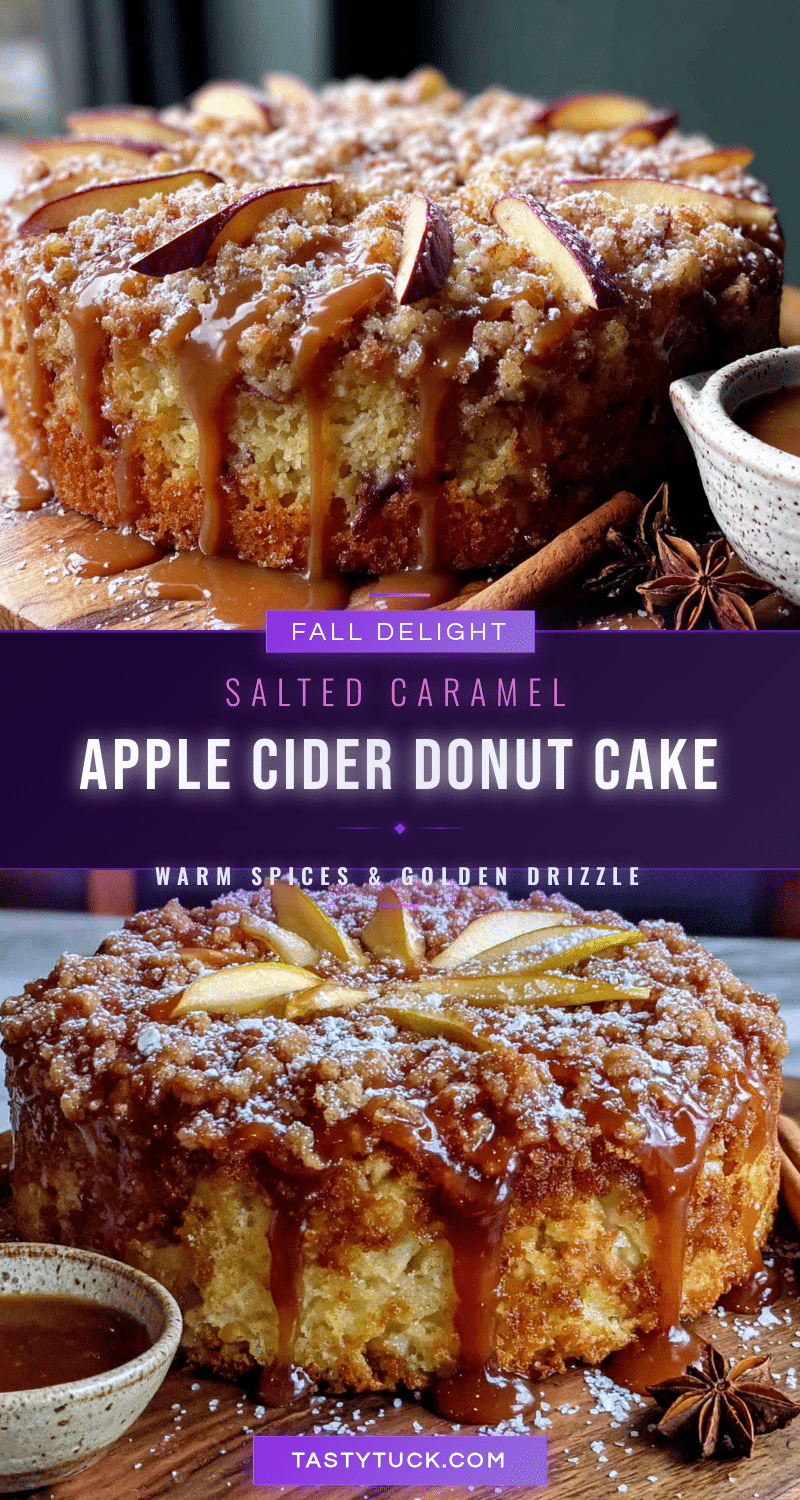
Cozy Salted Caramel Apple Cider Donut Cake
A soft, tender, buttery cake that tastes just like apple cider donuts from the orchard, but without the deep fryer. It features a hidden ribbon of homemade salted caramel and a crunchy cinnamon sugar coating.
- Prep Time: 15 minutes
- Cook Time: 55-65 minutes
- Total Time: 1 hour 20 minutes
- Yield: 10 servings 1x
- Category: Dessert
- Cuisine: American
Ingredients
- 1 ½ cups (360 ml) apple cider
- ½ cup (1 stick) unsalted butter, softened
- 1 cup (200 g) granulated sugar
- ½ cup (100 g) light brown sugar, packed
- 2 large eggs, room temperature
- 2 teaspoons vanilla extract
- 2 ½ cups (312 g) all-purpose flour
- 1 ½ teaspoons baking powder
- ½ teaspoon baking soda
- ½ teaspoon salt
- 1 ½ teaspoons ground cinnamon
- ½ teaspoon ground nutmeg
- ½ cup (120 ml) buttermilk, room temperature
- 1 cup (200 g) granulated sugar (for caramel)
- 6 tablespoons unsalted butter, cut into cubes (for caramel)
- ½ cup (120 ml) heavy cream, room temperature (for caramel)
- 1 teaspoon flaky sea salt (for caramel)
- 3 tablespoons unsalted butter, melted (for coating)
- ¼ cup (50 g) granulated sugar (for coating)
- 1 tablespoon ground cinnamon (for coating)
Instructions
- Reduce the apple cider: Pour 1 ½ cups apple cider into a medium saucepan. Bring to a boil over medium-high heat, then reduce to a steady simmer. Cook for 15-20 minutes, stirring occasionally, until reduced to about ½ cup. Set aside to cool completely.
- Make the salted caramel: In a clean, heavy-bottomed saucepan, spread 1 cup granulated sugar in an even layer. Cook over medium heat, gently swirling the pan, until the sugar melts and turns a deep amber color (6-8 minutes). Remove from heat. Carefully whisk in 6 tablespoons cubed butter until melted. Slowly pour in ½ cup heavy cream while whisking continuously. Whisk until smooth. Stir in 1 teaspoon flaky sea salt. Pour into a heat-safe container and let cool slightly.
- Preheat oven to 350°F (175°C). Grease a 9×5-inch loaf pan and line with parchment paper, leaving overhang on the long sides.
- Whisk dry ingredients: In a large bowl, whisk together 2 ½ cups flour, 1 ½ teaspoons baking powder, ½ teaspoon baking soda, ½ teaspoon salt, 1 ½ teaspoons cinnamon, and ½ teaspoon nutmeg. Set aside.
- Cream butter and sugars: In another large bowl, beat ½ cup softened butter, 1 cup granulated sugar, and ½ cup packed brown sugar until light and fluffy (3-4 minutes). Scrape down sides.
- Add wet ingredients: Beat in 2 room-temperature eggs, one at a time. Stir in 2 teaspoons vanilla extract and the cooled reduced apple cider. The mixture may look curdled; that’s normal.
- Alternate dry and wet: With mixer on low, add flour mixture in three parts, alternating with ½ cup buttermilk. Start and end with flour. Mix until just combined; do not overmix.
- Layer the batter: Pour half the batter into the prepared loaf pan. Drizzle about ⅓ cup of salted caramel over the batter. Swirl gently with a knife.
- Add remaining batter: Carefully spoon remaining batter over the caramel layer. Drizzle another 2 tablespoons of caramel on top and give one more gentle swirl.
- Bake for 55-65 minutes, until a toothpick inserted in the center comes out clean or with a few moist crumbs. If browning too quickly after 40 minutes, tent with foil.
- Cool and coat: Let cake cool in pan for 15 minutes. Use parchment sling to lift onto a wire rack. While still warm, brush top with 3 tablespoons melted butter. Mix ¼ cup sugar and 1 tablespoon cinnamon together and sprinkle generously over the top and sides. Let cool completely before slicing.
Notes
Don’t skip reducing the cider; it concentrates the apple flavor. Room temperature ingredients are important for a tender crumb. The cake may sink slightly in the center if the caramel swirl is heavy; that’s normal. Store in an airtight container at room temperature for up to 3 days. Freezes well for up to 3 months (without cinnamon sugar coating).
Nutrition
- Serving Size: 1 slice
- Calories: 380
- Sugar: 35
- Sodium: 320
- Fat: 18
- Saturated Fat: 11
- Carbohydrates: 52
- Fiber: 2
- Protein: 4
Keywords: apple cider donut cake, salted caramel cake, fall dessert, easy cake recipe, apple cider cake