My husband took a bite, paused mid-chew, and then just stared at his fork for a second. That’s the moment I knew this butternut squash risotto was different. He’s not one for dramatic food reactions—usually it’s a quick “yep, it’s good” and back to whatever game is on TV. But this time, he actually asked me to write it down. That’s the highest compliment in our house, honestly.
I had been chasing that creamy, cozy risotto texture for weeks. You know how it goes—too watery one night, too stiff the next, and once I burned the sage so badly the whole kitchen smelled like a campfire that went wrong. But this version? It clicked. The sweetness of roasted squash melts right into the arborio rice, and that brown butter with crispy sage leaves on top? It’s the kind of finish that makes you feel like you actually know what you’re doing in the kitchen.
There is something about a bowl of creamy butternut squash risotto that feels like a quiet win on a chilly evening. It’s not the fastest dinner, but it’s the kind that rewards patience. And when you get that first spoonful with a bit of crispy sage and a drizzle of brown butter, you’ll understand why it’s worth every stir. I’ve tested this one enough times to trust it completely—so you can skip the trial and error and just get to the good part.
Why You’ll Love This Recipe
I have made this creamy butternut squash risotto more times than I can count, and it keeps surprising me. Every batch feels a little more forgiving than the last, and that’s the kind of recipe I actually want to share. Here is why I think it will earn a spot in your regular rotation:
- Rich and Velvety Without the Cream: The squash breaks down right into the rice, giving you that luxurious texture without a drop of heavy cream. It is naturally thick and satisfying.
- One Skillet Wonder: You roast the squash while you start the risotto, then fold it in at the end. Minimal cleanup, maximum flavor. I use my trusty cast iron for the whole thing.
- Brown Butter Magic: That nutty, golden butter with crispy sage leaves takes this from good to unforgettable. It’s a simple step that makes the whole dish feel special.
- Perfect for Cozy Nights or Impressing Guests: It feels fancy enough for a dinner party but easy enough for a Tuesday when you need something warm. I have served it for both and it never disappoints.
- Packed with Real Ingredients: No cream, no processed shortcuts. Just rice, broth, squash, butter, and sage. It’s comfort food you can feel good about eating.
This isn’t just another risotto recipe. It’s the one where the squash gets roasted first (not boiled in broth), which gives it a deeper, caramelized sweetness. And that brown butter? It adds a toasty richness that ties everything together. Honestly, the first time I made it, I ate two bowls standing at the counter. No regrets.
What Ingredients You Will Need
This creamy butternut squash risotto relies on simple, real ingredients that work together to build deep flavor. Most of these are pantry staples for me now, and none of them are hard to find at a regular grocery store.
- Butternut Squash (1 medium, about 3 cups cubed): Look for one that feels heavy for its size with firm, unblemished skin. I prefer to buy whole and cube it myself—pre-cut cubes can be dry. Roasting brings out its natural sweetness.
- Arborio Rice (1 ½ cups): This short-grain rice is the key to that signature creamy texture. It releases starch slowly as it stirs. I have tried carnaroli too, and it works well, but arborio is easier to find and more forgiving.
- Chicken or Vegetable Broth (5-6 cups, warmed): A good broth makes a difference here. I use low-sodium so I can control the salt. Homemade is lovely, but a quality boxed brand works perfectly. For a vegetarian version, use vegetable broth.
- Dry White Wine (½ cup): This adds acidity to balance the richness. A sauvignon blanc or pinot grigio is great. If you don’t cook with wine, you can skip it and add an extra splash of broth with a squeeze of lemon at the end.
- Unsalted Butter (4 tablespoons, divided): We use some for the risotto base and the rest for the brown butter sage topping. Using unsalted lets you control the salt level.
- Fresh Sage Leaves (12-15 leaves): Fresh is non-negotiable here. Dried sage won’t give you that crispy texture or the same aromatic punch. Look for bright green leaves without any brown spots.
- Yellow Onion (1 medium, finely diced): A mellow base that disappears into the risotto. I’ve used shallots too, and they work beautifully—just use about 2 large shallots instead.
- Garlic (3 cloves, minced): Fresh garlic adds warmth. Don’t skip it, but don’t let it burn either.
- Parmesan Cheese (1 cup, freshly grated): Please grate it yourself. The pre-shredded stuff has anti-caking agents that ruin the texture. Parmigiano-Reggiano is my go-to for its nutty, salty depth.
- Salt and Black Pepper (to taste): I use fine sea salt for cooking and flaky salt for finishing. Freshly cracked black pepper makes a difference.
- Olive Oil (2 tablespoons): For roasting the squash. A good extra-virgin olive oil adds subtle fruitiness.
That’s it. No cream, no mascarpone, no complicated ingredients. Just honest food that comes together into something that tastes way more luxurious than it has any right to be.
Equipment Needed
You don’t need a fancy kitchen to make this creamy butternut squash risotto. Here is what I actually use:
- Large Heavy-Bottomed Pot or Dutch Oven: A 5- to 6-quart pot works best. It distributes heat evenly and prevents the rice from scorching. I use my enameled cast iron dutch oven and it is perfect.
- Baking Sheet: For roasting the squash. A rimmed sheet works best to catch any juices. Line it with parchment for easy cleanup.
- Wooden Spoon or Silicone Spatula: You need something sturdy for all that stirring. Wooden spoons are my favorite—they don’t scratch the pot and feel right in the hand.
- Small Skillet: For making the brown butter and sage. A light-colored pan helps you see the butter change color.
- Ladle: For adding warm broth to the risotto. A ½-cup ladle makes it easy to control the liquid.
- Chef’s Knife and Cutting Board: For cubing the squash and dicing the onion. A sharp knife makes squash prep much safer and faster.
- Box Grater or Microplane: For grating the Parmesan. A microplane gives you that fluffy, melt-in texture.
If you don’t have a dutch oven, a deep stainless steel pot works just fine. Just keep an eye on the heat and stir a little more often. I have made risotto in a cheap nonstick pot before and it worked—just not as evenly.
Preparation Method

This creamy butternut squash risotto comes together in stages, but none of them are complicated. Here is exactly how I do it, step by step.
- Preheat and Prep the Squash: Preheat your oven to 400°F. Peel the butternut squash, scoop out the seeds, and cut it into ½-inch cubes. Toss with 1 tablespoon olive oil, a pinch of salt, and a few cracks of black pepper. Spread in a single layer on a baking sheet. Roast for 25-30 minutes, flipping halfway, until tender and lightly caramelized on the edges. Set aside.
- Warm the Broth: While the squash roasts, warm the broth in a saucepan over low heat. Keep it at a gentle simmer. Cold broth will shock the rice and slow down cooking.
- Start the Base: In your large pot, melt 2 tablespoons of butter over medium heat. Add the diced onion and cook for 4-5 minutes until soft and translucent. Add the minced garlic and cook for 30 seconds until fragrant. Do not let the garlic brown.
- Toast the Rice: Add the arborio rice to the pot. Stir constantly for 1-2 minutes until the grains turn slightly translucent at the edges and smell nutty. This step helps the rice hold its shape during cooking.
- Deglaze with Wine: Pour in the white wine and stir until it is mostly absorbed. The alcohol cooks off, leaving behind acidity that balances the richness. This takes about 2 minutes.
- Add Broth, Ladle by Ladle: Begin adding the warm broth one ladleful (about ½ cup) at a time. Stir frequently and let each addition absorb before adding the next. This is the most important part—rushing leads to mushy risotto. Keep the heat at a steady medium-low so the rice simmers gently, not furiously.
- Know When to Stop: After about 18-20 minutes, taste the rice. It should be tender but still have a slight bite at the center (al dente). You may not use all the broth. When the rice is almost done, stir in the roasted squash cubes. Reserve a few for topping if you want.
- Finish with Cheese and Butter: Remove the pot from heat. Stir in the grated Parmesan and 1 tablespoon of butter. The residual heat melts everything into a creamy, dreamy texture. Taste and adjust salt and pepper.
- Make the Brown Butter Sage Topping: In a small skillet, melt the remaining 1 tablespoon of butter over medium heat. Add the sage leaves. Swirl the pan constantly. The butter will foam, then turn golden, then amber. As soon as it smells nutty and the sage leaves are crispy (about 2-3 minutes), remove from heat. Watch carefully—brown butter goes from perfect to burnt very fast.
- Serve Immediately: Spoon the risotto into bowls. Top with a few reserved roasted squash cubes, a drizzle of the brown butter, and a few crispy sage leaves. Add a final grating of Parmesan and a crack of black pepper. Risotto waits for no one—serve it right away.
One thing I learned the hard way: don’t walk away during the broth additions. Risotto demands attention, but that’s also part of its charm. Put on a podcast or pour yourself a glass of wine and enjoy the process.
Cooking Tips & Techniques
I have messed up this creamy butternut squash risotto more times than I care to admit. Here is what I learned so you don’t have to repeat my mistakes.
- Keep the Broth Warm: This is non-negotiable. Adding cold broth stops the cooking process and makes the rice gummy. I keep mine on the stove next to the risotto pot so it’s easy to reach.
- Stir, but Don’t Obsess: You don’t need to stir constantly. A good stir every 30-45 seconds is plenty. Constant stirring can break the grains and make the risotto gluey. I stir in a slow, steady rhythm—not frantic.
- Trust the Squash Roast: Roasting the squash instead of boiling it concentrates the sweetness and prevents the risotto from becoming watery. I have tried both ways and roasting wins every time. The caramelized edges add so much flavor.
- Watch the Brown Butter: The first time I made brown butter, I burned it so badly I had to start over. The key is to swirl the pan constantly and pull it off the heat the moment it turns amber. It will keep cooking in the hot pan for a few seconds.
- Salt in Layers: Season the squash before roasting, add a pinch to the onions, and taste the risotto before adding more salt at the end. Parmesan is salty, so go easy early on.
- Rest Before Serving: Let the risotto sit off the heat for 1-2 minutes after stirring in the cheese. This lets the starches settle into that perfect creamy consistency. It should flow slowly when you spoon it, not hold its shape stiffly.
One mistake I still make sometimes is using too much broth too quickly. Patience really is the secret here. Each ladleful needs time to work its way into the rice.
Variations & Adaptations
This creamy butternut squash risotto is flexible, and I have played around with it quite a bit. Here are some variations that actually work.
- Make It Vegan: Use vegetable broth, replace butter with a good vegan butter or olive oil, and use nutritional yeast instead of Parmesan. The texture won’t be exactly the same, but it is still creamy and delicious. I have made this for vegan friends and it was a hit.
- Add Protein: Top the risotto with crispy pancetta, crumbled Italian sausage, or shredded rotisserie chicken. The salty, savory contrast is wonderful. I sometimes add crispy prosciutto on top for extra crunch.
- Swap the Squash: Kabocha, acorn, or even sweet potato work beautifully. Just adjust roasting time based on the vegetable. Kabocha has a natural sweetness that pairs perfectly with sage.
- Go Gluten-Free: This recipe is naturally gluten-free as long as you use certified gluten-free broth. Arborio rice is a gluten-free grain, so no swaps needed there.
- Add Greens: Stir in a handful of fresh spinach or chopped kale during the last few minutes of cooking. The greens wilt right into the risotto and add color and nutrients. I do this often in winter.
- Try Different Herbs: If you don’t have fresh sage, thyme or rosemary work well in the brown butter. The flavor shifts a bit, but it is still lovely. I have used fresh thyme sprigs and it was a nice change.
My favorite variation? I once added a pinch of nutmeg to the roasted squash before folding it in. That warm, almost sweet spice made the whole dish taste like fall in a bowl. Try it if you are feeling adventurous.
Serving & Storage Suggestions
This creamy butternut squash risotto is best served immediately, but here is how to handle leftovers and make the most of it.
- Serving Temperature: Serve hot, straight from the pot. Risotto cools quickly, so warm your bowls if you can. I pop mine in a 200°F oven for a few minutes before serving.
- Presentation: Spoon into shallow bowls and top with crispy sage leaves, a drizzle of brown butter, and extra Parmesan. A sprinkle of flaky sea salt right before serving adds a lovely crunch.
- What to Serve With It: A simple arugula salad with lemon vinaigrette cuts through the richness. Grilled chicken or roasted pork chops make it a full meal. For a cozy night, I serve it with a glass of the same white wine I used in the recipe.
- Storage: Store leftovers in an airtight container in the fridge for up to 3 days. The risotto will absorb more liquid and thicken as it sits. Don’t worry—it’s fixable.
- Reheating: The best way is on the stovetop with a splash of broth or water. Warm over low heat, stirring gently, until loosened and hot. The microwave works in a pinch, but the texture won’t be as creamy. Add a little water before microwaving and stir halfway through.
- Freezing: Risotto freezes surprisingly well. Let it cool completely, then transfer to a freezer-safe container. Freeze for up to 2 months. Thaw in the fridge overnight and reheat as directed.
Honestly, I think leftover risotto is almost as good as fresh. The flavors meld together overnight, and with a little broth to revive it, you get a second meal that feels just as comforting.
Nutritional Information & Benefits
This creamy butternut squash risotto is comfort food that happens to have some real nutritional perks. Here is a rough estimate per serving (based on 6 servings):
- Calories: Approximately 380-420
- Protein: 10-12g
- Fat: 14-16g
- Carbohydrates: 55-60g
- Fiber: 5-7g
- Vitamin A: Over 200% of the daily value (thanks to the squash)
Butternut squash is packed with vitamin A, vitamin C, and fiber, which supports digestion and immune health. Arborio rice provides steady energy, and the Parmesan adds calcium and protein. The brown butter and sage add healthy fats and antioxidants. This isn’t a diet food, but it is a nourishing meal that leaves you satisfied, not stuffed.
If you are watching sodium, use low-sodium broth and go easy on the salt. The Parmesan adds plenty of savory depth on its own. For a lighter version, you can cut the butter in half and use more broth for creaminess.
Conclusion
This creamy butternut squash risotto is one of those recipes that feels like a hug in a bowl. It’s rich without being heavy, elegant without being fussy, and it comes together with ingredients you can actually pronounce. The roasted squash brings natural sweetness, the brown butter and sage add that nutty, aromatic finish, and the whole thing is just deeply, quietly satisfying.
I love that this recipe is forgiving enough for a weeknight but impressive enough for company. Whether you are cooking for yourself, your family, or a table full of guests, it delivers every time. Don’t be afraid to make it your own—swap the herbs, add some greens, or top it with crispy pancetta. The base is solid, and it welcomes creativity.
If you try this recipe, I would love to hear how it turned out. Drop a comment below, tag me in your photos, or tell me about your own twist. And if you are looking for more cozy comfort food, you might also enjoy this loaded pasta e fagioli soup or this southern squash casserole with golden cheese crust for another vegetable-forward dish. Happy cooking, and may your risotto always be perfectly creamy.
Frequently Asked Questions
Can I use pre-cut butternut squash from the store?
Yes, you can. Just keep in mind that pre-cut cubes are often smaller and may dry out faster during roasting. Toss them with a little extra olive oil and check them a few minutes earlier than the recipe says.
Do I have to use white wine?
Not at all. If you prefer not to cook with wine, replace it with an equal amount of warm broth and add a squeeze of fresh lemon juice at the end. The acidity is important for balance, so don’t skip the lemon.
Why is my risotto always mushy?
Mushy risotto usually means the heat was too high or you added too much broth at once. Keep the heat at a steady medium-low and add broth one ladleful at a time, waiting until it is mostly absorbed before adding more.
Can I make this risotto ahead of time?
Risotto is best fresh, but you can make it a few hours ahead. Spread it on a baking sheet to cool quickly, then reheat with a splash of broth. It won’t be quite as creamy, but it is still delicious.
How do I get crispy sage leaves without burning them?
Use medium heat and watch the butter closely. The sage leaves will crisp up in about 2 minutes. As soon as the butter turns amber and smells nutty, remove the pan from the heat. The leaves will continue to crisp as they cool.
Pin This Recipe!
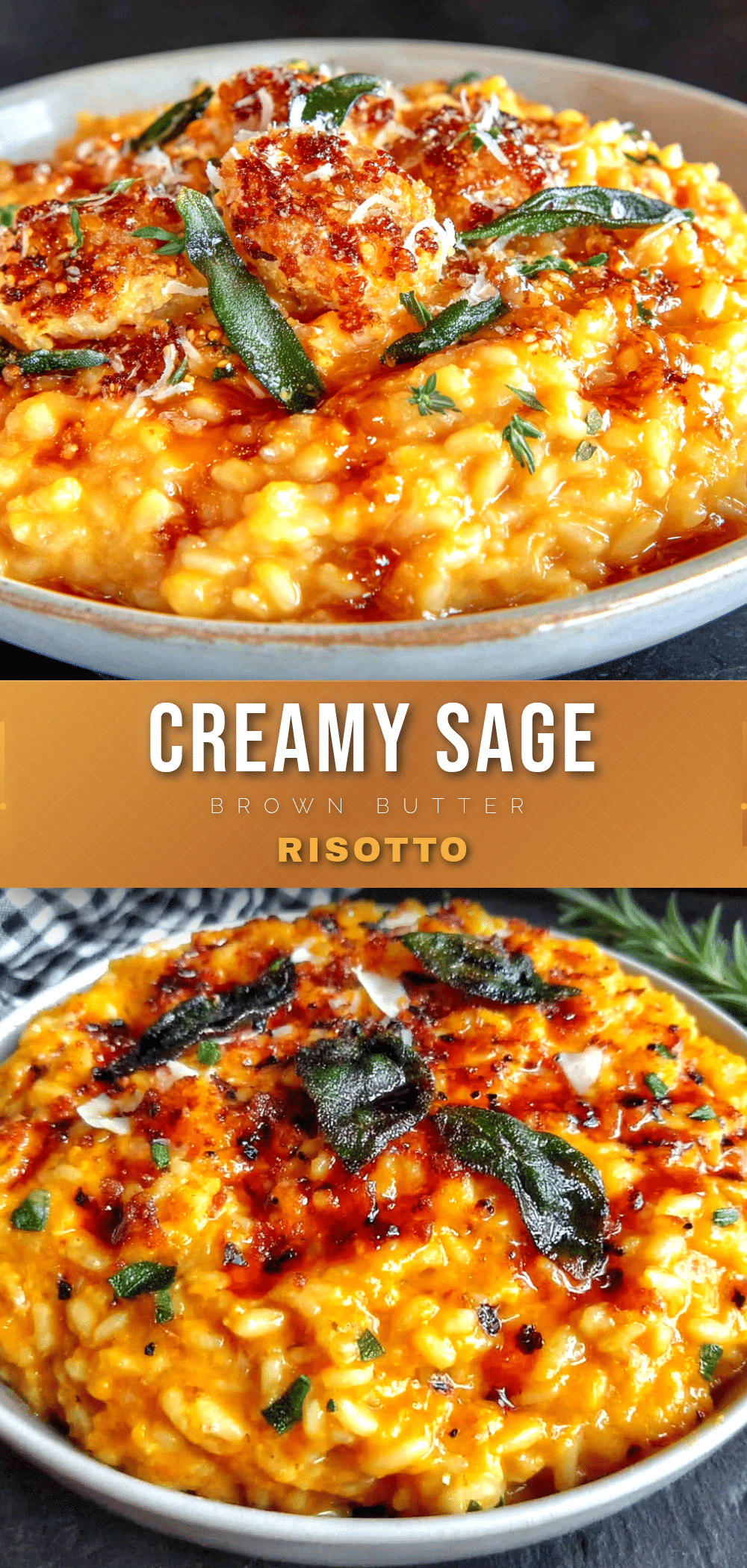
Creamy Butternut Squash Risotto with Sage Brown Butter

A rich and velvety risotto where roasted butternut squash melts into arborio rice, finished with nutty brown butter and crispy sage leaves. This one-skillet wonder is perfect for cozy nights or impressing guests.
- Prep Time: 15 minutes
- Cook Time: 30 minutes
- Total Time: 45 minutes
- Yield: 6 servings 1x
- Category: Main Course
- Cuisine: Italian
Ingredients
- 1 medium butternut squash (about 3 cups cubed)
- 1 ½ cups arborio rice
- 5–6 cups chicken or vegetable broth, warmed
- ½ cup dry white wine (e.g., Sauvignon Blanc or Pinot Grigio)
- 4 tablespoons unsalted butter, divided
- 12–15 fresh sage leaves
- 1 medium yellow onion, finely diced
- 3 cloves garlic, minced
- 1 cup freshly grated Parmesan cheese (Parmigiano-Reggiano preferred)
- Salt and black pepper to taste
- 2 tablespoons extra-virgin olive oil
Instructions
- Preheat oven to 400°F. Peel butternut squash, scoop out seeds, and cut into ½-inch cubes. Toss with 1 tablespoon olive oil, a pinch of salt, and black pepper. Spread in a single layer on a baking sheet. Roast for 25-30 minutes, flipping halfway, until tender and caramelized. Set aside.
- Warm the broth in a saucepan over low heat. Keep at a gentle simmer.
- In a large pot or Dutch oven, melt 2 tablespoons butter over medium heat. Add diced onion and cook 4-5 minutes until soft and translucent. Add minced garlic and cook 30 seconds until fragrant.
- Add arborio rice and stir constantly for 1-2 minutes until grains are slightly translucent at edges and smell nutty.
- Pour in white wine and stir until mostly absorbed, about 2 minutes.
- Begin adding warm broth one ladleful (about ½ cup) at a time, stirring frequently. Let each addition absorb before adding the next. Keep heat at medium-low. Continue for 18-20 minutes until rice is tender but still al dente.
- When rice is almost done, stir in roasted squash cubes (reserve a few for topping). Remove pot from heat.
- Stir in grated Parmesan and 1 tablespoon butter until creamy. Taste and adjust salt and pepper.
- In a small skillet, melt remaining 1 tablespoon butter over medium heat. Add sage leaves and swirl constantly until butter turns amber and smells nutty, about 2-3 minutes. Remove from heat immediately.
- Serve risotto immediately in bowls. Top with reserved squash cubes, drizzle of brown butter, crispy sage leaves, extra Parmesan, and a crack of black pepper.
Notes
Keep broth warm to avoid shocking the rice. Stir every 30-45 seconds, not constantly. Roast squash instead of boiling to concentrate sweetness. Watch brown butter carefully as it burns quickly. Let risotto rest 1-2 minutes off heat before serving for perfect creaminess.
Nutrition
- Serving Size: 1 serving (about 1.5
- Calories: 400
- Sugar: 8
- Sodium: 600
- Fat: 15
- Saturated Fat: 8
- Carbohydrates: 58
- Fiber: 6
- Protein: 11
Keywords: butternut squash risotto, creamy risotto, sage brown butter, fall recipe, vegetarian risotto, one skillet meal