The crackle of that skin as you press a finger against it—that’s the whole reason I do this every November. Not the compliments, not the leftovers, not even the gravy (though don’t get me wrong, I love the gravy). It’s that moment when you’re carving and the knife meets absolutely no resistance, gliding through meat that’s somehow both tender and firm, and the skin shatters into these salty, buttery shards that you absolutely have to sneak before anyone sees. That’s what a perfect spatchcock turkey gives you. Everything else is just… bonus.
I wasn’t always a spatchcock convert. For years I did the whole traditional roasting thing—trussing, flipping, basting every twenty minutes like a nervous parent. And you know what? It worked okay. But okay wasn’t cutting it anymore after I watched a friend’s turkey come out with thighs hitting 185 while the breast was still sitting at 150. We ate it. We smiled. But I knew there had to be something better.
Then I flattened my first bird. Cracked that backbone right out with kitchen shears (honestly, it’s more satisfying than it sounds), pressed down until I heard the breastbone pop, and slathered the whole thing with an herb butter that smelled like my grandmother’s garden in July. The turkey cooked in under two hours. The meat was juicy edge to edge. And the skin? Forget about it. I haven’t looked back since.
This recipe combines that spatchcock method with a bright, savory herb butter and an apple cider gravy that uses the pan drippings in the most honest way possible. No flour paste. No store-bought broth. Just apples, butter, and patience. It’s the kind of turkey dinner that makes people close their eyes on the first bite—and that’s not something I say lightly.
Why You’ll Love This Recipe
Let me be real with you for a second. Turkey can be dry. It can be bland. It can take up your entire oven for five hours while you stress about timing. This recipe solves all of that, and it does it without any fancy equipment or culinary school techniques.
- Incredibly Fast Cooking Time : A 12-14 pound spatchcock turkey roasts in about 75-90 minutes. That’s less time than most holiday side dishes take to bake. You read that right.
- Juicy Meat, Every Time : By flattening the bird, the dark meat and white meat cook at the same rate. No more dry breasts while you wait for thighs to finish. It’s physics, not luck.
- Simple, Pantry-Friendly Ingredients : Butter, fresh herbs, garlic, apple cider—these are things you probably already have or can grab in one quick store run. No weird specialty items.
- That Skin, Though : The herb butter gets rubbed under the skin and all over the outside, creating a golden, crispy, impossibly flavorful crust that makes the turkey the star of the plate.
- One-Pan Cleanup : The gravy comes together right in the roasting pan using the drippings. Less dishes, more time with your people.
I’ve tested this recipe on my own family, on friends, and on neighbors who showed up skeptical and left asking for the recipe. It’s the kind of dish that makes people say, “Wait, you made this? At home?” And honestly? That never gets old.
If you’ve been intimidated by whole turkey in the past, this is the recipe that changes everything. It’s approachable. It’s forgiving. And it delivers results that look like you spent all day in the kitchen—when really, you were just relaxing with a glass of wine while your oven did the work.
What Ingredients You Will Need
This recipe relies on a short list of quality ingredients, each doing its part to build layers of flavor. Here’s what you’ll need and why each one matters.
For the Herb Butter
- 1 cup (2 sticks) unsalted butter, softened — I use Kerrygold here. The higher butterfat content means richer flavor and better browning. Let it sit out for at least an hour before mixing.
- 3 tablespoons fresh rosemary, finely chopped — Woody and aromatic, rosemary stands up to the long roast without burning. Strip the leaves from the stems before chopping.
- 3 tablespoons fresh thyme leaves — Earthy and slightly floral. Run your fingers down the stems to strip the leaves quickly.
- 2 tablespoons fresh sage, finely chopped — That classic poultry flavor. Don’t skip it—sage is what makes turkey taste like Thanksgiving.
- 4 cloves garlic, minced — Fresh garlic only here. The jarred stuff has a different flavor that turns bitter during roasting.
- 1 tablespoon lemon zest — From about one large lemon. The brightness cuts through the fat and keeps the butter from feeling heavy.
- 2 teaspoons kosher salt — I use Diamond Crystal. If using Morton’s, reduce to 1 ½ teaspoons.
- 1 teaspoon black pepper, freshly ground — Pre-ground pepper won’t give you the same pop.
For the Turkey
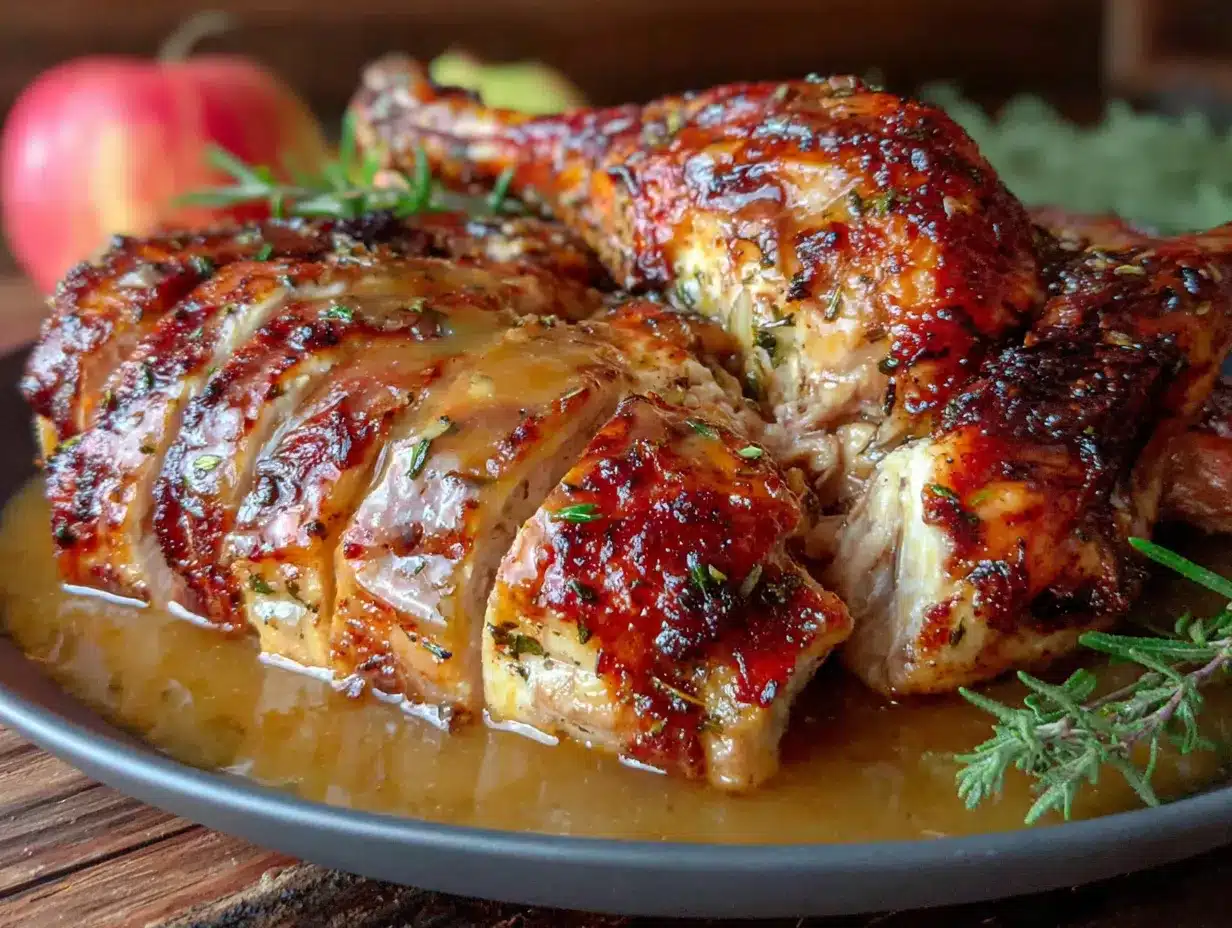
- 1 whole turkey (12-14 pounds), thawed if frozen — Look for a bird without added broth or saline solution if possible. Natural birds roast up crispier.
- 1 tablespoon kosher salt — For seasoning the cavity and any exposed meat.
- 1 teaspoon black pepper
- 1 large onion, quartered — Yellow or sweet onion works fine. This goes in the cavity for aroma, not for eating.
- 2 apples, quartered — Honeycrisp or Fuji. The apples steam from inside the cavity, adding moisture and a subtle sweetness.
- 4 sprigs fresh rosemary
- 4 sprigs fresh thyme
- 1 cup low-sodium chicken or turkey broth — For the bottom of the pan. This prevents drippings from burning and forms the base of your gravy.
For the Apple Cider Gravy
- ¼ cup unsalted butter
- ¼ cup all-purpose flour — You can use a gluten-free all-purpose blend if needed; just whisk a little longer.
- 2 cups apple cider, not vinegar — Look for fresh, refrigerated cider if possible. The shelf-stable stuff works too but has a slightly cooked flavor.
- 2 cups turkey or chicken broth, preferably low-sodium
- Reserved pan drippings — This is where the magic lives. Don’t skip deglazing the pan.
- Salt and pepper to taste
- 1 tablespoon fresh thyme leaves (optional, for garnish)
Ingredient Note : If you can’t find fresh apple cider, unfiltered apple juice works in a pinch. Just avoid anything labeled “apple juice cocktail” or “apple drink”—those have added sugars that throw off the gravy’s balance.
Equipment Needed
You don’t need a ton of fancy gear for this recipe, but a few specific tools make the job much easier.
- Kitchen shears — These are non-negotiable for cutting out the backbone. A sturdy pair with a spring-action handle saves your hands from cramping. I use my OXO shears and they’ve gone through at least a dozen turkeys without dulling.
- Large rimmed baking sheet or roasting pan — A half-sheet pan works perfectly. You want something with sides to catch drippings but not so deep that the turkey steams instead of roasts.
- Wire rack that fits inside your pan — This lifts the turkey off the bottom so air circulates underneath. No rack? Crumple long strips of aluminum foil into coils and arrange them like a grate.
- Instant-read thermometer — Guessing doneness is how dry turkey happens. A Thermapen is pricey but worth it; a basic digital probe works fine too.
- Small bowl — For mixing the herb butter.
- Chef’s knife and cutting board — For chopping herbs and quartering the aromatics.
- Whisk — For smoothing out the gravy. A flat whisk works best in a roasting pan.
- Fine-mesh strainer (optional) — For straining the gravy if you want it perfectly smooth. I skip this step half the time because I like the little bits of caramelized onion.
Preparation Method
Take your time with the prep. The actual cooking is fast, but getting everything set up right makes all the difference.
- Make the herb butter (can be done up to 3 days ahead). In a small bowl, combine the softened butter, chopped rosemary, thyme, sage, minced garlic, lemon zest, salt, and pepper. Mix until everything is evenly distributed. Scrape the butter onto a piece of plastic wrap, shape it into a log, and refrigerate until firm. Let it come back to room temperature before using—cold butter won’t spread under the turkey skin.
- Prep the turkey. Remove the turkey from its packaging. Take out the giblets and neck (save them for stock if you’re ambitious). Pat the turkey completely dry inside and out with paper towels. This is crucial—wet skin won’t crisp. Let the turkey sit uncovered on a tray in the refrigerator for 2-4 hours if you have time. This dries out the skin even more and gives you that shatter-crisp finish.
- Spatchcock the bird. Place the turkey breast-side down on your cutting board. Using your kitchen shears, cut along one side of the backbone, from the tail end all the way up to the neck. Repeat on the other side to remove the backbone entirely. Save it for stock or discard it. Flip the turkey over and press down firmly on the breastbone with the heels of your hands until you hear it crack and the bird lies flat. You’ll feel a satisfying pop—that’s normal.
- Season and butter the turkey. Season the underside of the turkey with half the salt and pepper. Flip it back over breast-side up on your wire rack. Use your fingers to gently loosen the skin from the breast meat, working from the neck end toward the legs. Be careful not to tear the skin. Take about two-thirds of the herb butter and push it under the skin, spreading it evenly over both breasts and the tops of the thighs. Rub the remaining butter all over the outside of the turkey. Sprinkle the remaining salt and pepper over the skin.
- Add aromatics and broth. Stuff the cavity area (it won’t hold much since the bird is flat) with the quartered onion, apple pieces, and herb sprigs. Pour the cup of broth into the bottom of the pan, being careful not to splash the turkey skin.
- Roast the turkey. Preheat your oven to 425°F with the rack in the lower third. Roast the turkey for about 12-15 minutes per pound, so a 13-pound bird takes roughly 75-85 minutes. Start checking temperature at the 60-minute mark. The turkey is done when the thickest part of the breast reads 155°F and the thigh reads 170°F. The temperature will continue rising about 5-10 degrees during resting.
- Rest the turkey. Transfer the turkey to a cutting board and tent loosely with foil. Let it rest for at least 20-30 minutes. Do not skip this step—it lets the juices redistribute so every slice is moist. While the turkey rests, make the gravy.
- Make the apple cider gravy. Place the roasting pan over two burners on medium heat. Add the ¼ cup butter and let it melt, scraping up all the browned bits from the bottom of the pan with a wooden spoon or spatula. Sprinkle the flour over the butter and whisk constantly for 1-2 minutes until the mixture turns golden and smells nutty. Slowly pour in the apple cider while whisking, then add the broth. Bring to a simmer and cook for 5-7 minutes, whisking occasionally, until the gravy thickens enough to coat the back of a spoon. Season with salt and pepper to taste. Strain through a fine-mesh strainer if you want it silky, or leave it rustic.
- Carve and serve. Carve the turkey by removing the legs first, then slicing the breast meat against the grain. Arrange on a platter, spoon some gravy over the top, and pass the rest at the table.
Cooking Tips & Techniques
I’ve made this recipe at least a dozen times, and I’ve learned a few things the hard way so you don’t have to.
Dry skin is crispy skin. The number one mistake people make is putting a wet turkey in the oven. Pat it dry. Let it air-dry in the fridge. If you’re short on time, use a hair dryer on the cool setting to blast the skin dry. I’m not kidding—it works.
Don’t skip the wire rack. I once tried roasting a spatchcock turkey directly on a baking sheet. The bottom got soggy and the skin never crisped underneath. The rack lifts the bird so hot air circulates all around. If you don’t have a rack, use halved onions or celery stalks as a makeshift grate.
Trust your thermometer, not the timer. Ovens vary wildly. A turkey that should take 80 minutes might take 70 or 100 depending on your oven’s calibration. Start checking early and pull the bird at the right temperature, not the right time.
Let the butter soften completely. I’ve made the mistake of trying to spread cold herb butter under turkey skin. It doesn’t work. The butter stays in clumps and melts unevenly. Room-temperature butter spreads like a dream and creates that even layer of flavor.
Deglaze while the pan is hot. Once you remove the turkey, the drippings start to harden and stick. Make the gravy immediately while the pan is still warm. If the drippings have solidified, warm the pan over low heat for a minute before adding the butter.
Season the underside too. A lot of recipes only season the top of the turkey. But the underside—especially the thighs—needs salt and pepper too. It’s a small step that makes a big difference in overall flavor.
Variations & Adaptations
This recipe is flexible. Here are some ways to make it your own.
Herb swap. Not a fan of sage? Use tarragon or marjoram instead. Both bring a different but equally delicious flavor. I once made this with a combination of dill and parsley when I ran out of rosemary—it was lighter and brighter, perfect for a spring gathering.
Spicy herb butter. Add 1-2 teaspoons of red pepper flakes or a minced chipotle pepper in adobo to the butter mixture. The heat cuts through the richness and adds a subtle warmth that pairs beautifully with the apple cider gravy.
Citrus variation. Replace the apple cider with fresh orange juice in the gravy, and add orange zest to the herb butter. The orange and sage combination is surprisingly good—bright and savory at the same time.
Gluten-free option. Use a gluten-free all-purpose flour blend in the gravy. I’ve used Bob’s Red Mill 1-to-1 with great results. Just whisk a little longer—gluten-free flours take an extra minute to thicken.
Dairy-free adaptation. Substitute the butter with a high-quality vegan butter (Miyoko’s works well) or use olive oil for the herb rub. The flavor changes slightly but the texture stays excellent.
Smoked version. If you have a smoker, this spatchcock turkey takes beautifully to smoke. Set your smoker to 275°F using apple or cherry wood. Smoke for 3-4 hours until the internal temperature hits 155°F in the breast. The herb butter keeps the meat moist through the longer cook time.
Serving & Storage Suggestions
This turkey is best served hot, right after resting. Arrange the carved meat on a large platter and spoon a little gravy over the top to keep everything glossy. Garnish with fresh thyme sprigs and apple slices for a pretty presentation.
What to serve alongside. This turkey pairs beautifully with classic sides. A cozy Southern loaded squash casserole with golden cheese crust adds a creamy, cheesy element that balances the savory turkey. For something fresh, the fresh loaded strawberry poppyseed salad brings brightness and acidity to cut through the richness. And if you want a starch that soaks up that apple cider gravy, the crispy cast iron loaded cornbread skillet is practically made for it.
Storage. Store leftover turkey in an airtight container in the refrigerator for up to 4 days. Keep the gravy in a separate container—if you store them together, the turkey gets soggy.
Reheating. The best way to reheat turkey without drying it out is to place slices in a baking dish, add a splash of broth or gravy, cover with foil, and warm in a 300°F oven for 10-15 minutes. For individual portions, the microwave works in a pinch—just cover the plate with a damp paper towel.
Freezing. Cooked turkey freezes well for up to 3 months. Wrap slices tightly in plastic wrap, then foil, and place in a freezer bag. Thaw overnight in the refrigerator before reheating. The gravy also freezes beautifully—pour it into a freezer-safe container and thaw in the fridge.
Flavor development. Honestly? Leftover turkey often tastes better the next day. The flavors meld overnight and the meat seems even more tender. I always make extra on purpose just for sandwiches and salads.
Nutritional Information & Benefits
This recipe serves about 10-12 people, depending on appetites and side dishes. Nutritional values are approximate and based on a 6-ounce serving of white meat with 2 tablespoons of gravy.
| Nutrient | Amount Per Serving |
|---|---|
| Calories | 385 |
| Total Fat | 22g |
| Saturated Fat | 12g |
| Cholesterol | 145mg |
| Sodium | 620mg |
| Total Carbohydrates | 8g |
| Dietary Fiber | 0g |
| Sugars | 5g |
| Protein | 38g |
Turkey is an excellent source of lean protein, providing all nine essential amino acids. It’s also rich in B vitamins, particularly B6 and B12, which support energy metabolism and nervous system function. The apple cider in the gravy adds a small amount of vitamin C and antioxidants, while the herbs contribute anti-inflammatory compounds. The butter adds saturated fat, so if you’re watching your intake, you can reduce the amount or use a plant-based alternative.
This recipe is naturally gluten-free if you use a gluten-free flour blend in the gravy. It’s also low-carb-friendly, with most of the carbohydrates coming from the apple cider in the gravy.
Conclusion
This herb butter spatchcock turkey with apple cider gravy isn’t just a recipe—it’s a game-changer for anyone who’s ever stressed over a dry, unevenly cooked bird. The spatchcock method delivers juicy meat from edge to edge, the herb butter infuses every bite with savory flavor, and the apple cider gravy ties it all together with a sweet-tart finish that feels special without being fussy.
I’ve made this turkey for Thanksgivings, Christmas dinners, and random Tuesday nights when I wanted something that felt like a celebration. Every single time, people ask what I did differently. Every single time, they go back for seconds. And every single time, I feel that little crackle of pride when I hear the skin shatter under the knife.
Try it. Customize the herbs, play with the gravy, make it your own. And when you do, come back and tell me how it went. Drop a comment below or tag me in your photos—I genuinely love seeing these birds come out of ovens all over the country. It’s the kind of recipe that builds confidence in the kitchen, and that’s something worth sharing.
Now go spatchcock something. You’ve got this.
Frequently Asked Questions
Can I spatchcock a turkey the night before?
Absolutely. Spatchcock the bird, season it, and leave it uncovered on a wire rack in the refrigerator overnight. This dries out the skin even more, which means extra crispiness. Just rub the herb butter on right before roasting.
Do I have to use fresh herbs?
Fresh herbs are best here because dried herbs burn at high temperatures. But if dried is all you have, use half the amount and add them to the butter just before roasting—don’t let them sit too long or they’ll turn bitter.
What if I don’t have kitchen shears?
You can ask your butcher to spatchcock the turkey for you. Most grocery store butcher counters will do this for free if you ask nicely. Alternatively, a sharp chef’s knife can cut through the backbone, but it takes more effort and is harder to control.
Can I make the gravy ahead of time?
Yes. Make the gravy up to 3 days in advance and store it in the refrigerator. Reheat gently on the stovetop, whisking in a splash of broth or cider if it’s too thick. The flavor actually deepens overnight.
My turkey is smaller/larger than 12-14 pounds. How do I adjust cooking time?
Use the 12-15 minutes per pound guideline as a starting point, but always rely on your thermometer. For a 10-pound bird, start checking at 50 minutes. For a 16-pound bird, start checking at 70 minutes. The breast should hit 155°F and the thigh 170°F regardless of size.
Pin This Recipe!
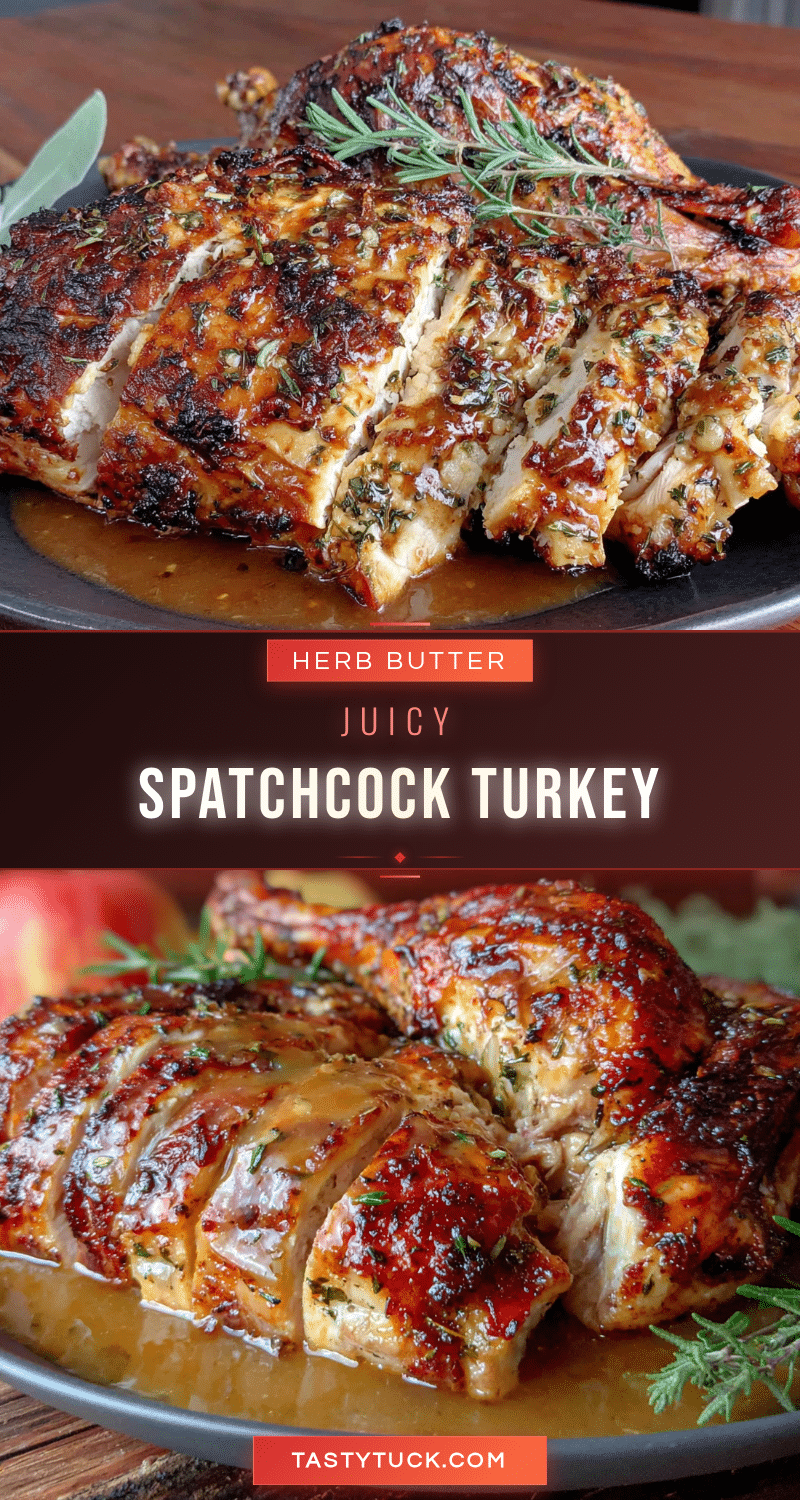
Perfect Herb Butter Spatchcock Turkey with Easy Apple Cider Gravy
A perfectly juicy and crispy spatchcock turkey roasted with a savory herb butter and served with a sweet-tart apple cider gravy. This recipe delivers evenly cooked, flavorful meat in under two hours, making it the ultimate stress-free holiday centerpiece.
- Prep Time: 30 minutes
- Cook Time: 75-90 minutes
- Total Time: 1 hour 45 minutes to 2 hours
- Yield: 10-12 servings 1x
- Category: Main Course
- Cuisine: American
Ingredients
- 1 cup (2 sticks) unsalted butter, softened
- 3 tablespoons fresh rosemary, finely chopped
- 3 tablespoons fresh thyme leaves
- 2 tablespoons fresh sage, finely chopped
- 4 cloves garlic, minced
- 1 tablespoon lemon zest
- 2 teaspoons kosher salt (Diamond Crystal; reduce to 1 ½ teaspoons if using Morton’s)
- 1 teaspoon black pepper, freshly ground
- 1 whole turkey (12–14 pounds), thawed if frozen
- 1 tablespoon kosher salt
- 1 teaspoon black pepper
- 1 large onion, quartered
- 2 apples (Honeycrisp or Fuji), quartered
- 4 sprigs fresh rosemary
- 4 sprigs fresh thyme
- 1 cup low-sodium chicken or turkey broth
- ¼ cup unsalted butter
- ¼ cup all-purpose flour
- 2 cups apple cider (not vinegar)
- 2 cups turkey or chicken broth, preferably low-sodium
- Reserved pan drippings
- Salt and pepper to taste
- 1 tablespoon fresh thyme leaves (optional, for garnish)
Instructions
- Make the herb butter (can be done up to 3 days ahead). In a small bowl, combine the softened butter, chopped rosemary, thyme, sage, minced garlic, lemon zest, salt, and pepper. Mix until evenly distributed. Scrape onto plastic wrap, shape into a log, and refrigerate until firm. Let come to room temperature before using.
- Prep the turkey. Remove turkey from packaging, take out giblets and neck. Pat completely dry inside and out with paper towels. For extra crispy skin, let sit uncovered on a tray in the refrigerator for 2-4 hours.
- Spatchcock the bird. Place turkey breast-side down on a cutting board. Using kitchen shears, cut along one side of the backbone from tail to neck. Repeat on the other side to remove backbone. Flip turkey over and press down firmly on the breastbone until it cracks and lies flat.
- Season and butter the turkey. Season the underside with half the salt and pepper. Flip back over breast-side up on a wire rack. Gently loosen skin from breast meat, working from neck end toward legs. Push about two-thirds of the herb butter under the skin, spreading evenly over breasts and thighs. Rub remaining butter over the outside. Sprinkle remaining salt and pepper over skin.
- Add aromatics and broth. Stuff the cavity area with quartered onion, apple pieces, and herb sprigs. Pour the cup of broth into the bottom of the pan, avoiding the turkey skin.
- Roast the turkey. Preheat oven to 425°F with rack in lower third. Roast for about 12-15 minutes per pound (a 13-pound bird takes roughly 75-85 minutes). Start checking temperature at 60 minutes. Turkey is done when thickest part of breast reads 155°F and thigh reads 170°F.
- Rest the turkey. Transfer to a cutting board and tent loosely with foil. Let rest for at least 20-30 minutes.
- Make the apple cider gravy. Place roasting pan over two burners on medium heat. Add ¼ cup butter and melt, scraping up browned bits. Sprinkle flour over butter and whisk constantly for 1-2 minutes until golden and nutty. Slowly pour in apple cider while whisking, then add broth. Bring to a simmer and cook for 5-7 minutes, whisking occasionally, until thickened. Season with salt and pepper. Strain if desired.
- Carve and serve. Remove legs first, then slice breast meat against the grain. Arrange on a platter, spoon some gravy over the top, and pass the rest at the table.
Notes
Dry skin is crispy skin—pat turkey dry and let air-dry in fridge if possible. Don’t skip the wire rack for even cooking. Trust your thermometer over the timer. Let butter soften completely before spreading. Deglaze the pan while it’s hot. Season the underside of the turkey too. For extra crispy skin, use a hair dryer on cool setting to blast skin dry.
Nutrition
- Serving Size: 6 ounces white meat
- Calories: 385
- Sugar: 5
- Sodium: 620
- Fat: 22
- Saturated Fat: 12
- Carbohydrates: 8
- Protein: 38
Keywords: spatchcock turkey, herb butter turkey, apple cider gravy, Thanksgiving turkey, roasted turkey, crispy skin turkey, holiday turkey recipe