The crackling crust. That’s the first thing you notice when you lift the lid. Not the smell—though that hits you a second later, all beefy and garlicky and woodsy with rosemary. But first, it’s the sound. A faint, papery pop as the exterior gives way, and the sight of that deeply browned, almost mahogany-colored bark crusted over the top. I made this for the sheer drama of it, honestly. For the moment when you slice in and see that perfect pink ring from edge to center, a gradient so precise it looks like it was painted. Everything else—the garlic butter pooling in the crevices, the herb-flecked juices at the bottom—that’s the payoff. But that crust, that crust is what I was after. And the slow cooker delivered it in a way I didn’t expect. This recipe is built around that singular obsession: getting a prime rib that tastes like it spent hours over an open flame, but with the hands-off ease of a countertop appliance. It’s a little ridiculous, a little indulgent, and absolutely the best way to serve a showstopping roast without hovering over an oven all day. Trust me on this one.
Why You’ll Love This Recipe
I’ve tested this more times than I care to admit. Burnt a few roasts, undercooked a couple, and once ended up with something that looked more like pot roast than prime rib. But this method? It’s the one that finally clicked. Here’s why it works.
- Foolproof Tenderness: The slow cooker does all the heavy lifting. Low and slow heat breaks down the connective tissue without drying out the meat. You end up with prime rib that’s butter-soft from end to end.
- That Crust, Though: A quick blast under the broiler after the slow cooker gives you a crackling, seasoned crust that rivals any steakhouse. It’s the best of both worlds.
- Hands-Off Cooking: No basting, no temperature spiking, no oven babysitting. You set it, you forget it, and you pull out a masterpiece hours later.
- Holiday-Worthy, Everyday-Easy: This is the recipe you pull out for Christmas dinner or a Sunday roast when you want to impress without the stress. It looks like you slaved away. You didn’t.
- Garlic Herb Butter Magic: The compound butter seeps into every crevice as the roast cooks, flavoring the meat from the inside out. It’s not just a rub—it’s an infusion.
This isn’t just another prime rib recipe. It’s the one that solves the biggest problem with prime rib at home: getting the inside perfectly medium-rare while the outside gets that serious sear. The slow cooker nails the internal temp every single time, and the broiler finishes the job with that crackling exterior. It’s comfort food reimagined—decadent, but approachable. The kind of meal that makes everyone at the table close their eyes after the first bite.
What Ingredients You Will Need
This recipe uses a short list of high-impact ingredients. The magic is in the technique, not a long grocery list. Here’s what you’ll need and why each one matters.
- Prime Rib Roast (bone-in, 4-6 pounds): The star of the show. Bone-in adds flavor and helps the meat cook more evenly. Look for a roast with good marbling—those thin veins of fat running through the meat are what keep it juicy. I usually grab mine from Costco or a local butcher. If you can find one with the fat cap still intact, even better.
- Unsalted Butter (1/2 cup, softened): The base of the compound butter. Using unsalted lets you control the salt level. Let it come to room temp so it spreads easily.
- Fresh Garlic (6-8 cloves, minced): Don’t skimp here. Fresh garlic is non-negotiable. The jarred stuff won’t give you the same punch. Mince it fine so it melts into the butter.
- Fresh Rosemary (2 tablespoons, chopped): Woody, piney, and classic with beef. Strip the leaves from the stems and chop them fine.
- Fresh Thyme (1 tablespoon, leaves stripped): Earthy and slightly floral. It adds a layer of complexity that dried thyme just can’t match.
- Kosher Salt (2 teaspoons): I use Diamond Crystal. It’s less salty by volume than Morton’s, so adjust if you’re using a different brand. Salt is crucial for that crust.
- Freshly Ground Black Pepper (2 teaspoons): Coarse grind gives you little pops of heat. Pre-ground pepper is a pale imitation.
- Beef Broth (1 cup, low-sodium): This creates the steamy environment in the slow cooker and forms the base for a quick au jus later. Low-sodium is key so you don’t end up with salty drippings.
- Optional for Au Jus: A splash of red wine (like a Cabernet or Merlot) and a tablespoon of Worcestershire sauce. Not required, but they deepen the flavor of the pan juices.
Ingredient Selection Tips: For the best results, choose a prime rib that’s USDA Choice or Prime grade. Prime has more marbling, which means more flavor and tenderness. If you’re on a budget, Choice works beautifully—just keep an eye on the cook time. Also, let your roast sit out on the counter for about an hour before cooking. It takes the chill off and helps it cook more evenly.
Equipment Needed
You don’t need a professional kitchen for this, but a few key tools make the job easier.
- Slow Cooker (6-7 quart): Big enough to hold a 4-6 pound roast without crowding. A round or oval shape works equally well.
- Cast Iron Skillet or Heavy-Bottomed Pan: For searing the roast before it goes into the slow cooker. Cast iron gives you the best crust, but any heavy pan will do.
- Instant-Read Meat Thermometer: Non-negotiable. You need to know the internal temp to nail that medium-rare. I’ve used a Thermapen for years and it’s worth every penny.
- Tongs: A sturdy pair for flipping the roast during searing. Don’t pierce the meat with a fork—you’ll lose those precious juices.
- Small Bowl: For mixing the garlic herb butter.
- Aluminum Foil: For tenting the roast while it rests. This is a step you cannot skip.
- Cutting Board: A large one with a groove to catch the juices. You’ll want those for the au jus.
- Sharp Chef’s Knife: A good knife makes slicing through that tender roast a breeze. Dull knives will shred the meat.
Budget-Friendly Alternatives: No cast iron skillet? Any oven-safe pan works for searing. No slow cooker? You can adapt this for a Dutch oven in a 275°F oven, but the cook time will be different. If you’re just starting out, a basic slow cooker from a big box store will do the job just fine.
Preparation Method
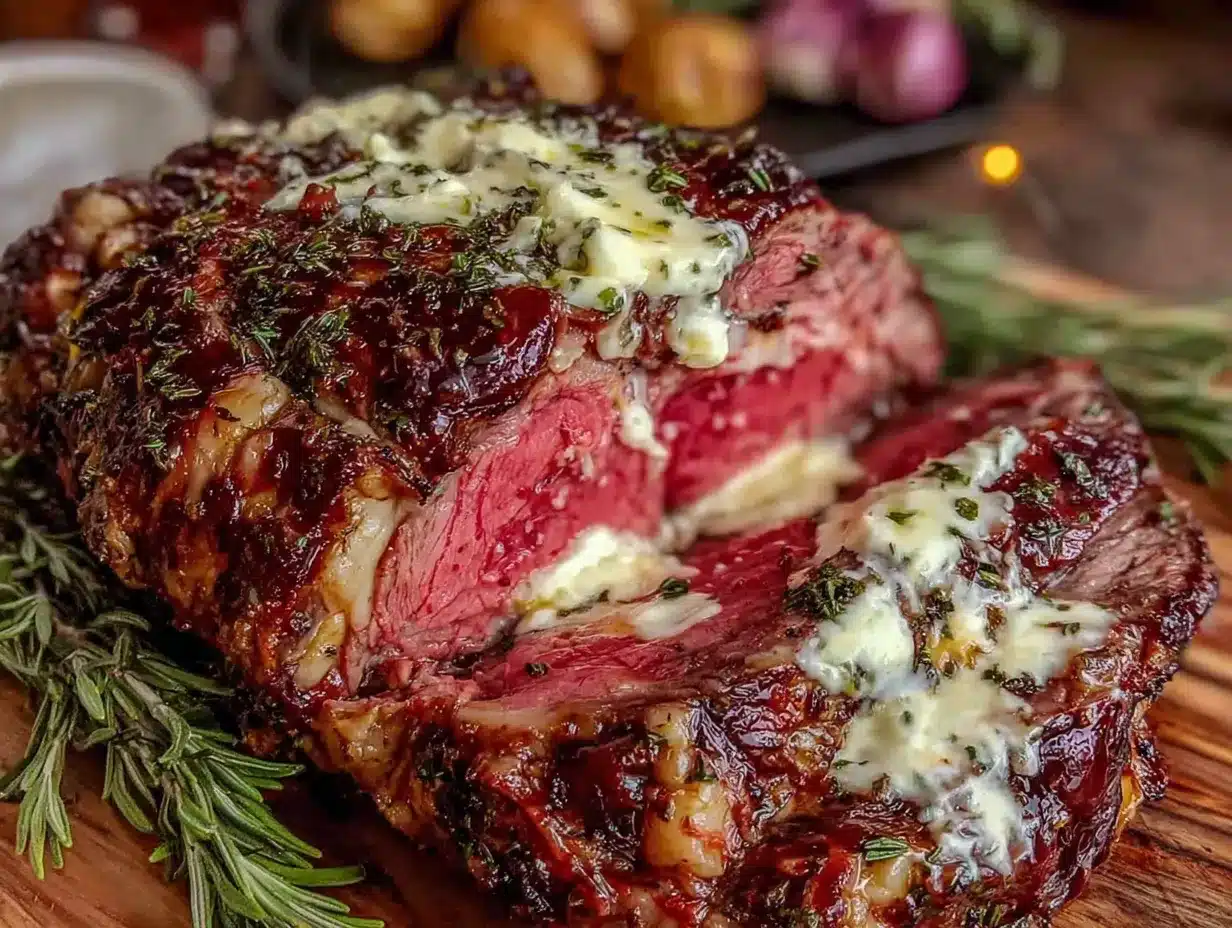
Alright, let’s get to it. This process has a few steps, but none of them are hard. Take your time, and you’ll be rewarded with the best prime rib of your life.
- Make the Garlic Herb Butter: In a small bowl, combine the softened butter, minced garlic, chopped rosemary, and thyme leaves. Add a teaspoon of kosher salt and a teaspoon of black pepper. Mash it all together with a fork until it’s evenly mixed. Set it aside. This can be done a day ahead and kept in the fridge—just let it soften again before using.
- Prep the Roast: Pat the prime rib dry with paper towels. This is crucial. Moisture is the enemy of a good sear. Let the roast sit at room temperature for about 45 minutes to an hour. It shouldn’t be cold to the touch.
- Season and Butter: Rub the garlic herb butter all over the roast. Don’t be shy—get it into every nook and cranny. If there’s any butter left, smear it on the cut ends. Season the outside with the remaining kosher salt and black pepper. You want a generous coating; it forms the crust.
- Sear the Roast: Heat a cast iron skillet over medium-high heat until it’s smoking hot. Add a splash of high-smoke-point oil (like avocado or canola). Carefully place the roast in the pan, fat-side down first. Sear for 2-3 minutes per side, without moving it, until a deep brown crust forms. You’re looking for a color that’s almost mahogany. Use tongs to hold the roast on its ends to sear those too. This step takes about 10-12 minutes total. Don’t rush it.
- Set Up the Slow Cooker: Pour the beef broth into the bottom of the slow cooker. Place the seared roast on top, fat-side up. The broth shouldn’t cover the meat—it’s there to create steam, not to braise the roast. If you’re using the wine and Worcestershire, add them to the broth now.
- Cook Low and Slow: Cover the slow cooker and cook on LOW for 4-5 hours for a 4-pound roast, or 5-6 hours for a 6-pound roast. Do NOT cook on high. The low temperature is what gives you that even pink interior. Start checking the internal temperature at the 3-hour mark. You’re looking for 125°F for medium-rare. The roast will continue to cook as it rests, so pull it out about 5 degrees early.
- Rest the Roast: Carefully transfer the roast to a cutting board. Tent it loosely with aluminum foil and let it rest for at least 20 minutes. This is not optional. The resting period allows the juices to redistribute throughout the meat. If you cut into it too soon, you’ll have a puddle of juice on the board and dry meat on your plate.
- Broil for the Crust (Optional but Recommended): While the roast rests, preheat your broiler to high. Place the rested roast on a baking sheet and slide it under the broiler for 2-3 minutes. Watch it closely—it can go from perfect to burnt in seconds. You’re looking for the crust to bubble and darken. This gives you that crackling exterior that makes this recipe so special.
- Slice and Serve: Use a sharp knife to slice the roast against the grain into 1/2-inch to 3/4-inch thick slices. The bone-in roast will have the rib bones on one side—you can either cut them off before slicing or serve them attached for a dramatic presentation. Spoon some of the reserved pan juices over the top.
Sensory Cues: When you sear the roast, you should hear a loud sizzle. If it’s quiet, the pan isn’t hot enough. The butter should smell fragrant and nutty as it melts. When you lift the slow cooker lid, the aroma should be deeply beefy and herbal. The meat should feel firm but give slightly when pressed—like the fleshy part of your palm when you touch your thumb and pinky together.
Cooking Tips & Techniques
I’ve made every mistake in the book with prime rib. Here’s what I learned so you don’t have to.
The Biggest Mistake: Skipping the Sear. I tried it once. I thought the slow cooker would brown the meat on its own. It doesn’t. The sear is what builds that deep, roasted flavor. Without it, you end up with grey, sad-looking meat. Don’t skip it.
The Second Biggest Mistake: Overcooking. Prime rib is expensive. It’s a tragedy to overcook it. Use a meat thermometer. Check the temp early and often. Remember, the roast will continue cooking after you pull it out (carryover cooking), so pull it at 125°F for medium-rare. If you want it medium, pull it at 130°F. Well-done? Please don’t do that to a prime rib.
Timing and Multitasking: The slow cooker does most of the work, so use that time wisely. Make your sides—mashed potatoes, roasted vegetables, a simple salad. The au jus can be made while the roast rests. Just strain the pan juices into a small saucepan, bring to a simmer, and season to taste. If you want it thicker, whisk in a slurry of cornstarch and water.
Consistency Tip: Every slow cooker runs a little differently. Some run hot, some run cool. After the first hour, check the temperature of the liquid. It should be around 200°F. If it’s bubbling vigorously, your slow cooker runs hot, so start checking the roast’s internal temp earlier.
My Personal Failure: The first time I tried this, I used a 3-pound roast and cooked it on high for 4 hours. It came out medium-well and tough. I was so disappointed. Learn from my mistake—low and slow is the only way to go.
Variations & Adaptations
This recipe is a fantastic base, but feel free to make it your own. Here are a few variations I’ve tried and loved.
- Herb Swap: Not a fan of rosemary? Use tarragon or oregano instead. The butter is a blank canvas. I once made it with a mix of parsley, chives, and lemon zest for a brighter flavor. It was fantastic with a side of roasted asparagus.
- Spicy Kick: Add a teaspoon of red pepper flakes or a minced chipotle pepper in adobo to the butter. The heat cuts through the richness of the beef beautifully. Serve it with a cooling crema or sour cream on the side.
- Garlic Lovers: Roast a whole head of garlic, squeeze out the soft cloves, and mash them into the butter. It’s sweeter and more mellow than raw garlic. I did this for a dinner party and everyone raved about it.
- Horseradish Crust: Mix 2 tablespoons of prepared horseradish into the butter. It gives the roast a sharp, sinus-clearing kick that pairs perfectly with the beef. This is my go-to for holiday dinners.
- Dietary Adaptations: This recipe is naturally gluten-free and low-carb. For a dairy-free version, substitute the butter with a high-quality vegan butter or beef tallow. The flavor will be different, but still delicious.
- Cooking Method Swap: If you don’t have a slow cooker, you can cook the roast in a 275°F oven in a covered Dutch oven. The cook time will be similar—about 20-25 minutes per pound. Check the internal temp regularly.
Serving & Storage Suggestions
Serving: Serve the prime rib hot, right after it’s rested and broiled. Arrange the slices on a warm platter and spoon some of the pan juices over the top. Garnish with a few sprigs of fresh rosemary or thyme for a beautiful presentation. This roast is the centerpiece, so let it shine.
What to Serve With It: The classics are classics for a reason. Creamy mashed potatoes, roasted carrots, green beans almondine, or a simple arugula salad with a lemon vinaigrette. The richness of the beef calls for something bright and acidic on the side. A bold red wine, like a Cabernet Sauvignon or a Zinfandel, is the perfect pairing. If you’re looking for a complete holiday spread, this roast pairs beautifully with a side of our savory cracker barrel loaded fried apples for a sweet-savory balance, or a comforting loaded potato salad for a heartier meal.
Storage: Store leftover prime rib in an airtight container in the refrigerator for up to 4 days. The meat will continue to absorb the flavors of the garlic and herbs as it sits, making leftovers even more delicious.
Reheating: The key to reheating prime rib is to avoid drying it out. The best method is to slice the leftover meat and reheat it gently in a skillet with a splash of beef broth or au jus. Warm it over medium-low heat, turning occasionally, until just heated through. You can also reheat it in a 300°F oven, covered with foil, for about 10-15 minutes. Avoid the microwave—it will turn your precious prime rib into shoe leather.
Freezer: Cooked prime rib freezes beautifully. Wrap the cooled roast tightly in plastic wrap, then in a layer of aluminum foil. Freeze for up to 3 months. Thaw in the refrigerator overnight before reheating. The texture will be slightly softer, but the flavor will still be incredible.
Nutritional Information & Benefits
Prime rib is a rich, indulgent cut of meat, so it’s not an everyday meal. But when you do enjoy it, you’re getting some solid nutritional benefits. Here’s the breakdown per serving (based on a 6-ounce portion, without au jus).
| Nutrient | Amount |
|---|---|
| Calories | 450-500 |
| Protein | 40-45g |
| Fat | 35-40g |
| Saturated Fat | 15-18g |
| Carbohydrates | 0g |
| Sodium | 400-500mg |
Health Benefits: Beef is an excellent source of high-quality protein, which is essential for muscle building and repair. It’s also rich in iron, zinc, and B vitamins, particularly B12, which is crucial for energy production and brain health. The garlic in the butter is known for its immune-boosting properties, and the herbs provide antioxidants. That said, prime rib is high in saturated fat, so enjoy it in moderation as part of a balanced diet.
Dietary Considerations: This recipe is naturally gluten-free, low-carb, and keto-friendly. For a dairy-free version, substitute the butter with a plant-based alternative or beef tallow. It is not suitable for vegetarian or vegan diets.
Conclusion
This Perfect Slow Cooker Prime Rib Roast with Garlic Herb Butter is more than just a recipe—it’s a game-changer for home cooks who want to serve a showstopping meal without the stress. The slow cooker gives you foolproof tenderness, the broiler gives you that crackling crust, and the garlic herb butter ties it all together with incredible flavor. It’s the kind of meal that makes you look like a hero at the dinner table, and the best part is, you barely broke a sweat.
I love this recipe because it takes the intimidation out of cooking prime rib. It’s forgiving, it’s delicious, and it’s guaranteed to impress. Whether you’re serving it for Christmas dinner, a birthday celebration, or just a Sunday roast that feels special, this recipe delivers every single time.
So go ahead—give it a try. Customize the herb butter to your liking, pair it with your favorite sides, and watch everyone at the table go quiet after the first bite. When you do, come back and let me know how it turned out. Leave a comment, share your photos, and tell me what variations you tried. I can’t wait to hear about your success!
Frequently Asked Questions
Can I use a boneless prime rib roast for this recipe?
Absolutely. Boneless roasts cook slightly faster than bone-in, so start checking the internal temperature about 30 minutes earlier. The bone adds flavor and helps with even cooking, but a boneless roast will still be delicious.
Do I have to sear the roast before putting it in the slow cooker?
Yes, I strongly recommend it. The sear builds a deep, roasted flavor and creates the foundation for that beautiful crust. Without it, the meat will be tender but lack the complex, savory notes that make prime rib so special.
Can I cook this on HIGH instead of LOW?
I don’t recommend it. Cooking on HIGH can lead to uneven cooking and a tougher texture. The low temperature is what allows the fat to render slowly and the meat to stay tender. Patience is key here.
How do I know when the prime rib is done?
Use an instant-read meat thermometer. For medium-rare, pull the roast at 125°F. For medium, pull it at 130°F. Remember, the roast will continue to cook as it rests (carryover cooking), so take it out of the slow cooker a few degrees early.
Can I make the garlic herb butter ahead of time?
Yes, this is a great make-ahead step. Mix the butter, garlic, herbs, salt, and pepper together, then roll it into a log in plastic wrap. Refrigerate for up to 3 days, or freeze for up to 3 months. Let it soften at room temperature before using.
Pin This Recipe!
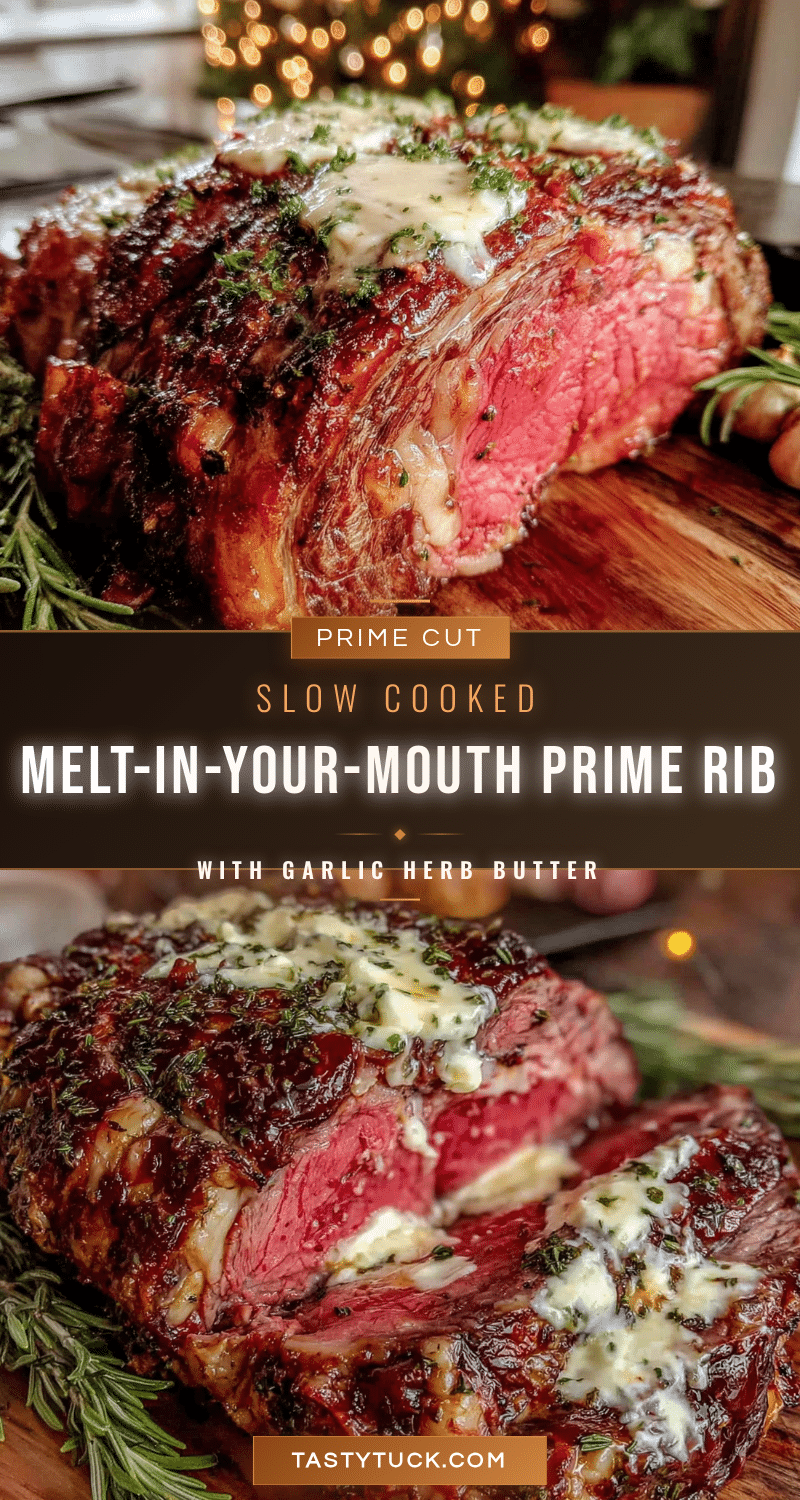
Perfect Slow Cooker Prime Rib Roast with Garlic Herb Butter
A showstopping prime rib roast that’s foolproof tender with a crackling crust, made effortlessly in the slow cooker and finished under the broiler. The garlic herb butter infuses the meat with incredible flavor, making it perfect for holidays or special dinners.
- Prep Time: 20 minutes
- Cook Time: 4-6 hours
- Total Time: 4 hours 20 minutes to 6 hours 20 minutes
- Yield: 8-12 servings
- Category: Main Course
- Cuisine: American
Ingredients
- Prime Rib Roast (bone-in, 4-6 pounds)
- Unsalted Butter (1/2 cup, softened)
- Fresh Garlic (6-8 cloves, minced)
- Fresh Rosemary (2 tablespoons, chopped)
- Fresh Thyme (1 tablespoon, leaves stripped)
- Kosher Salt (2 teaspoons)
- Freshly Ground Black Pepper (2 teaspoons)
- Beef Broth (1 cup, low-sodium)
- Optional for Au Jus: Splash of red wine (Cabernet or Merlot)
- Optional for Au Jus: Worcestershire sauce (1 tablespoon)
Instructions
- Make the Garlic Herb Butter: In a small bowl, combine the softened butter, minced garlic, chopped rosemary, and thyme leaves. Add a teaspoon of kosher salt and a teaspoon of black pepper. Mash it all together with a fork until evenly mixed. Set aside. Can be made a day ahead.
- Prep the Roast: Pat the prime rib dry with paper towels. Let the roast sit at room temperature for about 45 minutes to an hour.
- Season and Butter: Rub the garlic herb butter all over the roast, getting into every nook and cranny. Season the outside with the remaining kosher salt and black pepper.
- Sear the Roast: Heat a cast iron skillet over medium-high heat until smoking hot. Add a splash of high-smoke-point oil. Sear the roast for 2-3 minutes per side until a deep brown crust forms, about 10-12 minutes total. Use tongs to sear the ends.
- Set Up the Slow Cooker: Pour the beef broth into the bottom of the slow cooker. Place the seared roast on top, fat-side up. Add wine and Worcestershire if using.
- Cook Low and Slow: Cover and cook on LOW for 4-5 hours for a 4-pound roast, or 5-6 hours for a 6-pound roast. Start checking internal temperature at 3-hour mark. Pull at 125°F for medium-rare.
- Rest the Roast: Transfer roast to a cutting board. Tent loosely with aluminum foil and let rest for at least 20 minutes.
- Broil for the Crust (Optional): Preheat broiler to high. Place rested roast on a baking sheet and broil for 2-3 minutes, watching closely, until crust bubbles and darkens.
- Slice and Serve: Slice against the grain into 1/2-inch to 3/4-inch thick slices. Spoon reserved pan juices over the top.
Notes
For best results, choose USDA Choice or Prime grade prime rib. Let roast sit at room temperature for 1 hour before cooking. Do not cook on HIGH. Use a meat thermometer to avoid overcooking. Pull roast at 125°F for medium-rare due to carryover cooking. Resting is essential for juicy meat. Every slow cooker runs differently; check liquid temperature after first hour (should be around 200°F).
Nutrition
- Serving Size: 6 ounces
- Calories: 450500
- Sodium: 400500
- Fat: 3540
- Saturated Fat: 1518
- Protein: 4045
Keywords: prime rib, slow cooker prime rib, garlic herb butter prime rib, holiday roast, beef roast, easy prime rib, Christmas dinner