Honestly, I thought mixing spicy gochujang with ground beef over rice sounded like a mistake until that one chaotic weeknight when nothing else seemed doable. I was tired, the fridge was bare except for some ground beef, and I had zero energy for anything fancy. But I had this jar of gochujang sitting there, and let me tell you — I wasn’t convinced that dolloping it over a simple rice bowl would actually taste good. It felt too bold, too “out there” for a quick dinner in my kitchen.
Then came the moment I tossed some garlic, soy sauce, and a pinch of sugar into that beef, let it sizzle, and drizzled the spicy-sweet gochujang sauce on top. The aroma alone was arresting — smoky, tangy, with just enough heat to make you sit up straight. Each bite was a surprise, a little punch of flavor that didn’t overwhelm but instead made the whole meal come alive. It stuck with me because it was proof that quick meals don’t have to be boring or bland.
What surprised me most was how this Quick Korean Ground Beef Rice Bowl with Spicy Gochujang Drizzle became my go-to after that. It’s the kind of recipe that feels honest — no frills, no fuss — but it hits all the right notes when you need dinner fast and satisfying. It’s the kind of dish that quietly promises comfort and a little kick, night after night.
Why You’ll Love This Recipe
After testing this recipe multiple times, I can say it’s one of those rare dishes that balances speed with flavor so well, it almost feels like cheating. Here’s why this Korean ground beef rice bowl deserves a spot in your dinner rotation:
- Quick & Easy: Ready in under 20 minutes — perfect for those hectic evenings when you want something tasty, fast.
- Simple Ingredients: Uses pantry staples and common fridge finds, no last-minute grocery runs required.
- Perfect for Weeknight Dinners: Comforting but fresh, it hits the spot whether you’re cooking for one or feeding a hungry family.
- Crowd-Pleaser: The sweet and spicy gochujang drizzle is a hit with both kids and adults — trust me, it’s addictive.
- Unbelievably Delicious: The savory ground beef paired with the punchy sauce creates a flavor combo that feels thoughtfully crafted, not thrown together.
This isn’t just another beef and rice bowl. The magic lies in the gochujang drizzle — not too hot, just enough to make you pause and savor each bite. The balance of savory, sweet, and spicy is something I honed over time after some trial and error, and it’s what sets this recipe apart from other Korean-inspired dishes you might have tried.
It’s also incredibly forgiving — if you’re feeling adventurous, you can tweak the spice levels or add your favorite veggies. Honestly, it’s become my fallback when I want a fuss-free meal that still feels special. If you appreciate dishes like the comforting pasta e fagioli soup that warm you up and satisfy deeply, this bowl will fit right in your recipe collection.
What Ingredients You Will Need
This recipe uses straightforward, wholesome ingredients that combine to create bold flavors and a satisfying texture without fuss. Most of these are pantry staples, with a few Korean essentials that you can find easily in any grocery or Asian market.
- Ground Beef (85% lean recommended) – provides the hearty, savory base
- Garlic, minced – adds aromatic depth
- Green Onions, sliced – for freshness and mild onion flavor
- Soy Sauce (low sodium preferred) – the salty umami backbone
- Brown Sugar – balances the savory with a touch of sweetness
- Sesame Oil – delivers a nutty aroma and richness
- Gochujang (Korean chili paste) – the star of the show, lending that signature spicy-sweet punch
- Rice Vinegar – a little acidity to brighten the sauce
- Cooked White Rice (short grain or jasmine) – the perfect bed for the beef
- Sesame Seeds, toasted – for garnish and subtle crunch
- Optional Add-ins: shredded carrots, steamed broccoli, or kimchi to add texture and freshness
For best results, I recommend using a trusted brand like Chung Jung One for gochujang — it’s rich and flavorful without being overpowering. If you’re in a pinch, a good-quality chili garlic sauce can work as a substitute, though it won’t have that same depth. For rice, leftover steamed rice works beautifully, especially if it’s a day old (makes for better texture).
Gluten-free? No worries — just swap the soy sauce for tamari or coconut aminos, and you’re set. And if you’re after a bit more creaminess, a drizzle of mayo mixed with gochujang makes a killer spicy sauce alternative.
Equipment Needed
- Large Skillet or Nonstick Pan: Essential for browning the ground beef evenly — I find cast iron works well for great caramelization, but any heavy-bottomed pan will do.
- Mixing Bowls: For whisking together the gochujang drizzle and combining ingredients.
- Measuring Spoons and Cups: Precision helps with balancing flavors, especially the gochujang sauce.
- Rice Cooker or Pot: For perfectly cooked rice; using a rice cooker saves time and hassle.
- Spatula or Wooden Spoon: For stirring the beef mixture without breaking it up too much.
If you don’t have a rice cooker, no stress — a good pot with a tight-fitting lid and a little practice can yield fluffy rice. I’ve also used an inexpensive nonstick skillet for this recipe, and it cleans up easily afterwards, which is always a win on busy nights.
Maintaining your cast iron skillet with regular seasoning will keep it naturally nonstick and improve the flavor over time. But honestly, even a simple stainless steel pan works fine here.
Preparation Method
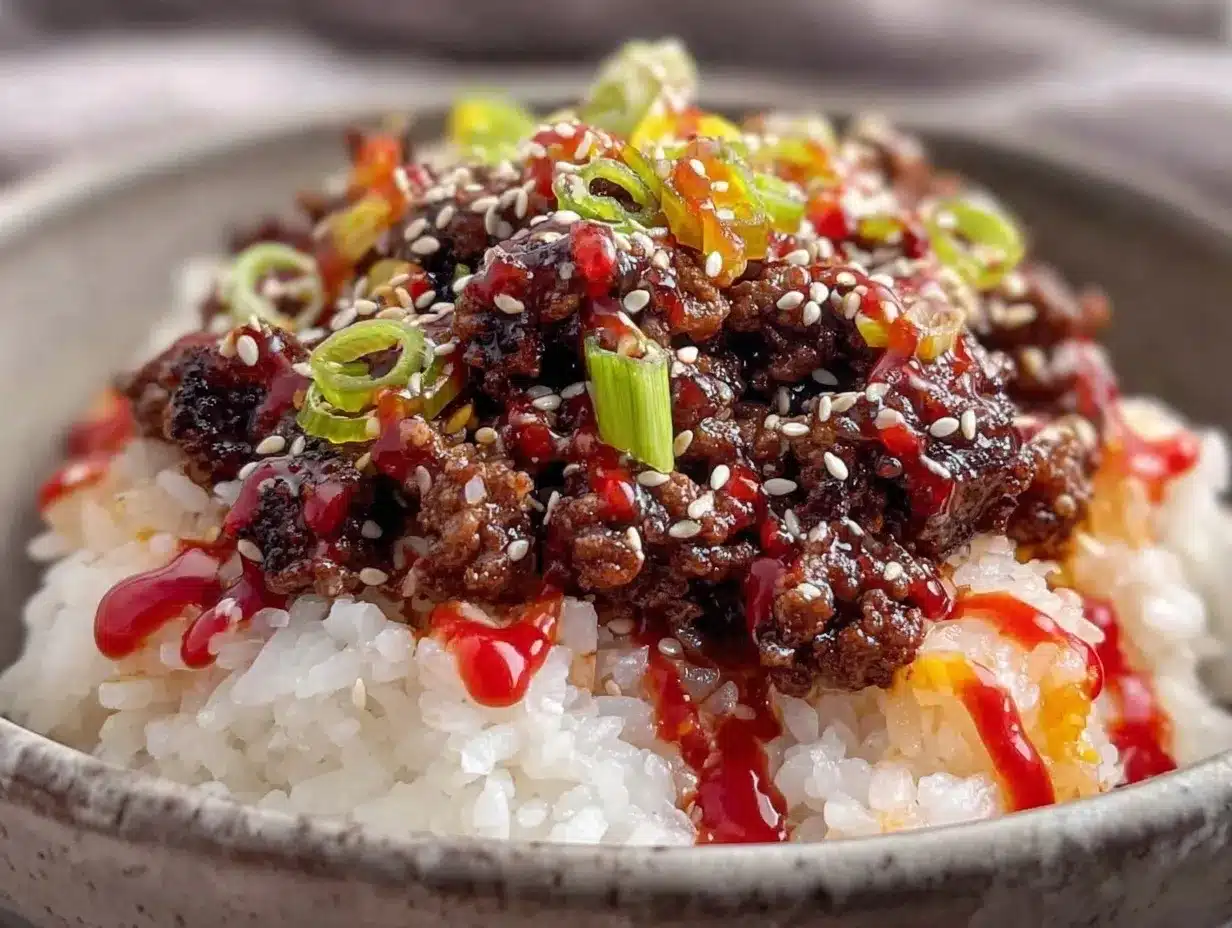
- Cook the Rice: Start by cooking 2 cups (about 360g) of white rice according to package instructions. This usually takes about 15-20 minutes. If you’re using leftover rice, just reheat it gently before serving.
- Prepare the Gochujang Drizzle: In a small bowl, whisk together 3 tablespoons (45ml) of gochujang, 1 tablespoon (15ml) of rice vinegar, 1 tablespoon (12g) of brown sugar, and 1 teaspoon (5ml) of sesame oil. Stir well until smooth and set aside. This sauce balances heat with tang and sweetness — if it feels too thick, add a splash of water to thin it slightly.
- Brown the Ground Beef: Heat 1 tablespoon (15ml) of vegetable or sesame oil in a large skillet over medium-high heat. Add 1 pound (450g) of ground beef, breaking it apart with a spatula. Cook for about 5-7 minutes, stirring occasionally, until the beef is no longer pink and starting to brown.
- Add Aromatics and Seasoning: Reduce heat to medium. Stir in 3 cloves of minced garlic and cook for 30 seconds until fragrant. Then add 2 tablespoons (30ml) of soy sauce, 1 tablespoon (12g) brown sugar, and half of the sliced green onions. Mix well, letting the sauce reduce slightly for 2-3 minutes. The beef should be glossy and well-coated.
- Assemble the Bowl: Spoon the cooked rice into bowls, then top generously with the Korean ground beef mixture. Drizzle the prepared gochujang sauce over the top in thin streams. Garnish with the remaining green onions and 1 teaspoon (3g) toasted sesame seeds.
- Optional Extras: Add steamed or roasted veggies like broccoli or carrots on the side for color and crunch. If you’re feeling adventurous, a fried egg on top adds richness that’s hard to beat.
Keep an eye on the beef as it cooks — you want it browned but not dry. If it starts to stick, a splash of water or broth can loosen things up. Also, the key to that crave-worthy flavor is balancing the sweet and salty elements just right; taste and adjust soy and sugar as needed before serving.
Cooking Tips & Techniques
One tip I learned the hard way: don’t overcrowd your pan when browning the ground beef. If there’s too much meat in the pan, it steams instead of browns, and you lose that caramelized flavor that makes this dish sing.
When mixing the gochujang drizzle, be patient and whisk until completely smooth. Sometimes gochujang can be a bit clumpy straight from the jar, and a silky sauce makes all the difference drizzled over hot beef and rice.
Also, timing is everything. Start your rice first, then prep your ingredients while it cooks. That way, everything comes together at the same time without any awkward waiting.
If you want to avoid the sauce overpowering the dish, start with less gochujang and add more to taste. It’s easier to add heat than take it away.
Lastly, I’ve found that letting the assembled bowls sit for 5 minutes before eating lets the flavors meld a bit, making each bite even better.
Variations & Adaptations
This recipe is a great canvas for experimentation. Here are some ways I’ve tweaked it:
- Vegetarian Version: Swap ground beef for crumbled firm tofu or cooked lentils. Add a splash of soy sauce and a pinch of smoked paprika to mimic the meaty flavor.
- Spice Level Adjustments: If you prefer milder, cut the gochujang in half and mix with a little plain yogurt or mayo to tone down the heat while keeping the flavor.
- Extra Veggies: Throw in shredded carrots, snap peas, or sautéed mushrooms for more texture and nutrition. These also add color that makes the bowl pop visually.
- Alternative Proteins: Ground turkey or chicken work well if you want a leaner option. Just adjust cooking times slightly, as they cook faster.
I once made a quick batch with ground pork instead of beef — the sweeter meat paired beautifully with the spicy sauce. It’s a great reminder that this recipe is forgiving and easy to personalize to your taste or pantry contents.
Serving & Storage Suggestions
This dish is best served warm, straight from the pan to the bowl. The contrast of hot rice, savory beef, and the spicy-sweet drizzle makes for a satisfying mouthful every time.
It pairs nicely with simple sides like steamed greens or a crisp cucumber salad for brightness. If you want to keep things easy, a quick kimchi side adds a tangy crunch that complements the flavors perfectly.
To store leftovers, transfer the beef and rice separately into airtight containers. Refrigerate for up to 3 days. When reheating, microwave in short bursts or reheat the beef gently in a skillet to avoid drying out. Add the gochujang drizzle fresh each time — it’s best that way.
Flavors tend to deepen overnight, so leftovers often taste even better the next day, especially if you mixed in some veggies or kimchi. Just keep the sauce separate until serving to keep that fresh heat vibrant.
Nutritional Information & Benefits
This Quick Korean Ground Beef Rice Bowl offers a balanced meal with protein, carbs, and a touch of healthy fats. Here’s a rough breakdown per serving (serves 4):
| Nutrient | Amount |
|---|---|
| Calories | 450–500 kcal |
| Protein | 28g |
| Carbohydrates | 45g |
| Fat | 15g |
| Fiber | 2-3g |
The gochujang paste contains fermented chili, which adds probiotics and antioxidants beneficial for digestion and immune health. Using lean ground beef keeps saturated fat moderate, and adding veggies bumps up fiber and vitamins. For gluten-free diets, simply swap to tamari soy sauce.
From my experience, this recipe hits a sweet spot between comfort and nutrition — easy to make but still nourishing enough to feel good about eating regularly.
Conclusion
This quick Korean ground beef rice bowl with spicy gochujang drizzle has earned a special place in my kitchen because it respects both time and flavor. It’s simple enough to pull together after a long day but vibrant enough to feel like a treat. I love how adaptable it is — whether you keep it classic or add your own twists, it rarely disappoints.
If you try this recipe, don’t hesitate to experiment with the spice level or mix in fresh veggies. It’s a dish that invites personalization, which makes it all the more satisfying. And if you’re curious about other easy meal ideas that bring comfort without hassle, you might enjoy the high-protein loaded grilled chicken meal prep from my collection.
Thanks for spending some time here with this recipe — I hope it becomes one of your quick fixes that doesn’t sacrifice taste. Feel free to share your tweaks or questions below; I love hearing how my recipes fit into your life!
FAQs
- Can I make this recipe ahead of time? Yes! Prepare the beef and rice separately, store them in airtight containers in the fridge, and assemble just before eating.
- How spicy is the gochujang sauce? It’s moderately spicy with a sweet undertone. You can adjust the heat by using less gochujang or mixing it with mayo or yogurt.
- What can I substitute for gochujang if I can’t find it? A mix of chili paste or chili garlic sauce with a bit of miso or soy sauce can mimic the flavor, though it won’t be exactly the same.
- Can I use brown rice or cauliflower rice? Absolutely! Brown rice adds nuttiness and fiber, while cauliflower rice is a low-carb option. Adjust cooking times accordingly.
- Is this recipe freezer-friendly? The beef can be frozen cooked, but rice texture may change. If freezing, separate components and thaw carefully before reheating.
Pin This Recipe!
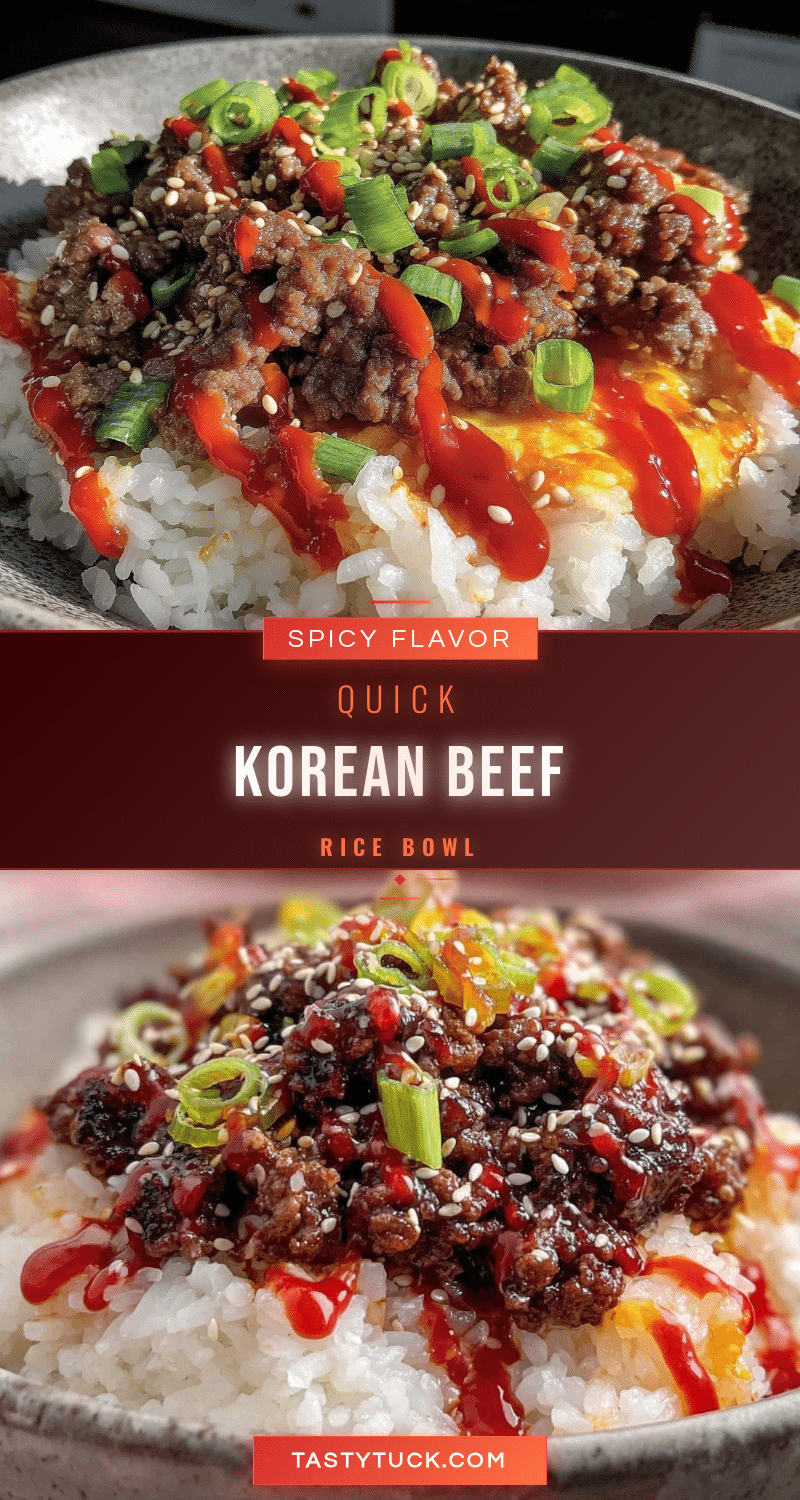
Quick Korean Ground Beef Rice Bowl Recipe with Easy Spicy Gochujang Drizzle
A quick and easy Korean-inspired ground beef rice bowl topped with a spicy-sweet gochujang drizzle, perfect for fast weeknight dinners that are flavorful and satisfying.
- Prep Time: 5 minutes
- Cook Time: 15 minutes
- Total Time: 20 minutes
- Yield: 4 servings 1x
- Category: Main Course
- Cuisine: Korean
Ingredients
- 1 pound (450g) ground beef (85% lean recommended)
- 3 cloves garlic, minced
- 2 tablespoons (30ml) soy sauce (low sodium preferred)
- 1 tablespoon (12g) brown sugar
- 1 tablespoon (15ml) sesame oil
- 3 tablespoons (45ml) gochujang (Korean chili paste)
- 1 tablespoon (15ml) rice vinegar
- Cooked white rice (short grain or jasmine), about 2 cups cooked
- Green onions, sliced (divided)
- 1 teaspoon (3g) toasted sesame seeds
- 1 tablespoon (15ml) vegetable or sesame oil for cooking beef
- Optional add-ins: shredded carrots, steamed broccoli, kimchi, fried egg
Instructions
- Cook 2 cups (about 360g) of white rice according to package instructions or reheat leftover rice.
- In a small bowl, whisk together 3 tablespoons gochujang, 1 tablespoon rice vinegar, 1 tablespoon brown sugar, and 1 teaspoon sesame oil until smooth. Add water to thin if needed and set aside.
- Heat 1 tablespoon vegetable or sesame oil in a large skillet over medium-high heat.
- Add ground beef, breaking it apart with a spatula, and cook for 5-7 minutes until no longer pink and starting to brown.
- Reduce heat to medium, stir in minced garlic and cook for 30 seconds until fragrant.
- Add 2 tablespoons soy sauce, 1 tablespoon brown sugar, and half of the sliced green onions. Mix well and cook for 2-3 minutes until sauce reduces slightly and beef is glossy.
- Spoon cooked rice into bowls, top with the Korean ground beef mixture.
- Drizzle the prepared gochujang sauce over the beef in thin streams.
- Garnish with remaining green onions and toasted sesame seeds.
- Optional: add steamed or roasted veggies or a fried egg on top for extra texture and richness.
Notes
Do not overcrowd the pan when browning beef to ensure caramelization. Whisk gochujang sauce until smooth to avoid clumps. Adjust spice level by reducing gochujang or mixing with mayo/yogurt. Let assembled bowls sit 5 minutes before eating to meld flavors. Use day-old rice for better texture. Store beef and rice separately for leftovers and add sauce fresh when reheating.
Nutrition
- Serving Size: 1 bowl (about 1/4 of
- Calories: 475
- Sugar: 10
- Sodium: 700
- Fat: 15
- Saturated Fat: 6
- Carbohydrates: 45
- Fiber: 2.5
- Protein: 28
Keywords: Korean ground beef, gochujang, rice bowl, quick dinner, spicy sauce, weeknight meal, easy recipe