“You’re really making flatbread without flour?” my friend asked, eyebrows raised as she glanced over my shoulder. Honestly, I was skeptical myself the first time I tossed together this cottage cheese flatbread. It all started on one of those evenings when the pantry was looking pretty sad, and I was craving something quick, filling, and—let’s be honest—comforting without the usual carb overload. I had cottage cheese sitting in the fridge, some eggs, and a handful of pantry staples, but no flour in sight. Instead of ordering takeout or settling for plain toast, I threw caution to the wind and whipped up a batter combining cottage cheese and eggs. The result? A surprisingly fluffy, protein-packed flatbread that felt like a little slice of magic.
This recipe quickly became a staple for those busy nights when I wanted something wholesome but fuss-free. The cottage cheese gives the flatbread a creamy richness and a bit of tang, while the eggs bind everything together without needing any flour at all. It’s honestly a neat little trick for anyone trying to cut back on carbs or add more protein to their meals without sacrificing flavor or texture.
What I love most about this flatbread is that it’s so adaptable. You can top it with everything from fresh herbs and a drizzle of olive oil to more elaborate spreads or even pair it with some high-protein grilled chicken for a satisfying meal. It’s the kind of recipe that feels like a secret weapon in the kitchen once you get the hang of it, especially if you’re someone who’s not really into baking but wants that homemade touch without the hassle.
And here’s the thing: it doesn’t just fill you up—it leaves you with that quiet satisfaction of something well-made, wholesome, and surprisingly versatile. That’s why this cottage cheese flatbread stuck with me. It’s a simple, unpretentious recipe that’s ready to become your go-to when you want something nourishing without fussing over flour or dough. No fancy equipment, no long wait, just real food you can trust to taste great.
Why You’ll Love This Recipe
After testing this recipe multiple times (yes, I couldn’t stop making it for a good week), I can say it’s one of those rare finds that manages to be both wholesome and indulgent. Let me break down what makes this wholesome high-protein cottage cheese flatbread so easy to love:
- Quick & Easy: Ready in under 20 minutes, perfect for those hectic evenings when you barely have time to think, let alone cook.
- Simple Ingredients: No need for special trips to the store—cottage cheese, eggs, and a few pantry staples are all you need.
- Perfect for Any Occasion: Whether it’s a snack, a light lunch, or as part of a cozy dinner, this flatbread fits right in.
- Crowd-Pleaser: My family and friends keep asking for it again and again (even those skeptical of flourless bread).
- Unbelievably Delicious: The creamy texture from the cottage cheese with just a hint of tang makes this flatbread stand out from other flour-free options.
This isn’t just another flourless flatbread. The secret lies in the way the cottage cheese is blended to achieve an ultra-smooth batter, creating a texture that’s surprisingly tender and fluffy. Plus, the seasoning is balanced so it complements a wide range of toppings, from savory to sweet. It’s kind of like the unsung hero of quick breads.
Honestly, this recipe is a little treasure for those who want to enjoy carbs without the guilt, or for anyone who’s looking to sneak more protein into everyday meals. Trust me, it’s a recipe I keep coming back to, especially when I want to impress guests with something a bit unexpected but totally comforting.
What Ingredients You Will Need
This recipe calls for a handful of wholesome, easy-to-find ingredients that come together to create a surprisingly flavorful and protein-rich flatbread. Most are pantry staples, and you can swap a few out depending on what you have or dietary needs.
- Cottage Cheese (1 cup / 240 ml, full-fat or low-fat, well-drained) – This is the star ingredient, bringing creaminess and protein. I prefer organic brands for freshness, but any good-quality cottage cheese works.
- Large Eggs (3, room temperature) – They bind everything together and add protein.
- Almond Flour (¼ cup / 30 g) – Optional, but adds a bit of structure and nuttiness. For gluten-free, almond flour is perfect; you can skip it if you want a more batter-like texture.
- Baking Powder (1 tsp / 4 g) – Helps the flatbread puff slightly and keeps it tender.
- Salt (½ tsp / 3 g) – Enhances the flavor throughout.
- Garlic Powder (½ tsp / 1.5 g) – Adds a subtle savory note (optional but recommended).
- Fresh Herbs (2 tbsp, chopped parsley or chives) – For freshness and a pop of color.
- Olive Oil (1 tbsp / 15 ml, for cooking) – Use extra virgin for the best flavor.
Ingredient Tips: Be sure to drain your cottage cheese well to avoid excess moisture, which can make the flatbread soggy. If you want a dairy-free twist, try blending silken tofu with a bit of nutritional yeast as a substitute, though the texture will differ slightly.
For a more indulgent version, a sprinkle of shredded mozzarella or parmesan can be mixed into the batter, giving a cheesy crust. And if you’re looking for a bit of sweetness, adding a touch of honey or cinnamon pairs beautifully with toppings like fruit preserves or a smear of strawberry cake mix dessert.
Equipment Needed
- Mixing Bowl: A medium-sized bowl to combine ingredients.
- Blender or Food Processor: Highly recommended to blend the cottage cheese and eggs for a smooth batter. A hand mixer or immersion blender works too.
- Non-stick Skillet or Cast Iron Pan: For cooking the flatbread evenly. I love using my cast iron skillet for a nice golden crust—if you don’t have one, a heavy non-stick pan will do.
- Spatula: To flip the flatbread gently without breaking it.
- Measuring Cups and Spoons: For accuracy, especially with baking powder and flour.
If you don’t own a food processor, no worries—just mix the cottage cheese with eggs vigorously with a fork or whisk until smooth, though it may take a bit more elbow grease. For those on a budget, a simple non-stick frying pan and a sturdy whisk can get the job done well enough.
Preparation Method

- Drain the Cottage Cheese: Place 1 cup (240 ml) of cottage cheese in a fine mesh sieve or cheesecloth and let it drain over a bowl for about 10 minutes. This step cuts down on excess moisture and ensures your flatbread isn’t soggy.
- Blend the Batter: In a blender or food processor, combine the drained cottage cheese and 3 large eggs (room temperature). Blend until the mixture is smooth and creamy, about 30–45 seconds. You’re aiming for no large curds—this smoothness helps the texture.
- Mix Dry Ingredients: In a separate bowl, whisk together ¼ cup (30 g) almond flour, 1 tsp (4 g) baking powder, ½ tsp (3 g) salt, and ½ tsp (1.5 g) garlic powder. This dry blend gives the flatbread structure and seasoning.
- Combine Wet and Dry: Pour the blended cottage cheese mixture into the dry ingredients, folding gently with a spatula until just combined. Do not overmix—the batter should be thick but pourable.
- Add Fresh Herbs: Fold in 2 tbsp chopped parsley or chives for a burst of color and brightness.
- Preheat the Skillet: Heat 1 tbsp olive oil in a non-stick or cast iron skillet over medium heat. The pan should be hot but not smoking.
- Cook the Flatbread: Pour half of the batter (about ¾ cup / 180 ml) into the skillet and spread it evenly into a 6–7 inch (15–18 cm) circle. Cook for 3–4 minutes or until the edges look set and the bottom is golden brown.
- Flip Carefully: Using a spatula, gently flip the flatbread and cook the other side for another 2–3 minutes until golden and cooked through. The flatbread should spring back slightly to the touch.
- Repeat: Remove the cooked flatbread and keep warm. Repeat with the remaining batter for a second flatbread.
- Serve Warm: Enjoy your flatbread immediately with your favorite toppings or keep it warm wrapped in foil.
Pro Tip: If the flatbread sticks when flipping, let it cook a little longer. Patience pays off for that perfect golden crust. Also, avoid pressing down on the flatbread when cooking—it helps keep it fluffy.
Cooking Tips & Techniques
Cooking this flourless flatbread is straightforward, but a few tips from my kitchen trials can save you some headaches.
- Drainage is Key: I learned the hard way that skipping the cottage cheese drainage step makes for a wet, gummy flatbread. Don’t rush this part.
- Blending Matters: The smoother the batter, the better the texture. I use my food processor for a velvety consistency, but a blender works just as well.
- Heat Control: Medium heat is your friend. Too hot, and the flatbread burns outside but stays raw inside; too low, and it takes forever to cook.
- Flip Gently: The batter is delicate, so use a wide spatula and slow, steady movements to flip without breaking.
- Multitasking: While the first flatbread cooks, prep toppings or set your table to save time.
From my experience, this recipe is forgiving but benefits from some gentle handling. If you’re curious about other skillet recipes, my cast iron apple pie skillet is a great one to try alongside.
Variations & Adaptations
This cottage cheese flatbread is a fantastic base for experimentation. Here are some ways I’ve tweaked it depending on mood, diet, or occasion:
- Herb & Spice Variations: Swap parsley for rosemary, thyme, or dill. Adding smoked paprika or cumin gives it a smoky, warm flavor.
- Cheese Add-Ins: Mix in shredded mozzarella, cheddar, or feta for a cheesier flatbread. This adds richness and a melty texture.
- Gluten-Free & Paleo-Friendly: Skip almond flour entirely or replace it with coconut flour (use less coconut flour as it’s more absorbent) for a paleo twist.
- Sweet Version: Omit garlic and salt, add a teaspoon of cinnamon and a drizzle of honey into the batter. Top with fresh berries or a spread of strawberry cake mix dessert for a fun brunch treat.
- Flatbread Pizza: Use as the crust for a quick pizza—top with tomato sauce, cheese, and your favorite toppings, then finish under the broiler.
One personal favorite is adding finely chopped sun-dried tomatoes and olives for a Mediterranean vibe. It’s a quick way to impress guests without fuss.
Serving & Storage Suggestions
This flatbread is best enjoyed warm right off the skillet, when it’s soft yet has a slight crisp on the edges. Serve it with a drizzle of olive oil and a sprinkle of flaky sea salt or use it as a base for open-faced sandwiches.
It pairs beautifully with fresh salads, roasted vegetables, or protein-rich dishes like the loaded grilled chicken meal prep I often make on busy weeks.
To store leftovers, wrap the flatbreads tightly in plastic wrap or place them in an airtight container in the fridge for up to 3 days. Reheat in a hot skillet or toaster oven for a few minutes to regain crispness. Avoid microwaving if you want to keep the texture intact.
Over time, the flavors mellow and the flatbread becomes denser, which works well for making sandwiches or paninis the next day.
Nutritional Information & Benefits
Each serving of this flatbread packs a solid protein punch thanks to the cottage cheese and eggs, making it a smart choice for anyone wanting to stay full and energized. Estimated nutrition per flatbread (makes 2):
| Calories | 180 kcal |
|---|---|
| Protein | 16 g |
| Fat | 10 g |
| Carbohydrates | 4 g |
| Fiber | 1.5 g |
The high protein content supports muscle repair and satiety, while the low-carb profile fits well with gluten-free or low-carb diets. Cottage cheese also provides calcium and probiotics, beneficial for bone health and digestion.
Note: This recipe contains dairy and eggs, so it’s not suitable for vegan diets. Substitutions can be made but will alter the nutritional profile.
Conclusion
This wholesome high-protein cottage cheese flatbread without flour is a recipe that’s stuck with me for its simplicity and surprising versatility. It’s perfect for anyone wanting a quick, nutritious alternative to traditional bread that doesn’t compromise on texture or taste.
Feel free to customize it with your favorite herbs, cheeses, or toppings to make it your own. Whether you’re serving it alongside a fresh salad or using it as a base for a savory pizza, it’s a reliable recipe that fills both the belly and the soul.
For me, it’s become a quiet kitchen hero—there when I need something easy, nourishing, and a bit different. I hope it finds a spot in your rotation too.
Let me know how you like to enjoy your flatbread or any creative twists you come up with—I’m always excited to hear your takes!
Frequently Asked Questions
Can I make this flatbread vegan?
Since the recipe relies on eggs and cottage cheese for structure and protein, making it vegan would require significant changes. You could experiment with silken tofu or chickpea flour, but the texture and flavor will differ.
How do I prevent the flatbread from sticking to the pan?
Use a good non-stick or well-seasoned cast iron skillet and preheat it properly with enough olive oil. Let the flatbread cook undisturbed until the edges set before flipping carefully.
Can I freeze the flatbread?
Yes, you can freeze cooked flatbreads. Wrap them well in plastic wrap and place in a freezer bag. Thaw overnight in the fridge and reheat in a skillet for best results.
Is almond flour necessary in this recipe?
Almond flour adds structure and a slight nuttiness but is optional. You can omit it for a softer, more batter-like flatbread or substitute with coconut flour (use less) for a paleo-friendly version.
What toppings work best with this cottage cheese flatbread?
It’s very versatile! Try fresh herbs and olive oil, avocado and smoked salmon, or for a sweet twist, nut butter and berries. It also pairs well as a base for quick pizzas.
Pin This Recipe!
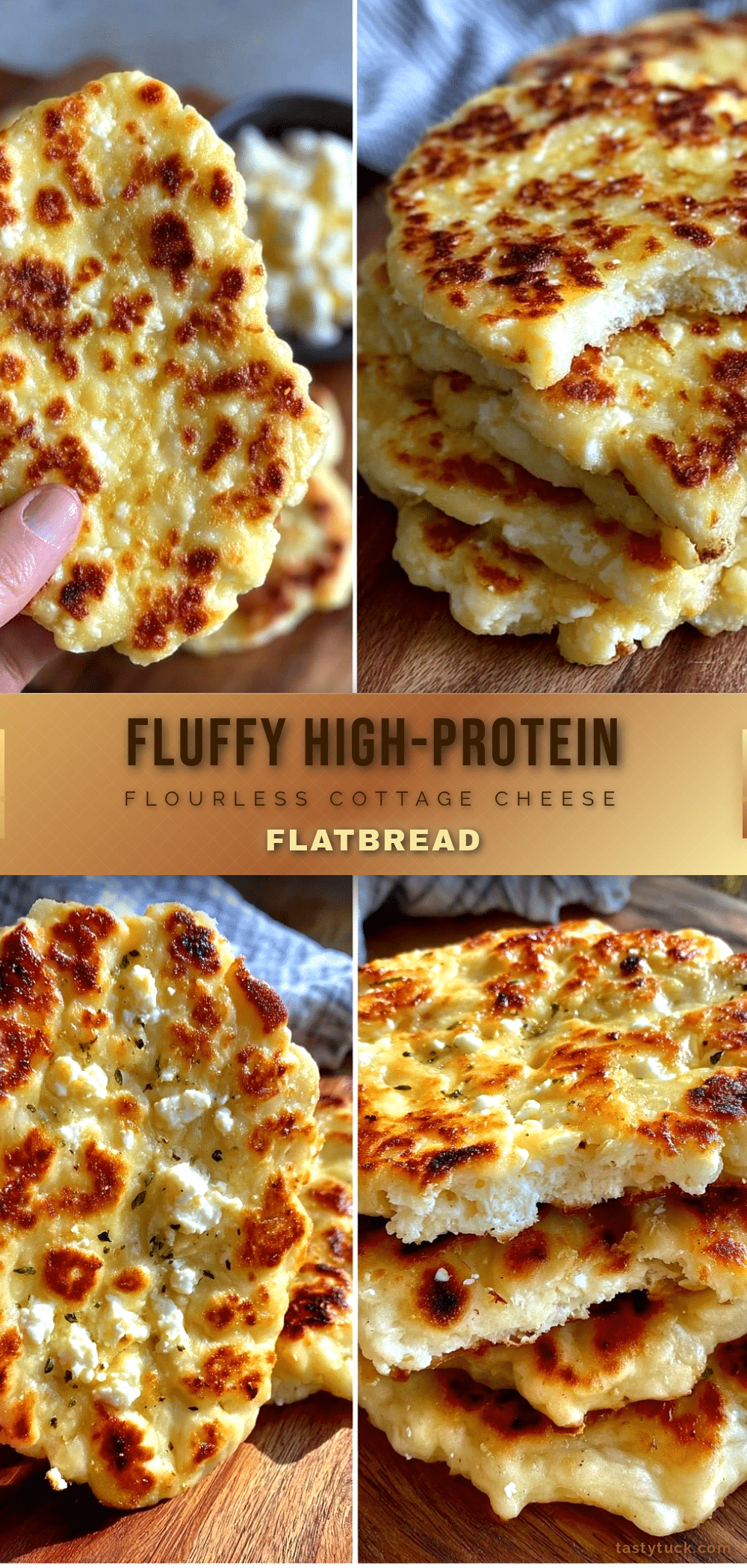
Wholesome High-Protein Cottage Cheese Flatbread

A quick and easy flour-free flatbread made with cottage cheese and eggs, packed with protein and perfect for low-carb diets. This versatile flatbread is fluffy, creamy, and adaptable for various toppings and meals.
- Prep Time: 15 minutes
- Cook Time: 8 minutes
- Total Time: 23 minutes
- Yield: 2 flatbreads 1x
- Category: Main Course
- Cuisine: American
Ingredients
- 1 cup (240 ml) cottage cheese, full-fat or low-fat, well-drained
- 3 large eggs, room temperature
- ¼ cup (30 g) almond flour (optional)
- 1 tsp (4 g) baking powder
- ½ tsp (3 g) salt
- ½ tsp (1.5 g) garlic powder (optional)
- 2 tbsp fresh herbs (chopped parsley or chives)
- 1 tbsp (15 ml) olive oil, for cooking
Instructions
- Drain the cottage cheese in a fine mesh sieve or cheesecloth over a bowl for about 10 minutes to remove excess moisture.
- In a blender or food processor, combine the drained cottage cheese and eggs. Blend until smooth and creamy, about 30–45 seconds.
- In a separate bowl, whisk together almond flour, baking powder, salt, and garlic powder.
- Pour the blended cottage cheese mixture into the dry ingredients and fold gently with a spatula until just combined. Do not overmix.
- Fold in the chopped fresh herbs.
- Heat olive oil in a non-stick or cast iron skillet over medium heat until hot but not smoking.
- Pour half of the batter (about ¾ cup / 180 ml) into the skillet and spread evenly into a 6–7 inch (15–18 cm) circle.
- Cook for 3–4 minutes until edges are set and bottom is golden brown.
- Carefully flip the flatbread and cook the other side for 2–3 minutes until golden and cooked through.
- Remove the cooked flatbread and keep warm. Repeat with the remaining batter.
- Serve warm with your favorite toppings.
Notes
Drain cottage cheese well to avoid soggy flatbread. Use medium heat to prevent burning. Flip gently with a wide spatula. For dairy-free, try silken tofu with nutritional yeast but texture will differ. Almond flour is optional and can be substituted with coconut flour for paleo version.
Nutrition
- Serving Size: 1 flatbread
- Calories: 180
- Fat: 10
- Carbohydrates: 4
- Fiber: 1.5
- Protein: 16
Keywords: flour-free flatbread, cottage cheese flatbread, high-protein flatbread, low-carb bread, gluten-free flatbread, quick flatbread recipe